
Show summary Hide summary
- How the red card unfolded and why it mattered
- FIFA’s unusual step: suspension of the suspension
- Why the decision feels unprecedented
- Political calls and the Infantino connection
- Why critics are uneasy: context and past scandals
- Repercussions across the tournament
- What this means for the US team and for sport governance
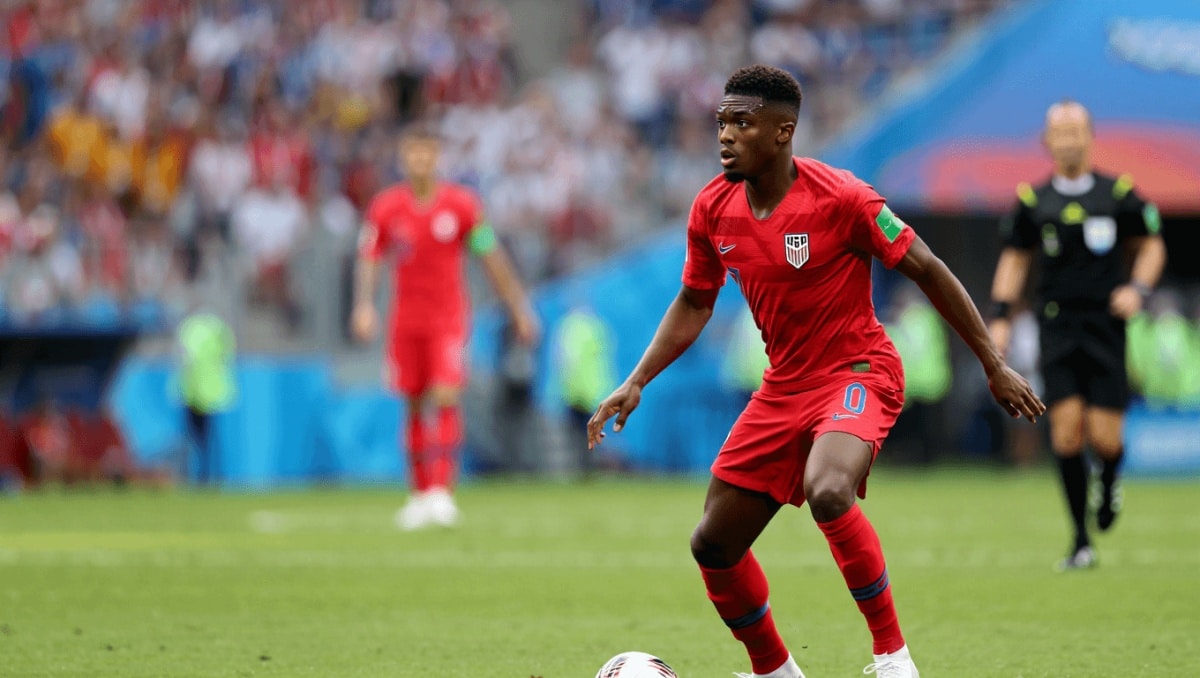
Folarin Balogun will be eligible to face Belgium after FIFA suspended his one-game ban — a rare reversal that has sent shockwaves through the World Cup and raised questions about influence, process, and precedent.
How the red card unfolded and why it mattered
Balogun was shown a red card during the US-Bosnia and Herzegovina match on July 1.
Nas slams music industry over disrespect: teases new music, vows to address it
1992 vocal performances: 3 jaw-dropping moments that still amaze
- About the 61st minute, Balogun and Bosnian defender Tarik Muharemović contested the ball.
- Replays showed Balogun stepping on Muharemović’s ankle and lower leg.
- After a VAR review the referee sent Balogun off in the 64th minute.
- Under standard rules, that red card carried an automatic one-match suspension.
Fans and some analysts argued the contact looked incidental. Muharemović finished the game, which some took as evidence the foul was not severe.
FIFA’s unusual step: suspension of the suspension
On Sunday, FIFA applied Article 27 of the FIFA Disciplinary Code to halt the immediate execution of the sanction.
The organization said the red card’s effect would be suspended under a probationary arrangement. Media reports later said the probation would last about one year.
What Article 27 allows
- The judicial body can fully or partially suspend a disciplinary measure.
- Such a suspension places the sanctioned person under a probationary period, typically one to four years.
Why the decision feels unprecedented
Overturning a red-card suspension at the World Cup is rare. The optics amplified the reaction.
- The United States is the host nation in 2026 and fields a strong squad.
- Balogun is one of the team’s top scoring threats heading into a key round-of-16 match.
- The reversal arrived just days before the US faced Belgium, its most important game so far.
Those factors combined to make the move appear more consequential than a routine disciplinary tweak.
Political calls and the Infantino connection
After FIFA’s announcement, former President Donald Trump publicly said he had asked for a review.
Trump characterized his intervention as a request to re-examine the decision and suggested it influenced the outcome.
FIFA president Gianni Infantino confirmed he took a call from the former president. Infantino also said he regularly speaks with heads of state and major stakeholders.
The exchange sparked debate about whether high-level pressure played a role in a sporting decision.
Why critics are uneasy: context and past scandals
FIFA’s reputation matters to how people view this episode. Past scandals cloud the reaction.
- In 2015, U.S. prosecutors indicted several FIFA officials on charges including racketeering and bribery.
- Investigations documented millions in alleged bribes tied to media and marketing rights.
- When Qatar hosted the 2022 World Cup, human-rights and labor abuses drew major criticism of FIFA’s choices.
The history does not prove direct wrongdoing in this instance, but it fuels skepticism about the organization’s independence.
Repercussions across the tournament
FIFA’s move has already prompted other federations to ask for similar reviews.
- The UK Parliament raised the question of whether an appeal could apply to England’s Jarell Quansah.
- France requested review options for Michael Olise, who received a booking in their recent match.
FIFA has not yet announced rulings on those calls.
What this means for the US team and for sport governance
On the field, Balogun being cleared means the United States can deploy one of its primary attackers against Belgium.
Off the field, the episode spotlights broader governance issues in global soccer.
- It raises questions about transparent processes for disciplinary reviews.
- It highlights how outside influence can alter public trust in decisions.
- It may encourage more appeals and more scrutiny of FIFA’s disciplinary code.
The saga is likely to reverberate through the tournament and beyond, as federations and fans watch how FIFA handles similar requests.










