
Show summary Hide summary
- Why novels mattered to a young republic and how critics labeled a national book
- Other notable works that scholars say deserve attention
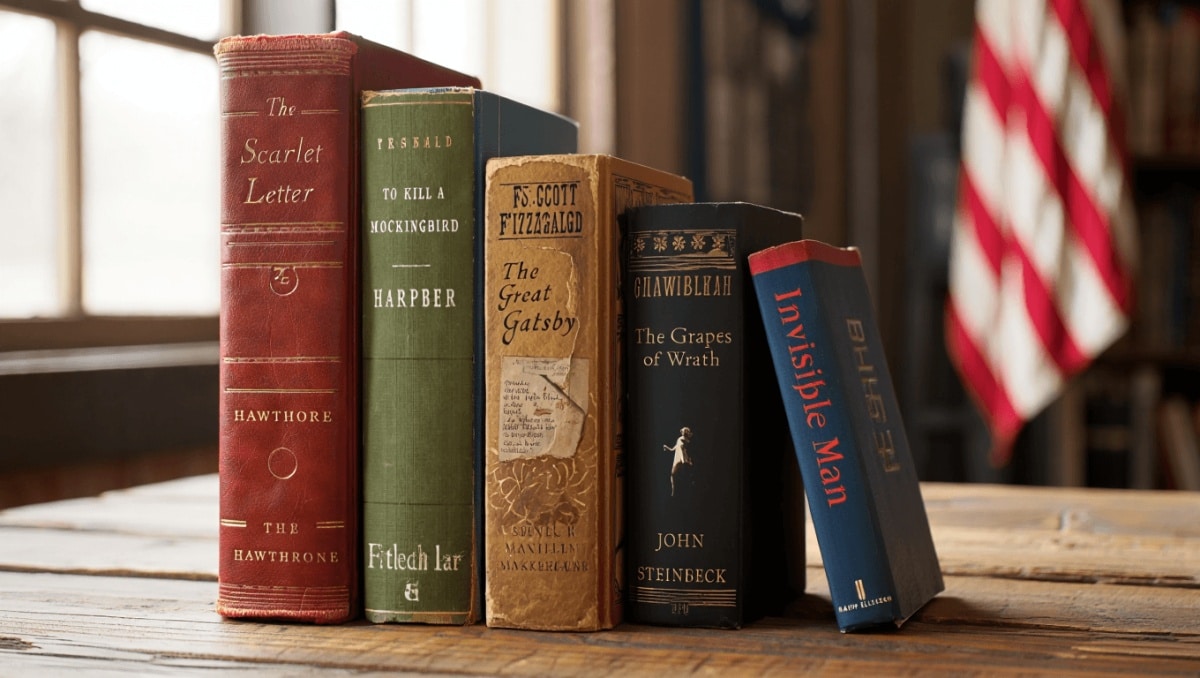
- Hawthorne’s vision: The Scarlet Letter (1850) and America’s moral origin story
- Melville’s sea as a nation: Moby-Dick (1851) and the peril of charismatic leaders
- Mark Twain’s moral reckoning: The Adventures of Huckleberry Finn (1884)
- Fitzgerald’s critique of ambition: The Great Gatsby (1925)
- Toni Morrison’s reckoning: Beloved (1987) and the weight of memory
- How these novels fit a pattern critics keep returning to
America did not begin as a single tribe or a single landscape. It began as an idea written down. That thought pushed American writers to invent stories that explained who the nation was, and what it might become. Over two centuries, certain novels kept returning to the same questions: Can a country of lofty principles live up to them? Which stories reveal the truth?
Why novels mattered to a young republic and how critics labeled a national book
From the Revolution onward, cultural leaders argued the United States needed its own literature. Scholars trace that desire to the late 18th century, and note that it swelled after the War of 1812.
Nas slams music industry over disrespect: teases new music, vows to address it
1992 vocal performances: 3 jaw-dropping moments that still amaze
Harvard critic Lawrence Buell framed the debate as a search for a single work that could capture America’s contradictions. He suggested the “great American novel” often centers on a people under strain. These novels typically dramatize a stressed collective that exposes national themes.
In 1868, writer John William DeForest coined the phrase “great American novel,” warning that the definitive book had yet to be written. Since then, critics, teachers, and readers have argued about candidates.
Other notable works that scholars say deserve attention
Beyond the usual suspects, scholars pointed to a cluster of novels that illuminate different American truths. They range from gothic frontier tales to contemporary takes on urban Indigenous life.
- Edgar Huntly by Charles Brockden Brown (1799) — A gothic mystery set in early Pennsylvania.
- Who Would Have Thought It? by María Amparo Ruiz de Burton (1872) — The first English-language novel by a Chicana writer. It skewers liberal pretensions.
- Invisible Man by Ralph Ellison (1952) — An unnamed Black narrator faces surreal institutional betrayals.
- Gravity’s Rainbow by Thomas Pynchon (1973) — A sprawling, paranoid modern epic with wartime excess and dark humor.
- Two Wings to Veil My Face by Leon Forrest (1983) — Jazz-inflected prose tracing Black history through one survivor’s life.
- The Overstory by Richard Powers (2018) — Interlocking lives awaken to environmental crisis.
- The Great Believers by Rebecca Makkai (2018) — A taut narrative about the AIDS era and its survivors.
- There There by Tommy Orange (2018) — Urban Native voices in Oakland reclaim complicated Indigenous identity.
- No One Is Talking About This by Patricia Lockwood (2021) — A Joycean, hyper-online meditation on attention and grief.
Hawthorne’s vision: The Scarlet Letter (1850) and America’s moral origin story
Nathaniel Hawthorne’s tale of Hester Prynne became a staple of classrooms. It arrived early enough to be read as a foundational account of American character.
Puritan shame and the public imagination
Hawthorne set the story in a tight Puritan settlement. Hester is publicly marked for adultery with a scarlet letter. The community’s response exposes a culture of surveillance.
Critics read the novel as an origin narrative. It asks whether a nation born from strict moral codes can escape its punitive instincts. Hawthorne suggests the newborn country shelters both idealism and harsh control.
Melville’s sea as a nation: Moby-Dick (1851) and the peril of charismatic leaders
Herman Melville’s Moby-Dick baffled contemporaries. Its form blends drama, encyclopedia, and myth. The book found acclaim decades later.
A ship that mirrors a republic
The Pequod’s crew is diverse: people from several continents sail together. Yet their fate hinges on one man, Captain Ahab, and his obsession.
Readers and scholars often call Moby-Dick a democratic tragedy. The crew willingly cedes power to Ahab’s will. Melville dramatizes how a united group can self-destruct under one leader’s grip.
Because the novel feels ahead of its time, critics argue it speaks to future crises in American life.
Mark Twain’s moral reckoning: The Adventures of Huckleberry Finn (1884)
Mark Twain’s novel reached wide audiences quickly, even if critics took time to elevate it into canonical status. Its influence exploded in the 20th century.
Friendship, conscience, and the limits of freedom
Huck’s journey down the Mississippi with Jim, an escaped enslaved man, tests law, habit, and compassion. Huck chooses Jim’s safety over social norms.
That moment of defiance has long been read as moral redemption. Yet the story does not end with a tidy triumph. Later episodes complicate the novel’s promises of emancipation.
Scholars link the book to Reconstruction’s failures and to Twain’s later, darker perspective on American race relations. The book both indicts a cruel society and exposes its unfinished change.
Fitzgerald’s critique of ambition: The Great Gatsby (1925)
F. Scott Fitzgerald’s slim novel casts a long shadow. Its hero, Jay Gatsby, chases wealth and an idealized love. The chase exposes the cost of aspiration.
The American dream, revised
Gatsby embodies the self-made myth gone wrong. His riches are suspect. His longing is pure, but the outcome is hollow.
Academics say Gatsby interrogates meritocracy. The novel asks whether American striving is noble or rigged. Fitzgerald makes that failure feel irresistibly beautiful and tragic.
Toni Morrison’s reckoning: Beloved (1987) and the weight of memory
Toni Morrison arrived when the literary canon was changing. Her work insisted readers face the brutal realities slavery left behind.
Ghosts, law, and what it means to be human
Beloved centers on Sethe, a formerly enslaved woman haunted by the murdered child she killed to stop the child’s return to bondage. The novel examines trauma across generations.
Morrison’s language and perspective refused to let America treat slavery as a closed chapter. Critics and readers rallied behind the book, and it later won major prizes.
Scholars argue Beloved asks who counts as fully human in a society that denied rights to many. It treats national memory as a wound that shapes bodies, families, and land.
How these novels fit a pattern critics keep returning to
Readers who champion a “great” American novel often want a book that dramatizes national conflict. That recipe tends to include a pressured collectivity and a theme about democracy or identity.
- Stories that stage a community under strain.
- Protagonists whose choices reveal national faults.
- Language and form that push literary boundaries.
- Enduring presence in classrooms and cultural conversations.
Through different eras and styles, the books discussed here share a common aim. They interrogate the gap between America’s ideals and its realities. Each novel forces readers to recognize a messy national truth rather than a tidy myth.










