
Show summary Hide summary
- Reimagining a familiar heroine for streaming audiences
- New setting, similar stakes: Beverly Hills vs. 1995 Seattle
- Cast highlights and character dynamics
- Writing, tone, and the shadow of the original film
- Plot mechanics: from high school drama to a proto-legal mystery
- What “Elle” does well
- Where the series loses momentum
- Key episodes and standout moments to watch
- Production notes and creative team
- Practical viewing info
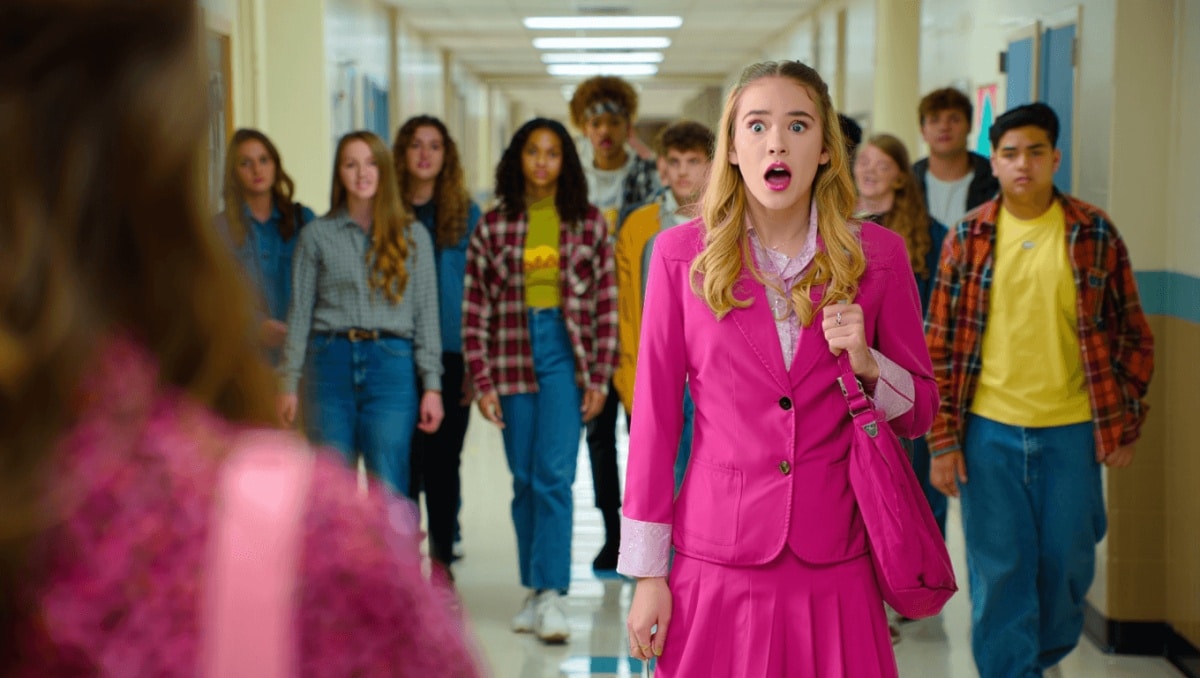
Amazon Prime Video’s Elle drops viewers into a glossy, slightly altered past: 1995, a young Elle Woods years before Harvard, navigating high school in a world of flannels and Doc Martens. The series leans into charm, color, and courtroom instincts while often tracing familiar beats from the original Legally Blonde story. It’s a playful prequel that sometimes feels like a retelling — and that tension is where the show’s strengths and limits live.
Reimagining a familiar heroine for streaming audiences
Elle positions itself as a prequel to the 2001 hit film based on Amanda Brown’s novel. Yet the eight-episode arc frequently mirrors the film’s emotional milestones. That similarity can make the series read like an earlier chapter of the same growth arc. Still, the creative team aims to introduce Elle’s spirit to a younger streaming audience.
Nas slams music industry over disrespect: teases new music, vows to address it
1992 vocal performances: 3 jaw-dropping moments that still amaze
Keywords: Elle series review, Legally Blonde prequel, Amazon Prime Video.
New setting, similar stakes: Beverly Hills vs. 1995 Seattle
Rather than tracing the exact path to Harvard, the show relocates Elle from sunny Beverly Hills to rainy Seattle. The move reshapes social dynamics and visual style. Designers trade pink sun dresses for layered plaid and band tees. The Pacific Northwest setting gives the series a distinctive soundtrack and a grunge-era palette.
Seattle’s culture creates an obvious contrast: a community that prizes low-key authenticity versus Elle’s deliberate glamour. That cultural clash fuels the season’s drama and humor.
How the setting changes the story
- New high school environment puts Elle at odds with local trends.
- Grunge-era music acts as a tonal counterpoint to Elle’s aesthetic.
- Relocation forces Elle into community-focused plots rather than romantic pursuit.
Cast highlights and character dynamics
Lexi Minetree takes on the title role, channeling the effervescent energy that made Reese Witherspoon’s Elle famous. Minetree’s performance balances the character’s sunny optimism with a growing curiosity about justice.
Supporting players shape Elle’s world:
- Tom Everett Scott plays Wyatt, Elle’s father, whose professional misstep triggers the family move west.
- June Diane Raphael brings warmth as Elle’s mother, offering comic grounding.
- Chandler Kinney portrays Kimberly, the high school queen bee who tests Elle’s authenticity.
- Other peers include a skeptical record-shop clerk and a student activist who becomes an ally.
Some family and romantic threads feel undercooked. The series excels when it leans into camaraderie and investigative drive. It stumbles when asked to invent deep new emotional corners for familiar characters.
Writing, tone, and the shadow of the original film
Writers borrow motifs and lines that echo the original script. Episode titles nod to iconic dialogue. This homage keeps longtime fans engaged but also highlights how the new material often follows preexisting outlines.
The show prefers charm and affirmation over subversion. Its jokes and quips land, yet they sometimes feel like color inside someone else’s lines. That approach makes the series comfortable and predictable in equal measure.
Where the humor lands
- Lighthearted one-liners and pop-culture references provide most of the laughs.
- Fish-out-of-water scenarios generate genuine warmth.
- Attempts at darker satire are limited by the series’ gentle tone.
Plot mechanics: from high school drama to a proto-legal mystery
The central narrative pivot involves Elle stepping into a quasi-legal role. A subplot about missing or misallocated funds gives her cause to investigate. This storyline allows the series to explore Elle’s curiosity and tenacity.
The show borrows detective tropes: detention-room bonding, school politics, and grassroots organizing become the scaffolding for Elle’s growth. These elements echo the original film’s courtroom tenacity while fitting a teen setting.
What “Elle” does well
- Performance energy: Minetree captures Elle’s effervescence without mimicking the film verbatim.
- Cultural texture: The 1995 Seattle backdrop is richly rendered and musically evocative.
- Accessible themes: Identity, perception, and community advocacy remain central.
Where the series loses momentum
The episodes flag when the show attempts wholly new directions. Family relationships and a potential romantic subplot lack depth. Some supporting arcs feel like placeholders rather than fully formed narratives.
When Elle moves away from the familiar blueprint, the series shows hesitation. These scenes reveal a creative reliance on the source material more than a desire to reinvent it.
Key episodes and standout moments to watch
- Early episodes that establish the relocation and cultural clash.
- A detention-focused installment that channels ’80s teen-movie energy.
- The investigation arc, where Elle’s legal instincts begin to emerge.
Production notes and creative team
Created by Laura Kittrell and executive produced by Reese Witherspoon’s Hello Sunshine, the series blends nostalgia with streaming-era sensibilities. The writing team leans into established beats while introducing period touches in costume and music.
Episode titles and callbacks intentionally reference the film’s memorable lines. That strategy serves fans who enjoy connective tissue between iterations.
Practical viewing info
All eight episodes of Elle are available to stream on Amazon Prime Video. The show runs as a limited series with an episodic cadence suited to binge watching.










