
Show summary Hide summary
- Why World Cup visitors are falling for everyday America
- Viral moments: small surprises that spark big reactions
- How soft power helps shape worldwide impressions
- Where attraction meets policy: tensions under the current administration
- Institutional changes that dimmed some American appeal
- Local hospitality keeps the welcoming image alive
- The dual narrative: exclusionary politics and popular welcome
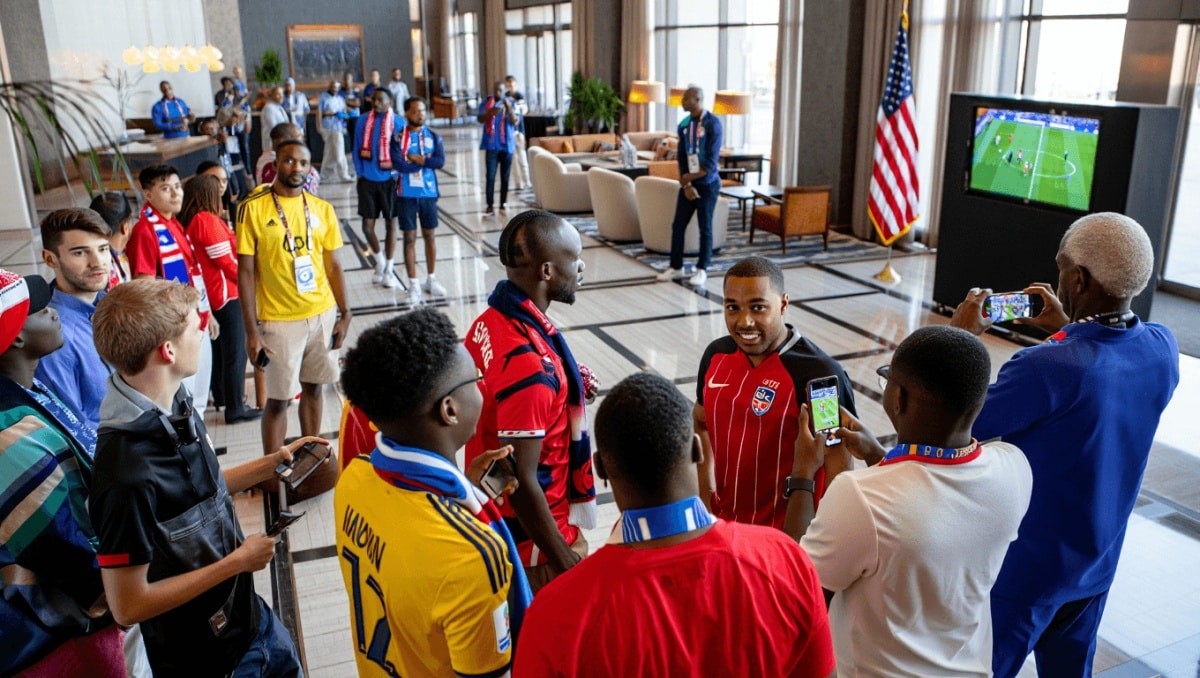
Fans streaming into U.S. stadiums and hotel lobbies for the 2026 World Cup have produced an unexpected cultural spectacle: short videos of visitors marveling at everyday American life. Those clips — part wonder, part travelogue — offer a striking contrast to the headline stories about diplomacy, immigration rules, and political tensions.
Why World Cup visitors are falling for everyday America
Thousands of international supporters have posted candid reactions to simple sights: oversized grocery items, fluorescent school buses, and stadium tailgate parties. These moments go viral because they are relatable and surprising to viewers back home.
Nas slams music industry over disrespect: teases new music, vows to address it
1992 vocal performances: 3 jaw-dropping moments that still amaze
- Social media clips show fans encountering ice-dispensing fridges and free soda refills for the first time.
- Fans frame larger-than-life retail items and roadside iconography as symbols of American abundance.
- Scenes of welcoming crowds and neighborhood celebrations humanize the U.S. beyond news headlines.
For many visitors, these small discoveries stitch together a larger impression of America. The result is an avalanche of positive, authentic impressions that spread quickly online.
Viral moments: small surprises that spark big reactions
Some of the most-shared footage is charmingly mundane. A Scottish man gushed over a refrigerator ice dispenser. A Norwegian fan, sporting a huge Viking hat, told a local paper she loved parking-lot tailgates.
- Everyday conveniences: ice makers, single-serve frozen desserts, and refillable drinks.
- Retail contrasts: gallon milk jugs and supermarket aisles that dwarf European stores.
- Iconic visuals: bright yellow school buses and cinematic red fire engines.
These clips read as cultural souvenirs. They show that, for many travelers, the U.S. is as much a place of familiar pop-culture images as it is a functioning set of surprising comforts.
How soft power helps shape worldwide impressions
Academics call the pull of culture and innovation “soft power.” It’s the ability to attract rather than coerce. The United States has wielded soft power through film, music, tech, and academia for decades.
Soft power works by making people curious, appreciative, and engaged. Visitors remember films, songs, and brands, and those memories color how they receive real-life America.
Expert perspective on influence
Hendrik W. Ohnesorge, a senior lecturer at the University of Bonn, notes that soft power succeeds when it draws people in rather than forcing them. He argues that U.S. culture often serves as a global reference point for this type of influence.
Where attraction meets policy: tensions under the current administration
At the same time, official policies have complicated the welcome many expect. Stricter entry rules and other measures have led to troubling incidents and real barriers.
- An international athlete experienced a prolonged airport detention.
- A referee from another country was denied entry before the tournament began.
- Families from the Global South reported being unable to travel to support their teams.
Those episodes underscore how immigration policy can dampen the cultural reach that soft power depends on.
Institutional changes that dimmed some American appeal
Beyond single incidents, there have been longer-term shifts. Funding and support for cultural and diplomatic programs have been reduced. Some institutions that once promoted U.S. influence have seen cuts and legal challenges.
- Public diplomacy outlets and aid programs have been scaled back.
- Higher education and international student enrollment faced pressure and decline.
- Criticisms and lawsuits have targeted research and cultural organizations.
Ohnesorge points out that these moves undercut tools that historically amplified U.S. attraction overseas.
Local hospitality keeps the welcoming image alive
Despite political currents, communities around host cities have shown a different, more open face. Diaspora groups and local residents have organized fan events and neighborhood celebrations.
One Midwestern town embraced an African national team with flags, scarves, and a city that learned a foreign national anthem. Such gestures are not orchestrated from Washington.
They reflect the grassroots side of soft power. Everyday hospitality, volunteer hosts, and neighborhood pride often do more to foster goodwill than official campaigns.
The dual narrative: exclusionary politics and popular welcome
There is a competing narrative at play. On one side are policies that constrict travel and shrink institutional engagement. On the other is a popular, people-driven enthusiasm that greets visitors with warmth.
Some voters find the current administration’s approach appealing. That style of politics has its own magnetic pull for certain audiences.
Yet the World Cup shows how spontaneous cultural exchange can counterbalance formal restrictions. Local fans, volunteers, and immigrant communities create moments of connection that media clips then amplify.










