
Show summary Hide summary
- How the series frames the founding of the United States
- Visceral reenactments, careful narration and cinematic craft
- Who shapes the story: producers, curators and voices
- Balancing difficult history with civic lessons
- Voices on screen: whose perspectives are included
- How the series treats slavery and its legacies
- Modern politics in a historical mirror
- Humanizing founders without erasing flaws
- Where the show excels and where it hesitates
The new Netflix docuseries timed for America’s 250th anniversary takes a reverent, museum-like approach to the country’s birth. Martin Sheen provides the voice of George Washington, and the show stitches together interviews with historians, politicians and scholars to retell the Revolutionary era and the first decades of the republic.
How the series frames the founding of the United States
The show spans roughly from the years before the 1776 Declaration to the end of Washington’s presidency in 1797. Over five episodes and about six hours of footage, it aims to examine both achievements and failures. The pacing favors dignity and clarity, like a curated gallery walking viewers from one pivotal scene to the next.
Nas slams music industry over disrespect: teases new music, vows to address it
1992 vocal performances: 3 jaw-dropping moments that still amaze
- Scope: Pre-Declaration through Washington’s last term.
- Length: Five episodes, approximately six hours total.
- Tone: Educational, measured, and formally staged.
Visceral reenactments, careful narration and cinematic craft
Director Brian Knappenberger opts for high-production re-enactments rather than quick digital tricks. Battle and debate sequences look like scenes from a prestige drama. Letters and diary passages are read aloud, with Martin Sheen voicing Washington to add weight and continuity.
- Lavish period sets and costumes.
- Close readings of personal correspondence.
- Selective use of modern montage to bridge past and present.
Who shapes the story: producers, curators and voices
Playtone and Tom Hanks are attached as producers, signaling a focus on mainstream accessibility. Brian Knappenberger directs, and the Smithsonian’s Lonnie G. Bunch III plays a prominent curatorial role in the series’ perspective.
Key contributors
- Martin Sheen — voice of George Washington.
- Tom Hanks / Playtone — production support.
- Brian Knappenberger — director.
- Lonnie G. Bunch III — Smithsonian’s guiding voice.
Balancing difficult history with civic lessons
Smithsonian Secretary Lonnie Bunch appears to push back on critics who say museums dwell too much on pain. He argues that confronting ugly chapters is essential to understanding the nation. The series echoes that view by treating difficult subjects as part of a bigger civic story.
The program keeps returning to the idea that the nation’s founding was experimental. Its creators stress that the republic emerged from debate, compromise and real uncertainty.
Voices on screen: whose perspectives are included
The documentary assembles dozens of talking heads. Many are historians, authors and public figures. Black and Native scholars are featured to broaden the narrative beyond a strictly Eurocentric line.
- Scholars who explain legal and political choices.
- Journalists and commentators who tie events to later developments.
- Modern politicians who reflect on procedural norms.
How the series treats slavery and its legacies
Slavery is presented as an unavoidable moral and political contradiction at the republic’s birth. The show details how compromises like the three-fifths rule warped representation and empowered slaveholding states. Experts describe the political payoff that entrenched unequal power.
The program stops short of making continuous, explicit links from those founding-era choices to every modern protest or movement. It shows recent footage in places, but it mostly lets historians lay out the early mechanics.
Modern politics in a historical mirror
The series inserts contemporary political figures to stress bipartisan themes. Voices from across the political spectrum speak on the Electoral College, peaceful transfer of power and the spirit of compromise.
- Hillary Clinton discusses electoral rules and their flaws.
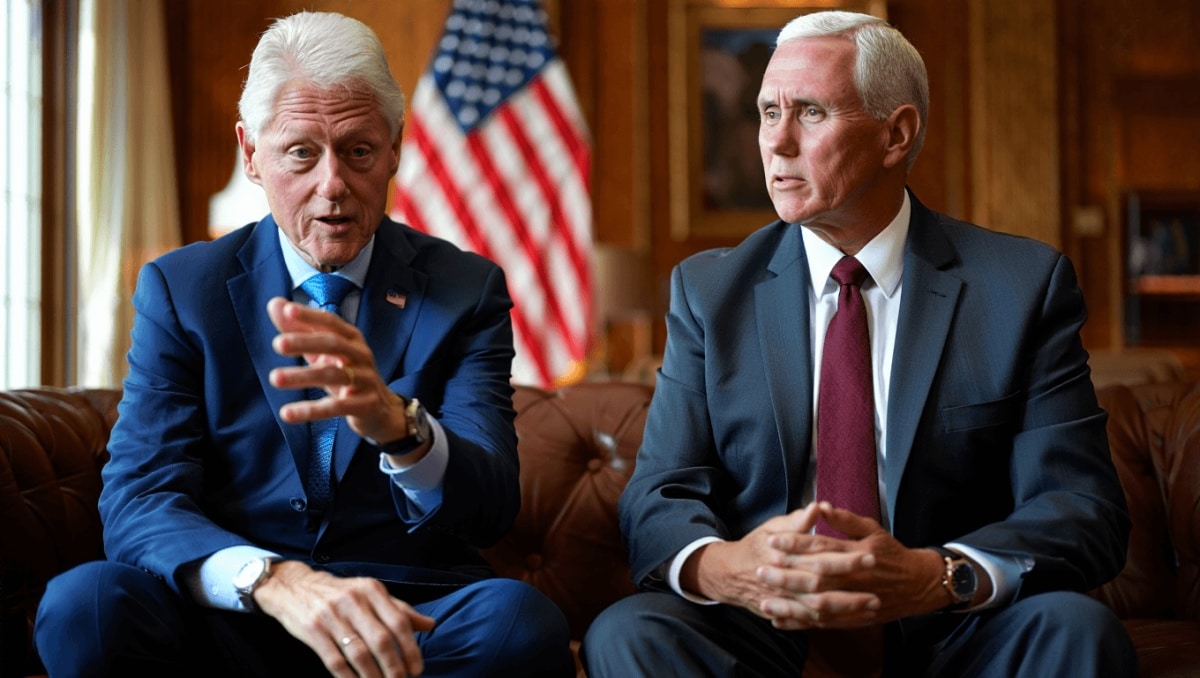
- Mike Pence reflects on constitutional transfer of power.
- Ted Cruz and others praise founding virtues, sometimes awkwardly.
Having current officeholders offer moral lessons can feel constructive. For some viewers, it may also feel discordant or ironic when past ideals are used by politicians with contested records.
Humanizing founders without erasing flaws
The series tries to breathe life into historical figures with vivid, domestic details. Small biographical notes show these leaders as fallible humans. This approach makes their choices feel less inevitable and more fraught.
- Personal anecdotes reveal temper and ambition.
- Conflicts and rivalries show the scale of compromise required.
- Moments of doubt make the path they chose less preordained.
Where the show excels and where it hesitates
It succeeds as a thorough primer on the founding era. The storytelling is tidy and authoritative. Yet, the series sometimes avoids drawing clear lines from the past to the present. It demonstrates the machinery of early politics well, but leaves viewers to make some contemporary connections themselves.
At its best, the program invites viewers to see the nation’s beginnings as a complex, ongoing experiment. At times, it prefers restraint over explicit commentary.










