
Show summary Hide summary
- Spielberg’s latest: aliens meet theology on screen
- Religious institutions and the possibility of life beyond Earth
- Public attitudes: surveys and what people say they would do
- UFO belief as a modern kind of religion
- Why disclosure resonates now: anxiety, technology, and the hunger for meaning
- From Close Encounters to Disclosure Day: Spielberg’s evolving cosmic themes
- What UFO conversations reveal about power and trust
- How cosmology and humility shape modern faith
Steven Spielberg’s new movie Disclosure Day pulls two powerful obsessions into one story: contact from beyond Earth and the human need for belief. The film asks whether proof of intelligent life in space would shake churches, comfort seekers, or reshape how we think about the divine. As the real-world debate over UFOs intensifies, Spielberg’s drama arrives at a moment when science, secrecy, and spirituality are colliding.
Spielberg’s latest: aliens meet theology on screen
Disclosure Day returns Spielberg to territory he first explored in the 1970s and 1980s. This time, the filmmaker frames extraterrestrial contact as both a global political problem and a spiritual test.
Nas slams music industry over disrespect: teases new music, vows to address it
1992 vocal performances: 3 jaw-dropping moments that still amaze
Rather than treating aliens only as spectacle, the film centers on human reactions. Some characters pursue control of the narrative. Others face a moral and theological dilemma. The movie asks a direct question: can religious faith coexist with the discovery of intelligent life elsewhere?
The movie positions believers and institutional religion against the social shock of disclosure. That tension drives much of the drama and forces audiences to consider how sacred truths might adapt to cosmic news.
Religious institutions and the possibility of life beyond Earth
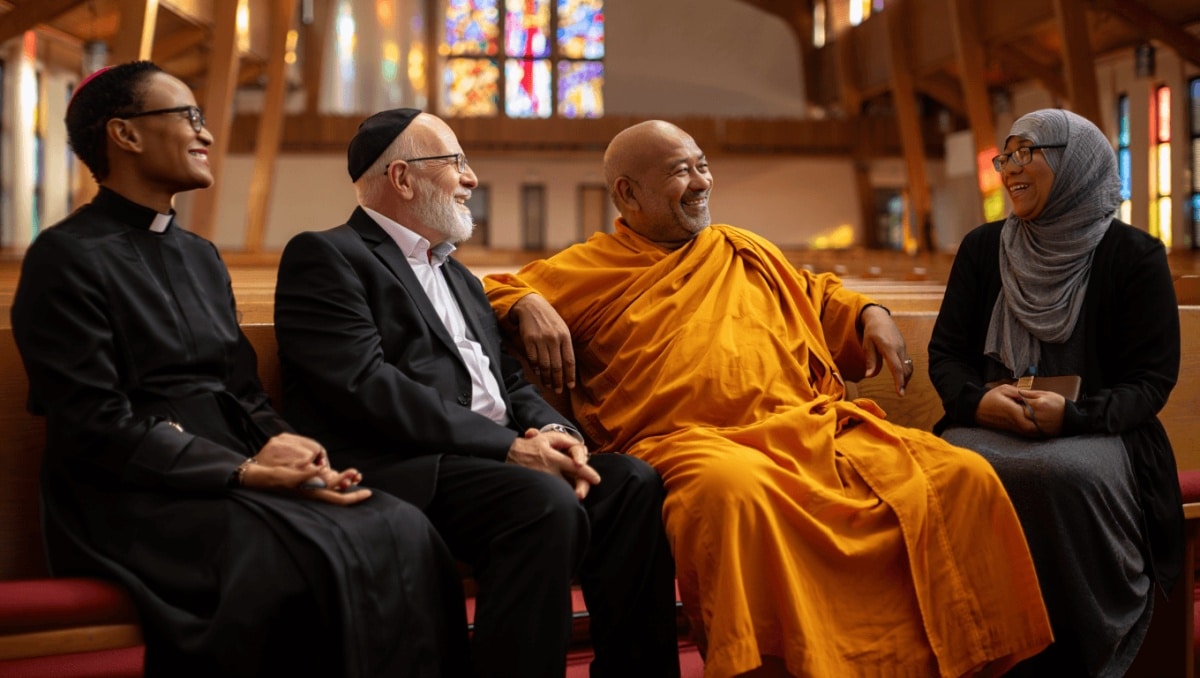
Across major faiths, scholars and leaders have shown an unexpected openness to the idea of life beyond our planet.
How different traditions frame the issue
- Catholicism: The Vatican has said that extraterrestrial life would not necessarily contradict Catholic doctrine.
- Judaism: Many rabbis argue that scripture does not preclude life elsewhere.
- Islam: Some Muslim scholars point to texts that allow for creation beyond Earth.
- Buddhism: The tradition’s cosmology can accommodate a populated universe.
Even high-profile religious figures have weighed in. Casual comments from prominent leaders signal that theological frameworks can stretch to include other intelligent beings.
While official theologians often provide nuanced answers, there is less certainty about how average believers would react. That gap between clergy and laity is central to the current debate.
Public attitudes: surveys and what people say they would do
Research suggests most people would not abandon their faith if aliens are confirmed. A landmark survey led by a theologian asked more than a thousand people how they would respond to proof of extraterrestrial beings.
- Over 80 percent across several faiths said their personal beliefs would survive disclosure.
- Respondents often imagined God as creator of all life, not only humanity.
- Many believed other civilizations could also reflect a divine purpose.
Yet the same studies reveal anxiety about religious authorities. Laypeople sometimes expect clergy to resist or to struggle more than congregants.
Institutions may fear reputational risk, even when individual believers adapt. That difference helps explain why some communities might react defensively to cosmic revelations.
UFO belief as a modern kind of religion
Scholars of religion note that communities devoted to UFOs and alien contact perform many roles similar to traditional faiths.
- They build networks of believers and spread shared narratives.
- They offer interpretive frameworks for extraordinary experiences.
- They create cosmologies that supply meaning in uncertain times.
Author D.W. Pasulka argues the UFO movement supplies communal belonging and mythic answers. For some, the idea that more advanced beings could guide humanity is a response to technological anxiety and moral fear.
After the 20th century’s scientific leaps, people began to worry about self-destruction. The hope that superior intelligences would teach us peaceful uses of technology is a recurring theme in ufology.
The myth of benevolent, advanced aliens helps people imagine an ordered alternative to chaos. That longing is part religion, part cultural coping mechanism.
Why disclosure resonates now: anxiety, technology, and the hunger for meaning
Several social forces are making alien narratives more appealing.
- Global instability and environmental risk increase existential dread.
- Rapid advances in AI and biotech stoke questions about what counts as intelligence.
- High-profile political moves to declassify UFO files have fueled public fascination.
Thinkers who study media and belief say people crave myth and mystery after decades of technocratic governance. The appeal is not just novelty. It is an emotional search for something greater than routine life.
Some experts compare the current moment to past eras of spiritual seeking. That cultural thirst can make narratives of extraterrestrial contact attractive in ways that political arguments alone cannot satisfy.
From Close Encounters to Disclosure Day: Spielberg’s evolving cosmic themes
Spielberg’s films have long used aliens as mirrors for human longing. Each movie reflects its moment.
- Close Encounters emphasized personal wonder and private revelation.
- ET explored empathy and the human heart, not geopolitical stakes.
- War of the Worlds channeled fear and sudden catastrophe.
- Disclosure Day blends theology, conspiracy, and societal upheaval.
By returning to alien stories, Spielberg taps a cultural vein that runs from intimate yearning to mass anxiety. His new film treats disclosure as both a narrative puzzle and a spiritual test.
That blend of spectacle and sermon is why the topic feels timely. The story of contact changes depending on the questions the culture asks.
What UFO conversations reveal about power and trust
Belief in alien visitors often comes with suspicion of earthly institutions. Many UFO enthusiasts distrust governments, scientists, and religious hierarchies.
This distrust fuels narratives about cover-ups and hidden knowledge. It also explains why disclosure debates can quickly become political theater.
Historical patterns show that people who feel alienated from authority are more likely to embrace alternative explanations. In turn, these narratives shape how groups organize and contest truth claims.
How cosmology and humility shape modern faith
Religious thinkers who accept the possibility of extraterrestrial life often invoke humility. If life is widespread, human centrality fades.
For many believers, that does not diminish the sacred. Instead, it expands the scale of divine action.
Faith adapted to a populated universe can remain meaningful. The idea shifts from exclusivity to an expanded view of creation.
That theological flexibility is part of why disclosure may unsettle institutions more than individuals.










