
Show summary Hide summary
- What this Cape Fear is trying to be
- How the plot grows—and where it gets tangled
- A reshaped legal and moral center
- The cast: who anchors the chaos
- Visual language, music and homage
- Pacing and the problem of expansion
- Direction and episode-to-episode feel
- Where the series succeeds and where it strains
- How the show sits beside its predecessors
- Why people will watch—and who might walk away
Apple TV’s new Cape Fear reimagining stretches a compact 1957 thriller into a sprawling TV event. Nick Antosca turns the tight revenge story into a 10-episode labyrinth, and the result is equal parts thrilling, noisy and indulgent.
What this Cape Fear is trying to be
The series arrives with a clear ambition: expand a classic cat-and-mouse tale into a long-form meditation on guilt, spectacle and public spectacle. Antosca and his writers build new backstories, layer in modern obsessions and push the original thriller into contemporary terrain.
Nas slams music industry over disrespect: teases new music, vows to address it
1992 vocal performances: 3 jaw-dropping moments that still amaze
- Format: 10 episodes; roughly 10 hours of storytelling.
- Goal: deepen characters and update the world for 2026 viewers.
- Tone: more showy and sometimes more grotesque than earlier versions.
How the plot grows—and where it gets tangled
The spine of the story remains familiar: a dangerous man released from prison returns to haunt those he believes wronged him. But the series threads several new strands through that core. Some add texture. Others feel like padding.
- Expanded motives. The show spends time on why the antagonist seeks revenge, slowly unraveling past courtroom decisions and moral compromises.
- Contemporary trappings. True-crime podcasts, nonprofit law centers and social-media adoration figure into the narrative.
- Family fallout. The household under siege is portrayed with more interior detail and private strife than in earlier adaptations.
Those additions create moments of insight. They also require ⎯ occasionally painfully ⎯ more scenes to make their points. At times, the series substitutes length for narrative necessity.
A reshaped legal and moral center
Instead of a single morally ambiguous lawyer, the show splits that role into two characters with separate histories. That choice spreads the ethical burden across more lives and allows prolonged interrogation of culpability.
- Backstory threads the trial into family life.
- The legal world is shown as both idealistic and opportunistic.
- Public praise and private guilt collide, fueling the story’s tension.
The cast: who anchors the chaos
The performances are one of the series’ chief attractions. The leads and many supporting players bring theatrical energy that elevates even the bloated stretches.
Key performers
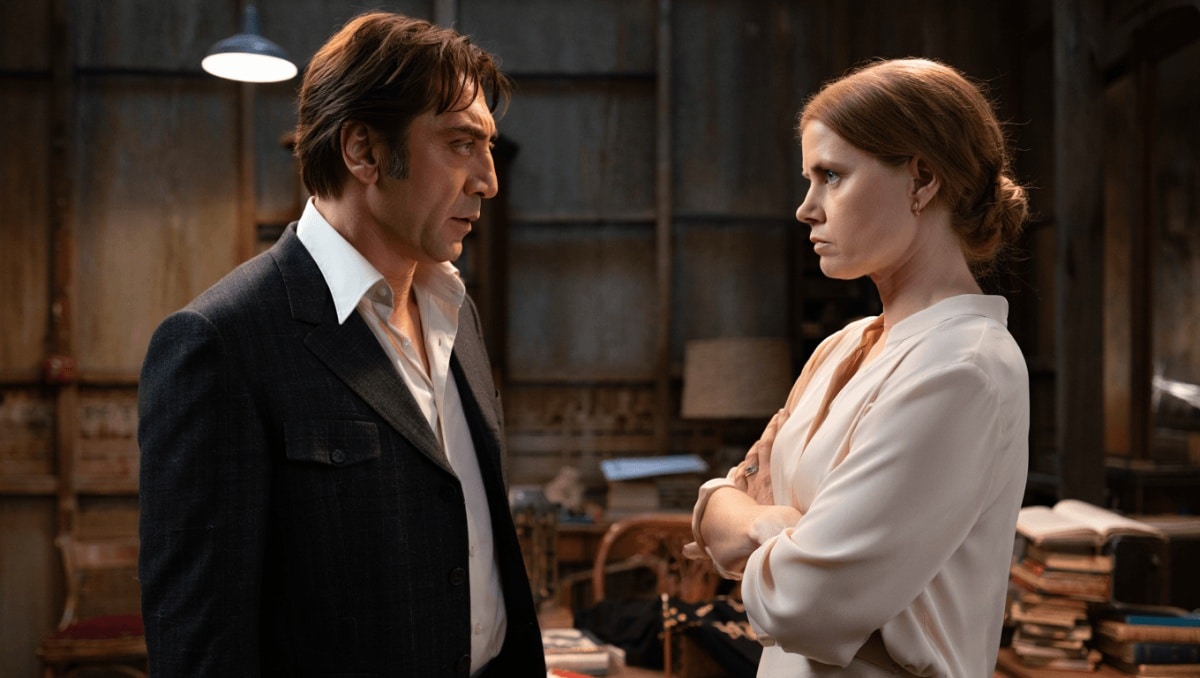
- Javier Bardem as the menacing returnee. He’s introduced sparingly and then unleashed, favoring a showy menace that demands attention.
- Patrick Wilson in a central role torn between conscience and denial. He portrays mounting dread with escalating intensity.
- Amy Adams (credited in the show’s lineage) anchors complicated moral questions tied to past decisions.
- Lily Collias stands out for naturalism. Her performance gives the family an emotional center.
Supporting actors like Ted Levine and Ron Perlman pop in with scene-stealing bits. Their presence helps the series feel large and theatrically tuned.
Visual language, music and homage
Stylistically, the series leans into cinematic references. The pilot echoes photo-negative visuals and a muscular theme that nod to earlier filmic versions.
- Directorial roster includes established names who each add texture.
- Music weaves echoes of classic scores into a modern soundscape.
- Visual motifs—river, moss, long frames—establish a persistent unease.
The show often invites viewers to spot callbacks to famous scenes from past Cape Fear films. Those Easter eggs are part tribute, part strategy to keep attention during slower beats.
Pacing and the problem of expansion
Converting a compact book and two films into a 10-episode arc brings a constant challenge: what to fill time with. The writers deploy modern tropes and side plots to flesh out the world.
- True-crime obsession turns up as a driver for the younger characters.
- Technology—smartphones and home security—figures into peril but also interrupts suspense at moments.
- Red herrings and character detours multiply to justify runtime.
Sometimes these elements enrich character psychology. Often they read like a sampling of prestige-TV devices layered over a previously efficient engine. The series feels longer than its essentials demand.
Direction and episode-to-episode feel
Different directors handle episodes, producing a mixed but generally cinematic texture. Some chapters crackle with tension. Others sag under the weight of backstory.
- Pilot direction sets a stylish tone and borrows visual tricks from the films.
- Subsequent episodes vary in momentum and mood.
- When directors hit their stride, the show balances dread and spectacle well.
Where the series succeeds and where it strains
The show’s strengths are obvious: a committed, sometimes grandiose cast, lush Southern settings, and production values that often feel cinematic.
- Strengths:
- Compelling central performances.
- Strong production design and location work.
- Memorable set pieces that recall classic suspense cinema.
- Weaknesses:
- Plot inflation that dilutes urgency.
- Modern plot devices that occasionally feel tacked on.
- Moments where homage overshadows original voice.
Viewed in weekly instalments, the series may land better. In marathon viewings, its excesses become more apparent.
How the show sits beside its predecessors
Comparisons are inevitable. The 1962 adaptation and Scorsese’s 1991 film remain reference points. Antosca’s Cape Fear trades some of those films’ concentrated brutality for serialized reach.
- It borrows set pieces and speeches, reframing them for a longer canvas.
- It keeps the stalker-versus-family core but stretches motive and consequence.
- Fans of the films will spot many deliberate nods; newcomers get a glossier, more episodic thriller.
The creative choice to expand is deliberate. Whether it improves the story depends on what a viewer wants from a Cape Fear experience: compact terror or extended, melodramatic unraveling.
Why people will watch—and who might walk away
The series sells itself on menace, big acting and a modern moral frame. For many viewers, that mix is enough.
- Fans of pulpy thrillers and star-driven TV will stay engaged.
- Viewers who prefer taut, economical thrillers may find it overlong.
- Those attuned to cinematic callbacks will enjoy the game of recognition.
Ultimately, the show trades the lean force of the original for a more expansive, theatrical approach. That trade will charm some and fatigue others.










