
Show summary Hide summary
- How pocket-sized paperbacks became a wartime lifeline
- The Council on Books in Wartime and the man behind the idea
- What servicemen actually read: genres, favorites and surprises
- Controversy in print: bans, politics and the defense of free reading
- Where the collection lives now and books for deeper reading
As a child I noticed that many fathers in my neighborhood carried stories they would not tell. They offered stray details: a phrase in Mandarin, a burned uniform, an offhand comment about “funny paperbacks.” Years later I learned those small, flimsy books were part of a vast wartime effort to keep U.S. servicemen reading, to fill restless hours between drills and missions, and to uphold the idea that ideas mattered as much as ammunition.
How pocket-sized paperbacks became a wartime lifeline
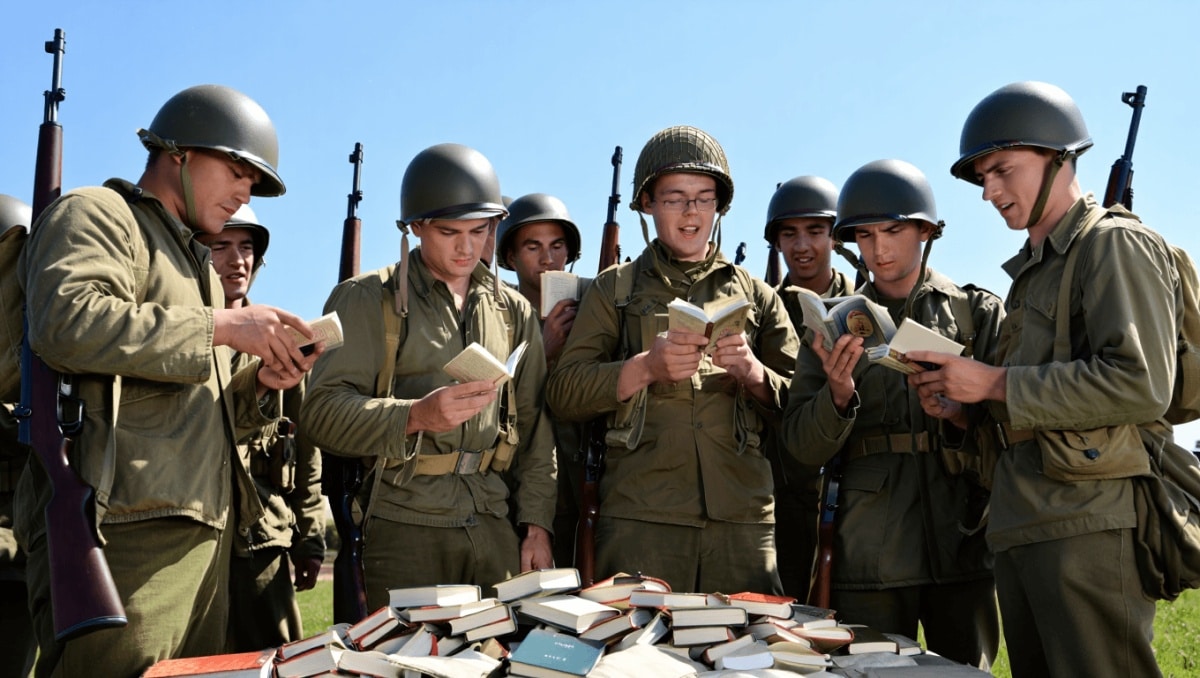
During World War II, a coalition of publishers, booksellers and librarians created a program to place books directly into the hands of soldiers. The editions were slim, light and designed to slip easily into a uniform pocket. They were printed on cheap pulp paper but meant to deliver a big cultural impact.
Nas slams music industry over disrespect: teases new music, vows to address it
1992 vocal performances: 3 jaw-dropping moments that still amaze
Design, scale and reach
- Printed in paperback format for portability.
- Launched in 1943 and continued until 1947.
- Nearly 123 million copies distributed to U.S. troops.
- Peak shipments coincided with major operations, including D-Day.
Many infantrymen carried these books into combat zones. On the eve of the Normandy landings, soldiers tucked these little volumes into their pockets. The portability and low cost made mass distribution feasible on an unprecedented scale.
The Council on Books in Wartime and the man behind the idea
A formal effort emerged under the banner of the Council on Books in Wartime. The council adopted a bold motto: “Books Are Weapons in the War of Ideas.” Their aim was cultural as well as practical. They wanted to boost morale while asserting the free exchange of ideas.
Ray Trautman’s role
Col. Ray Trautman is credited with pushing the project beyond distribution to production. Under his guidance, special editions were created specifically for service use. These editions later became widely known by their initials, ASEs—Armed Services Editions.
Historian Molly Guptill Manning explores Trautman’s initiative in depth in a recent book that traces the logistics and the personalities who made the program happen.
What servicemen actually read: genres, favorites and surprises
The committee that chose titles did not limit itself to dime-store fiction. Editors put a wide swath of literature into circulation. The selections reflected a belief that soldiers deserved access to the broader literary tradition.
- Popular escapist fare: westerns, adventures and romances.
- Mass-market hits that offered distraction and comfort.
- Classics and literary works: novels, poetry and essays.
- Biographies and historical works that provided context and inspiration.
Among the most carried titles was Betty Smith’s A Tree Grows in Brooklyn. Classics and complex works also made the cut. For example, Herman Melville’s Moby-Dick and collections of poems appeared alongside light fiction.
F. Scott Fitzgerald’s The Great Gatsby enjoyed a remarkable posthumous revival thanks in part to these editions. In 1945 alone, about 155,000 ASE copies of Gatsby reached servicemen, helping to cement the novel’s place in the American canon.
Controversy in print: bans, politics and the defense of free reading
The project was not free of conflict. The selection process reflected the biases of the era. Most authors featured were white. And political tensions sometimes reached into the distribution chain.
In the runup to the 1944 presidential election, some ASEs perceived as favorable to President Roosevelt were singled out for removal. That sparked widespread backlash. Newspapers and readers objected. Soldiers, too, noticed and protested. The public pressure was decisive; the effort to purge titles largely failed.
Voices within the ranks drew a direct line between such censorship and the tactics of authoritarian regimes that banned and burned books. The pushback helped preserve the principle of freedom to read among service members.
Where the collection lives now and books for deeper reading
The Library of Congress holds the only complete collection of these wartime paperbacks. Researchers and the curious can request access to the set and hold a physical piece of literary and military history. The sensation of handling one of these small books is frequently described as unexpectedly powerful.
Recommended reading about the program
- A Librarian’s War by Molly Guptill Manning — a detailed recent account of the people who organized and ran the program.
- When Books Went to War by the same author — an earlier exploration of the project’s origins and cultural effects.
- Books in Action — a concise Library of Congress volume offering images and context about the editions.
These titles offer the best pathways to understand how a compact paperback could become a cultural instrument during wartime and how the ASEs helped shape the reading habits of an entire generation of American servicemen.










