
Show summary Hide summary
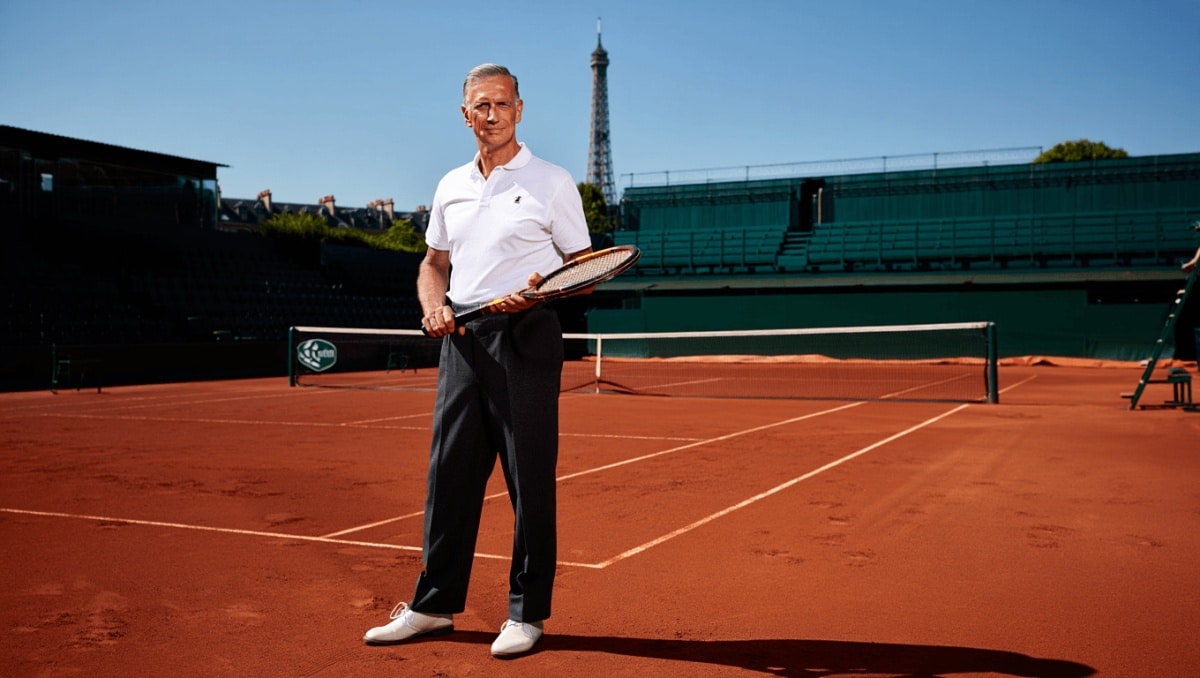
As Paris fills with the sound of rallies and the distinct red dust of clay, many English speakers call the event the French Open. Yet the tournament and its courts carry the name Roland Garros — a choice that surprises fans who assume the name must honor a tennis legend.
Why the Paris Grand Slam bears the Roland Garros name
When the new Paris stadium opened in 1928, organizers reached for a name with meaning. They picked a figure who had become a national symbol after World War I. Roland Garros was not a racquets player. He was an aviator whose fame and sacrifice resonated with the French public.
Nas slams music industry over disrespect: teases new music, vows to address it
1992 vocal performances: 3 jaw-dropping moments that still amaze
Emile Lesueur, who led the Stade Français club and once shared classes with Garros, proposed the dedication. The decision reflected postwar France’s need for heroes and memory, not a link to the sport itself.
The man: from Réunion to the skies of Europe
Roland Garros was born in 1888 on Réunion, a French island in the Indian Ocean. He left a conventional path — business school and a car business — for the nascent world of aviation.
How he became a pilot and a celebrity
- 1909: Attended a major air show in Champagne and promptly taught himself to fly.
- Early 1910s: Entered air races and show circuits, earning public attention across France.
- 1911–1912: Broke altitude records, climbing to nearly 13,000 feet, then past 19,000 feet.
- 1913: Completed the first solo flight across the Mediterranean, landing in Tunisia after almost eight hours aloft.
These feats made Garros a household name. Aviation then had the glamour of a dangerous sport, and successful pilots were treated as stars.
How Garros helped change aerial combat
When World War I began, airplanes served mainly to scout. Combat was improvisational at first. Pilots attempted to fire at each other despite propellers blocking a clear line of fire.
Garros connected with engineer Raymond Saulnier to address that problem. Rather than wait for a perfect solution, Garros and his team fitted metal wedges to his propeller blades. The wedges deflected bullets and let him use a forward-firing gun.
- April 1915: Using this setup, Garros downed his first German plane.
- Within weeks: He shot down two more enemy aircraft.
- Later in April: His plane suffered engine trouble; he crashed and was captured by German forces.
Prison weakened his health, but Garros later escaped in disguise. The Germans, meanwhile, advanced the technology by developing a synchronizer that allowed a machine gun to fire safely through propeller rotation. That innovation reshaped air warfare.
Key wartime milestones and final action
- Joined the army air branch as WWI began in 1914.
- Scored multiple aerial victories before capture in 1915.
- Spent roughly three years as a prisoner of war; eyesight and health declined.
- Escaped and returned to active duty in 1918.
- Killed in action in October 1918, shortly before his 30th birthday.
By the time of his death, Garros had four confirmed shoot-downs. He fell short of the five victories that defined a formal “ace” then, but the popular press had already adopted the term more broadly.
From national hero to sporting landmark: the name endures
France’s experience in World War I left deep scars. The country suffered massive losses on its own soil. In the decades that followed, commemorating fallen figures helped shape public memory.
Garros fit that role. His prewar exploits, wartime daring, and ultimate death combined to create a potent symbol. The stadium naming linked that image to an arena of perseverance and competition.
The tournament itself invokes a phrase attributed to Napoleon I that Garros reportedly painted on his propellers: “Victory belongs to the most persevering.” The motto resonated with organizers and later with champions who prevail on clay courts.
Fast facts fans often ask about Roland Garros
- Born: 1888 on Réunion island. The island’s main airport also bears his name.
- Not a tennis player: He had little connection to the sport.
- Altitude records: Climbed to nearly 13,000 ft in 1911 and surpassed 19,000 ft in 1912.
- Mediterranean crossing: First aviator to fly solo across the sea in 1913.
- Wartime innovation: Used propeller deflectors that led others to develop synchronizer technology.
- POW and escape: Captured after a crash in 1915; held for years before escaping.
- Died: October 1918, one month before the armistice.
- Stadium named: 1928, giving the French Open its enduring official name.










