
Show summary Hide summary
- Meeting the Kori bustard: a blunt, eloquent gesture
- Ray Nayler’s fiction: a steady curiosity about animal minds
- Palaces of the Crow: wartime story, avian intelligence
- Crows, cooperation, and a long intellectual lineage
- City edges, tide pools, and the opportunism of corvids
- From shelter work to lifelong attention: how observation shapes care
- Zoos as ethical classrooms and moral contradictions
- Philosophy and the limits of knowing another mind
- War, debris, and the economy of care between species
- How small gestures carry ethical weight
- Practical takeaways about animals, cities, and storytelling
- Attention as a kind of reciprocity
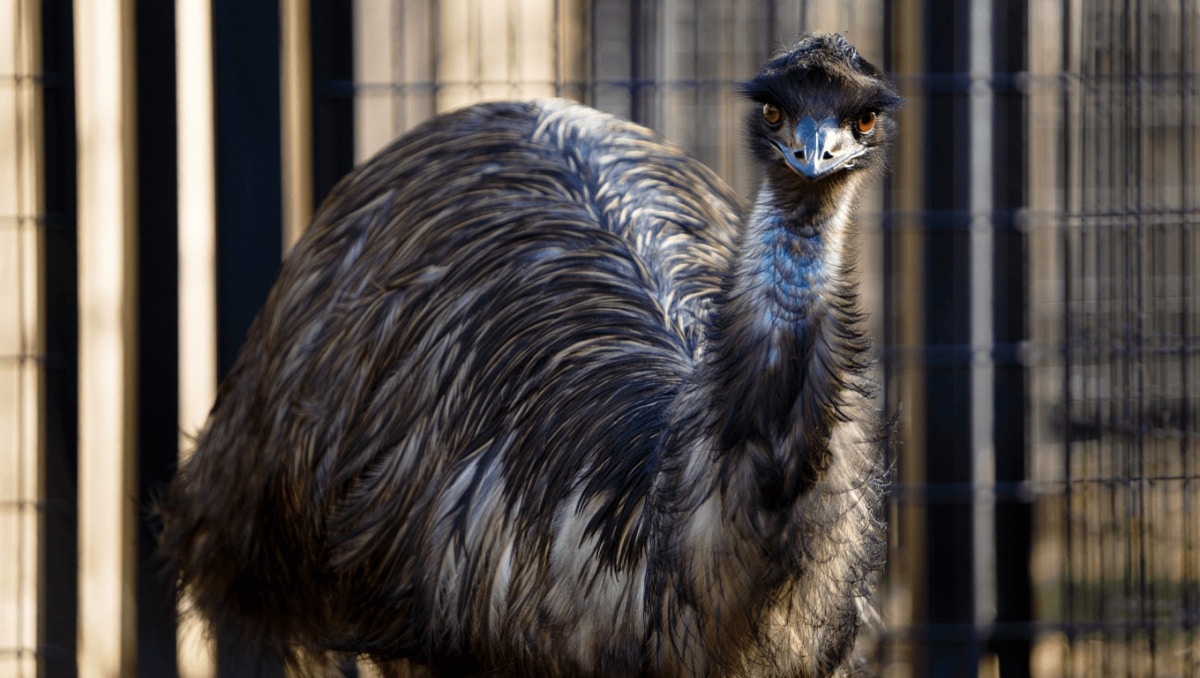
At the National Zoo I watched a massive bird stride toward the fence with the confidence of something that knew exactly what it was doing. It paused, fluffed a long neck, and then—without fanfare—performed a brief, precise display that felt like communication. That sudden, almost ceremonial motion lingered with me as I walked through the Bird House, thinking about how animals try to get our attention and how stories try to teach us to listen.
Meeting the Kori bustard: a blunt, eloquent gesture
Near the aviaries a large bustard separated from its group and moved deliberately toward visitors. Its plumage was a mix of gray, black, and white. Its beak was a sharp, practical tool. It did not call. It used posture and timing like a sentence.
Nas slams music industry over disrespect: teases new music, vows to address it
1992 vocal performances: 3 jaw-dropping moments that still amaze
The interaction had no obvious explanation. Still, it communicated. Writers and scientists often debate what counts as “language.” At that fence I understood something simpler: animals can make meaningful attempts to change our behavior. Sometimes the message is to back off. Sometimes it is just to be noticed.
Ray Nayler’s fiction: a steady curiosity about animal minds
Ray Nayler writes speculative novels that put nonhuman cognition at center stage. He asks what humans might learn by trying to understand creatures shaped by different bodies. His work blends biology, ethics, and narrative invention.
Key works and ideas
- The Mountain in the Sea — Researchers study octopuses that leave messages in ink. The book explores language that is not human.
- The Tusks of Extinction — An elephant scientist’s mind is transferred into a resurrected mammoth to help the herd adapt.
- Palaces of the Crow — A historical novel about teenagers in wartime Lithuania and a flock of unusually social crows.
Nayler’s fiction returns again and again to one core theme: the shape of a creature’s body and life determines how it communicates and how it forms society.
Palaces of the Crow: wartime story, avian intelligence
In his latest novel, Nayler moves into historical territory. The narrative follows a group of resourceful kids in the forest outside Vilnius during the German invasion of the Soviet Union. Crows become guardians, scouts, and partners in survival.
The book does not sanitize bird behavior. These crows are clever and dangerous in all the ways that crows are. They do not metamorphose into tiny humans. Nayler gives them agency rooted in corvid biology: precise observation, tool use, and a social intelligence tuned to human disturbance.
Palaces uses the birds’ distinctness as a moral lens. By insisting that animals matter because they remain other, the novel asks readers to value difference instead of erasing it with sentimental projection.
Crows, cooperation, and a long intellectual lineage
Nayler draws on actual animal research. He studies how corvids raise young, solve problems, and freeze into motion while they deliberate. Those traits inform how he imagines crows forming alliances with humans in his story.
He is influenced by thinkers who emphasize cooperation in nature. That lineage includes the Russian naturalist and political radical who argued that mutual aid, not ruthless rivalry, often drives survival.
Community and collaboration explain a lot of animal social life. Whether on a Siberian plain or in an urban alley, cooperation is a powerful evolutionary strategy.
Examples of interspecies negotiation
- When a hare locks eyes with a pursuing fox, both animals often abandon the chase. The exchange saves energy and reduces risk.
- Crows repeatedly exploit human disturbance: a crowd on a beach steps on snails; crows wait and feast afterward.
- In urban contexts, corvids join in loose, sometimes violent gatherings, but they also tend to one another in surprising ways.
City edges, tide pools, and the opportunism of corvids
Nayler has observed how crows patrol the margins of human life. He says the borderlands of our cities and coasts are full of openings for birds. Where we toss, tread, or leave debris, adaptable animals find niches.
One story he shared: after a class of children tromped through tide pools, crows descended to pick through the chaos. The birds had learned that human play often leaves edible opportunities behind.
Such scenes point to a simple fact: some species succeed by reading and exploiting human behavior. That success reveals a kind of intelligence calibrated to us.
From shelter work to lifelong attention: how observation shapes care
Nayler’s interest in animals began in adolescence. A stint volunteering at an animal shelter confronted him with abandonment and brutality. It also made individual animals visible in their personalities.
Later, at the zoo, he watched an owl swallow a mouse whole. That moment was gruesome and natural. It reminded him that animal lives are not moral fables but complex, real events that can still teach us compassion.
Watching animals closely forces a slower attention. That kind of attention makes it possible to care in ways that respect difference rather than erase it.
Zoos as ethical classrooms and moral contradictions
Zoos are ambivalent spaces. They can rescue species beyond help in the wild. They also confine animals inside areas far smaller than their natural ranges.
At the National Zoo a Kori bustard and an owl live in enclosures. Their presence allows long observation. That time can build empathy. But it is also a reminder of what we have taken from the world.
- Value: Zoos let people see species they otherwise never would.
- Problem: Captivity constrains full animal lifeways.
- Opportunity: Thoughtful viewing can foster care and attention.
The act of being still at an exhibit, Nayler suggests, is itself a practice worth learning from birds.
Philosophy and the limits of knowing another mind
Nayler often brings philosophical questions into the conversation. He references a famous essay asking what it is like to occupy a bat’s sensory world. He argues that the piece is not a blanket claim of impossibility.
Instead, Nayler says we can approach other minds. We will never perfectly inhabit another species’ perspective. But we can make partial, meaningful advances.
Partial understanding, plus effort, yields real empathy. Stories and careful observation are tools for that approach.
War, debris, and the economy of care between species
Palaces of the Crow sets human violence against avian resilience. The crows in Nayler’s novel scavenge and reuse the ruins of conflict. They also form protective bonds with children and return care in unexpected ways.
The novel refuses easy moralization. It depicts antisemitism, brutality, and the arbitrary cruelty of war. But it also imagines networks of mutual assistance forming in the shadows of that cruelty.
At times the book asks a simple ethical question: if we do not require a profound motive to be cruel, why demand a deeper reason to be kind?
How small gestures carry ethical weight
Throughout Nayler’s work and our walk through the Bird House, attention to small acts recurs. A bird’s posture. A child’s hesitation. A crow’s timed raid on a tide pool. These micro-events accumulate into a larger ethic.
Care often begins with modest, imperfect attempts to understand. Those attempts do not need to culminate in perfect knowledge to matter.
Practical takeaways about animals, cities, and storytelling
- Observe more slowly. Time at an exhibit or in the wild reveals complex behaviors.
- Respect difference. Animal minds are not human minds; that distinctness is valuable.
- Look for mutual benefit. Cooperation appears in surprising places, including competitive ones.
- Use stories to expand empathy. Fiction can model how to care for beings unlike ourselves.
Attention as a kind of reciprocity
Days after the zoo visit, Nayler wrote about a spoonbill whose face he remembered like an old, patient teacher. That memory captures the book’s tone. Animals teach us not by becoming us but by prompting us to become better observers.
In his fiction and in the zoo’s quiet cages, Nayler finds a basic moral: the readiness to pay attention is itself a form of generosity. It changes how we measure intelligence, value, and responsibility.










