
Show summary Hide summary
- How the series reinvents a familiar tale
- Cast and central performances that stand out
- Visuals, costumes and the decision to favor style
- Where the series thrives and where it falters
- Why the music should feel like a character
- Character study: rivalry, faith and personal demons
- Adaptation choices that reshape the original drama
- What viewers should expect when tuning in
Reimagining a beloved classic is risky, and Starz’s new Amadeus takes that risk head on. This lush, five-hour limited series recasts Peter Shaffer’s stage drama for television, leaning into spectacle and modern sensibilities while retelling the volatile relationship between Wolfgang Amadeus Mozart and Antonio Salieri.
How the series reinvents a familiar tale
Joe Barton adapts a story rooted in 19th- and 20th-century plays for a 21st-century audience. The show opens with a shocking confession and then rewinds to late-18th-century Vienna. From there, it tracks Salieri’s rise and decline and Mozart’s chaotic arrival in the capital.
Nas slams music industry over disrespect: teases new music, vows to address it
1992 vocal performances: 3 jaw-dropping moments that still amaze
- Source material: Inspired by Peter Shaffer and ultimately Alexander Pushkin.
- Format: A five-episode limited series, each hour expanding scenes that once fit a film.
- Tone: Contemporary energy mixed with baroque opulence.
Cast and central performances that stand out
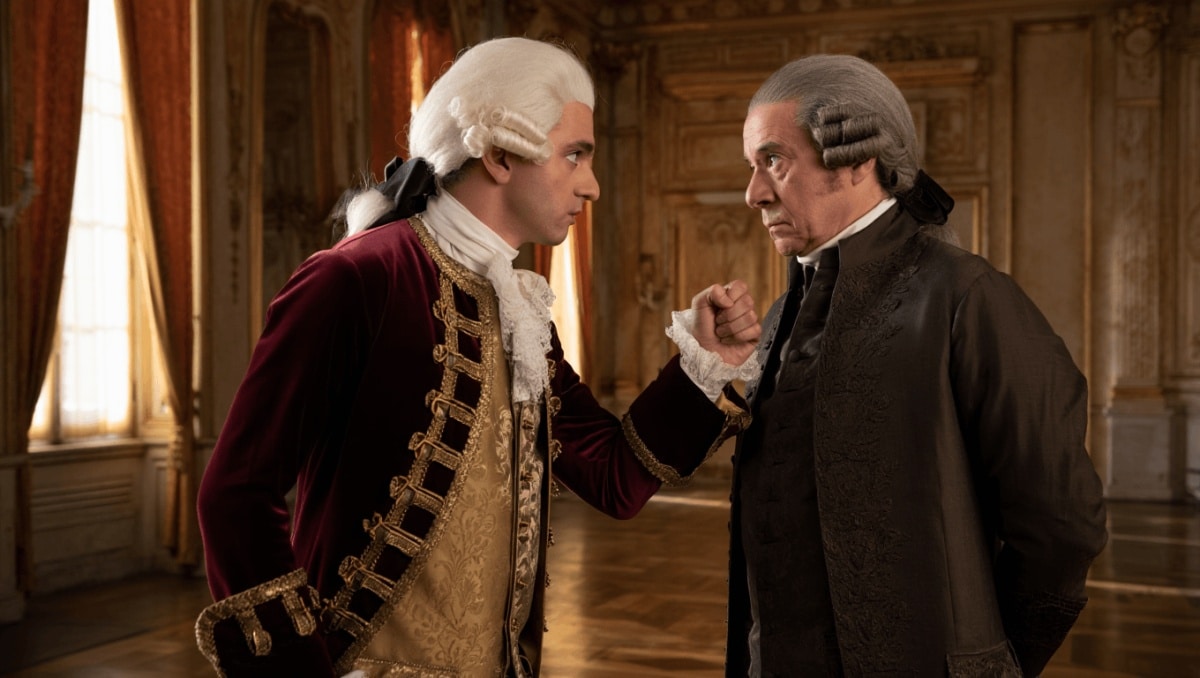
The series hinges on two lead performances. Paul Bettany plays Salieri with a slow-burning intensity. Will Sharpe embodies Mozart as mercurial, brash, and anarchic. Both actors give the material life, but in different ways.
- Paul Bettany (Antonio Salieri): Conveys a devotional fanaticism that borders on self-destruction.
- Will Sharpe (Wolfgang Mozart): Portrays a volatile genius who alternates between charm and chaos.
- Supporting cast: Includes a solid turn as Constanze and a measured Emperor Joseph.
Visuals, costumes and the decision to favor style
If you watch for set design and wardrobe, the show delivers. Lavish production values and intricate period costumes create an intoxicating world. The hair, the fabrics, the theater interiors — all shine.
Rather than strict historical realism, the series opts for heightened aesthetics. That choice places it alongside recent dramas that prioritize glamour over archival detail.
Where the series thrives and where it falters
Several elements work well, and others feel undernourished when stretched across five episodes.
Strengths
- Acting: Bettany’s magnetism and Sharpe’s unpredictability keep scenes compelling.
- Production: Cinematography and design bring Vienna’s world to vivid life.
- Dramatic tension: The personal animosity between composer and rival is palpable.
Weaknesses
- Pacing: The story dilutes as episodes progress, losing narrative momentum.
- Character focus: Salieri’s obsession becomes repetitive rather than revealing.
- Music placement: Mozart’s compositions often sit in the background instead of driving scenes.
Why the music should feel like a character
This is, at its core, a story about musical genius and envy. Yet the soundtrack rarely dominates the storytelling. Short bursts of operatic passages appear, but they mostly serve as ambience.
For a series about composers, the score’s limited prominence is surprising. When music takes center stage, the emotional stakes rise. Too often here, the compositions act as ornaments instead of narrative engines.
Character study: rivalry, faith and personal demons
Salieri’s crisis blends religious fervor with professional insecurity. Bettany’s interpretation paints a man haunted by devotion and jealousy. Contrasted with Mozart’s reckless brilliance, the pair create a volatile dynamic.
Mozart is less a sympathetic hero and more an intoxicating force. Sharpe emphasizes charm, vulgarity and flightiness, making him magnetic but occasionally one-note. The series tries to probe why genius bruises ordinary ambition, but it doesn’t fully mine the psychological depths.
Adaptation choices that reshape the original drama
Expanding the material aims to reveal unseen corners of both men’s lives. Some scenes add texture; others repeat themes already explored. The choice to lean into spectacle shifts focus away from the intimate moral questions at the heart of the original play and film.
- Longer runtime allows more subplots.
- Modern narrative beats change character emphasis.
- Opulent visuals sometimes overshadow internal conflict.
What viewers should expect when tuning in
If you come for star turns and sumptuous visuals, the series rewards. If you arrive seeking a taut exploration of artistic rivalry, you may find the storytelling sprawling.
Amadeus premieres May 8 on Starz. New episodes air weekly on Fridays. The show is best appreciated as a stylized retelling rather than a strict historical or musical study.










