
Show summary Hide summary
- Big-ticket projects transforming the capital’s skyline and parks
- Reflecting Pool: an aesthetic makeover with practical worries
- Public golf courses: takeover, lawsuits and turf controversy
- National Garden of American Heroes: statues, deadlines and where to place them
- New and reinstated statues stirring debates over memory and monuments
- Triumphal arch: a new giant on the Mall horizon
- White House East Wing and a new ballroom: scope and secrecy
- Kennedy Center renovation: money, closures and artistic backlash
- Eisenhower Executive Office Building: color fight over historic stone
- Lafayette Square and public parks: closures, security and design choices
- Federal architecture policy: reverting to classical styles
- Beautification agenda and funding: a $10 billion vision
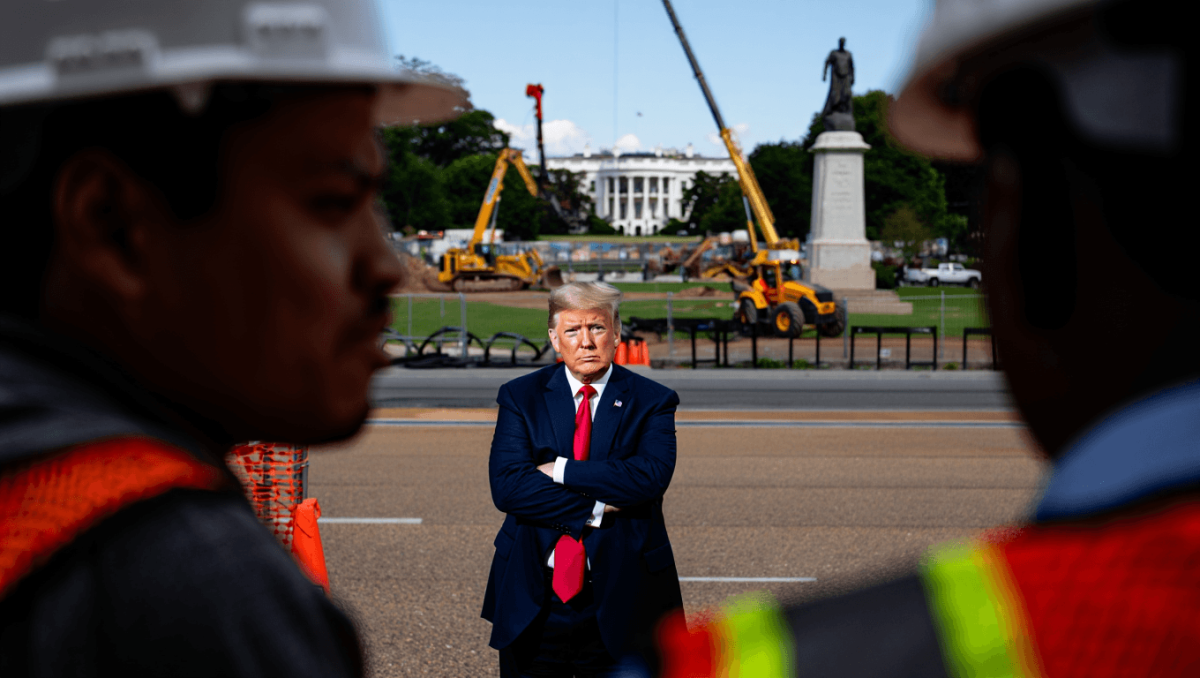
President Trump has launched a sweeping effort to alter Washington, D.C.’s public face. From painted pools and new statues to towering arches and a rebuilt White House wing, the changes reach from ceremonial lawns to the National Mall. The moves are reshaping the city’s look and stirring fights over history, design and who decides the capital’s future.
Big-ticket projects transforming the capital’s skyline and parks
Several high-profile initiatives are underway or proposed across federal land in D.C. They include repairs, dramatic redesigns and entirely new monuments. Many are tied to the nation’s 250th anniversary plans. Each carries political, legal and preservation questions.
Nas slams music industry over disrespect: teases new music, vows to address it
1992 vocal performances: 3 jaw-dropping moments that still amaze
- Reflecting Pool refresh — A resurfacing and recoloring effort on the Lincoln Memorial pool, aimed at changing its bottom to a deep blue.
- Golf course renovations — Plans to take over and upgrade three municipal courses, especially East Potomac Golf Links.
- National Garden of American Heroes — A proposed sculpture garden honoring a long list of historical figures.
- New statues — Reinstatements and additions to public sculpture displays, including contested figures.
- Triumphal arch — A proposed 250-foot commemorative arch near the Potomac.
- White House East Wing ballroom — Demolition and reconstruction to create a large new event space above significant underground work.
- Kennedy Center overhaul — A multi-year closure and renovation supported by congressional funds.
- Eisenhower Executive Office Building changes — A proposal to alter the historic facade color and finish.
- Lafayette Square upgrades — Turf, irrigation and hardscape work that has closed parts of the park.
Reflecting Pool: an aesthetic makeover with practical worries
The long pool near the Lincoln Memorial will be relaidd and tinted a darker blue. Officials say the work is meant to refresh a familiar landmark.
Past renovations addressed leaks and depth. Still, maintenance has been costly because of plumbing and refills. The Interior Department expects the latest work to finish soon, but timelines and final costs remain under scrutiny.
Critics warn the changes feel like a private pool resurfacing rather than a public restoration. Architects say treating national parkland like a country-club amenity raises cultural concerns.
Public golf courses: takeover, lawsuits and turf controversy
The administration is pushing to assume control of three municipal golf courses. East Potomac Park’s course has drawn the most attention.
Officials talk about turning courses into championship-level facilities. Local golfers and the former nonprofit operator, National Links Trust, dispute that narrative. The government ended a 50-year lease and cited unmet obligations.
- National Links Trust says it will keep the courses open while legal fights continue.
- Reports surfaced of fill dirt dumped near fairways and potential tree-clearing for landscaping.
- Legal groups filed emergency motions to halt major changes and to stop further fill being placed in parkland.
A federal judge has already limited tree removal without court approval. Access, preservation and public use are at the center of the dispute.
National Garden of American Heroes: statues, deadlines and where to place them
First proposed in 2020, the sculpture garden has reappeared with renewed urgency. An early list of nearly 250 names spanned athletes, artists, politicians and scientists.
The revived project removes a fixed deadline tied to the semiquincentennial and calls for action “as expeditiously as possible.” Documents suggest West Potomac Park as the likely site, adjacent to golf course plans.
Funding and logistics are still unclear. The National Endowment for the Humanities set up a grant program for sculptors, asking for timely deliveries that many artists warn are unrealistic.
New and reinstated statues stirring debates over memory and monuments
The administration has moved statues into public view that many find contentious. Some commemorations honor figures whose records include slavery or other painful histories.
Examples cited by local historians and critics include a reinstalled Confederate monument and the placement of a Columbus statue near executive buildings. Another statue of an Independence-era statesman, once removed from public display for problematic ties to slavery, has temporarily reappeared.
Opponents argue these actions rewrite or sanitize difficult parts of history. Supporters call them restoration of heritage.
Triumphal arch: a new giant on the Mall horizon
Renderings for a proposed 250-foot arch recall European monuments. It would stand across the Potomac and dwarf many local structures.
Federal advisory bodies with administration allies have approved aspects of the plan. Yet thousands of public comments opposed it, and veterans’ groups filed a lawsuit saying the arch disrespects nearby Arlington National Cemetery.
Engineers and preservationists warn about the complexity of foundations for such a heavy structure. Cost estimates and a construction calendar have not been released.
White House East Wing and a new ballroom: scope and secrecy
The East Wing was cleared to make room for a 90,000-square-foot ballroom. The administration says the expanded space will host large state events and includes security-related underground work.
Conservationists sued to stop construction, citing historic preservation laws. Courts temporarily halted progress unless Congress authorized it. The administration points to national security exceptions to continue critical infrastructure.
The National Capitol Planning Commission moved the process forward after receiving tens of thousands of comments, most opposed. Preservationists warn that the scale of the build will permanently alter the White House complex.
Kennedy Center renovation: money, closures and artistic backlash
After replacing board members, the president took a leadership role over the Kennedy Center. He secured federal funding to address long-delayed repairs.
The center planned a two-year closure for what officials call a comprehensive revitalization. Some artists canceled shows in protest of the new leadership.
Architecture and cultural groups sued to force congressional review and protect historic fabric. Supporters insist major infrastructure repairs are necessary to keep the venue safe and usable.
Eisenhower Executive Office Building: color fight over historic stone
The administration proposed painting the grey granite of the EEOB white to match the White House. It called the change a maintenance measure and a visual alignment.
Preservation experts strongly disagree. They say applying masonry paint or similar coatings could trap moisture and accelerate decay. Lawsuits have been filed to block the plan.
Historic trusts argue that altering original materials would damage a National Historic Landmark. Officials describe the chosen coating as a durable “magic” treatment, a term many conservators dispute.
Lafayette Square and public parks: closures, security and design choices
Parts of Lafayette Square and other public areas have been fenced and worked on under the banner of semiquincentennial rehabilitation.
Projects include irrigation upgrades, fountain repairs, tree replacement and new walkways. The National Park Service cites security and protection of equipment as reasons for closures.
- Some closures are billed as temporary.
- Residents and activists say long shutdowns limit access to protest space and tourist experience.
- Officials mention a desire for more durable materials, such as granite in place of brick paths.
Federal architecture policy: reverting to classical styles
The administration has issued memos and orders promoting classical and neoclassical architecture for federal buildings. Styles named as preferred include Georgian, Greek Revival, Beaux-Arts and Art Deco.
Planners and architects note this is a return to earlier preferences. Critics fear the mandate politicizes design and may stigmatize modernist work.
Experts caution that such directives are temporary and reversible by future presidents. Yet the immediate effect is visible in project proposals and design submissions.
Beautification agenda and funding: a $10 billion vision
A March order created a task force to address safety, monument protection and beautification in D.C. That plan underpins increased law enforcement, park projects and memorial restorations.
The administration’s proposed budget includes a $10 billion program for capital stewardship. Some projects have already closed green spaces for repairs, drawing mixed reactions from communities.
Those who welcome upgrades argue they fix neglect. Others say the scheduling and scope exclude public voice and limit access during peak months.
How residents and experts are responding
Architects, preservation groups and local leaders have filed lawsuits and submitted thousands of public comments. Some legal rulings have slowed or paused work.
Neil Flanagan, a D.C.-based architect and public historian, says the current wave of projects emphasizes spectacle over programmatic investment. He warns that cutting science and future-focused spending while building grand monuments sends a particular message about priorities.
Legal battles, congressional oversight and public opinion will shape what is built and what ultimately endures.










