
Show summary Hide summary
- How a Tribute Project Became Temple of the Dog
- Recording in an Atmosphere Free From Label Pressure
- Standout Songs That Defined a Moment
- Why “Hunger Strike” Became a Breakthrough Moment
- How the Album Shaped Careers and the Seattle Scene
- Production Choices That Kept the Record Honest
- The Legacy: Why the Album Still Resonates
- Anniversaries, Reissues, and Live Reunions
- Searching for Meaning in a Pressure-Free Creation
Thirty-five years ago a quiet, unhurried recording session in Seattle produced an album that would become a touchstone of the grunge era. Born out of grief and friendship, the project brought together musicians who had nothing to prove to executives. The result was raw, soulful, and free from the usual industry demands — a reminder that great art can grow when artists set their own rules.
How a Tribute Project Became Temple of the Dog
The group formed in late 1990 as a response to the death of Andrew Wood, the charismatic frontman of Mother Love Bone. Chris Cornell, lead singer of Soundgarden and Wood’s roommate, wanted to honor his friend. He wrote songs as a cathartic exercise and invited fellow Seattle musicians to play on the tracks.
- Chris Cornell — vocals and guitar, the project’s emotional center.
- Stone Gossard — rhythm guitar, soon to be a founding member of Pearl Jam.
- Jeff Ament — bass, another future Pearl Jam stalwart.
- Mike McCready — lead guitar, whose solos shaped the album’s sound.
- Matt Cameron — drums, double duty with Soundgarden and later Pearl Jam.
- Eddie Vedder — guest vocals on key tracks, before Pearl Jam’s debut.
Nas slams music industry over disrespect: teases new music, vows to address it
1992 vocal performances: 3 jaw-dropping moments that still amaze
Recording in an Atmosphere Free From Label Pressure
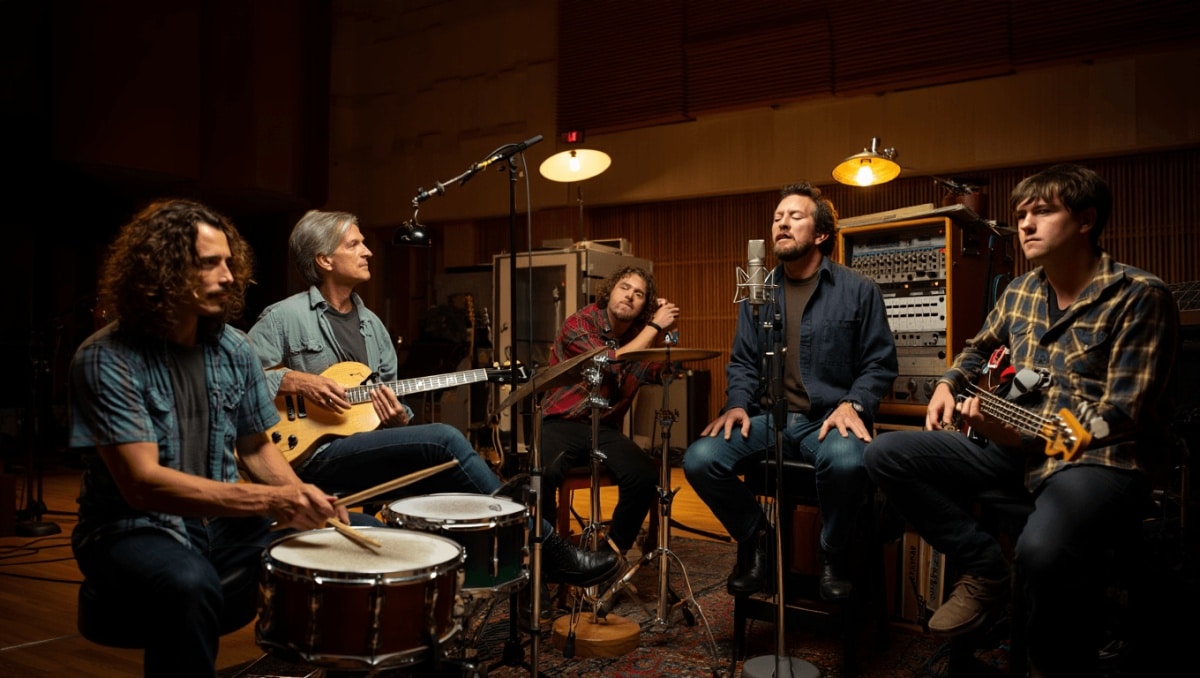
The sessions took place with minimal oversight from record companies. There was no marketing plan. No singles were forced. Musicians arrived as friends, not as assets. This environment let them take risks.
Engineers recall long, late-night takes where the band chased emotion more than perfection. Songs evolved naturally. Producers encouraged honesty over polish. That freedom allowed vulnerabilities to surface in the vocals and the arrangements.
Standout Songs That Defined a Moment
The album contains a handful of tracks that still resonate decades later. Each song blends sorrow with a sense of resilience.
- “Say Hello 2 Heaven” — Cornell’s direct elegy to Andrew Wood.
- “Hunger Strike” — a duet that introduced many listeners to Eddie Vedder.
- “Pushin Forward Back” — driving rhythm and communal vocals.
- “Seven O’Clock” — understated and melodic, showcasing the band’s restraint.
Why “Hunger Strike” Became a Breakthrough Moment
When Eddie Vedder sang alongside Chris Cornell, something electric occurred. Their voices contrasted yet complemented each other. Radio stations picked up the track. Audiences who would later follow Pearl Jam and Soundgarden heard it and took notice.
“Hunger Strike” served as both a highlight of the album and a bridge between two rising bands. It showed how collaboration can multiply impact.
How the Album Shaped Careers and the Seattle Scene
Temple of the Dog arrived before Pearl Jam and at a key point for Soundgarden. The project helped bind a scene already rich in camaraderie. Members returned to their bands with deeper creative connections.
The album’s reputation grew steadily. Initially modest in sales, it later found wider success as Pearl Jam and Soundgarden rose. The record became a historical marker, signaling the collaborative spirit behind many Seattle acts.
Production Choices That Kept the Record Honest
Producers captured live takes and avoided excessive studio trickery. The guitars are organic, the drums are upfront, and the vocal takes preserve ragged edges.
- Minimal overdubs, to retain authenticity.
- Room mics used to add warmth and presence.
- Vocals mixed for emotional clarity, not clinical perfection.
The Legacy: Why the Album Still Resonates
Decades later, the record is more than nostalgia. It stands as evidence that great music can be made without heavy-handed corporate influence. Fans revisit the songs for honesty and craftsmanship.
Key reasons for its lasting power:
- Emotional honesty: grief and friendship drive the songwriting.
- Timeless performances: vocal chemistry and memorable hooks.
- Historical context: it sits at the crossroads of two influential bands.
Anniversaries, Reissues, and Live Reunions
Milestones have renewed interest in the album. Reissues have included demos and remastered mixes. Onstage reunions brought the songs back to life for new audiences and long-time fans.
What listeners discover now
- Fresh nuance in the instrumentation.
- New appreciation for the songwriting craft.
- How collaboration can alter music history.
Searching for Meaning in a Pressure-Free Creation
The album’s story continues to inspire artists who question the role of labels and charts. It shows that when musicians prioritize connection over commerce, they can produce work that lasts.
Temple of the Dog remains a reminder: sometimes the absence of outside pressure is the most fertile condition for art.










