
Show summary Hide summary
- How the song came to be: AI tools, prompts, and intent
- What changes when a real voice sings robotic lines
- Listeners react: laughter, discomfort, and fascination
- Why the mismatch between AI text and human delivery matters
- Notable moments and standout lines
- What this experiment suggests about the future of AI music
- Ethical and legal questions around AI-assisted songs
- How creators can tame the awkwardness
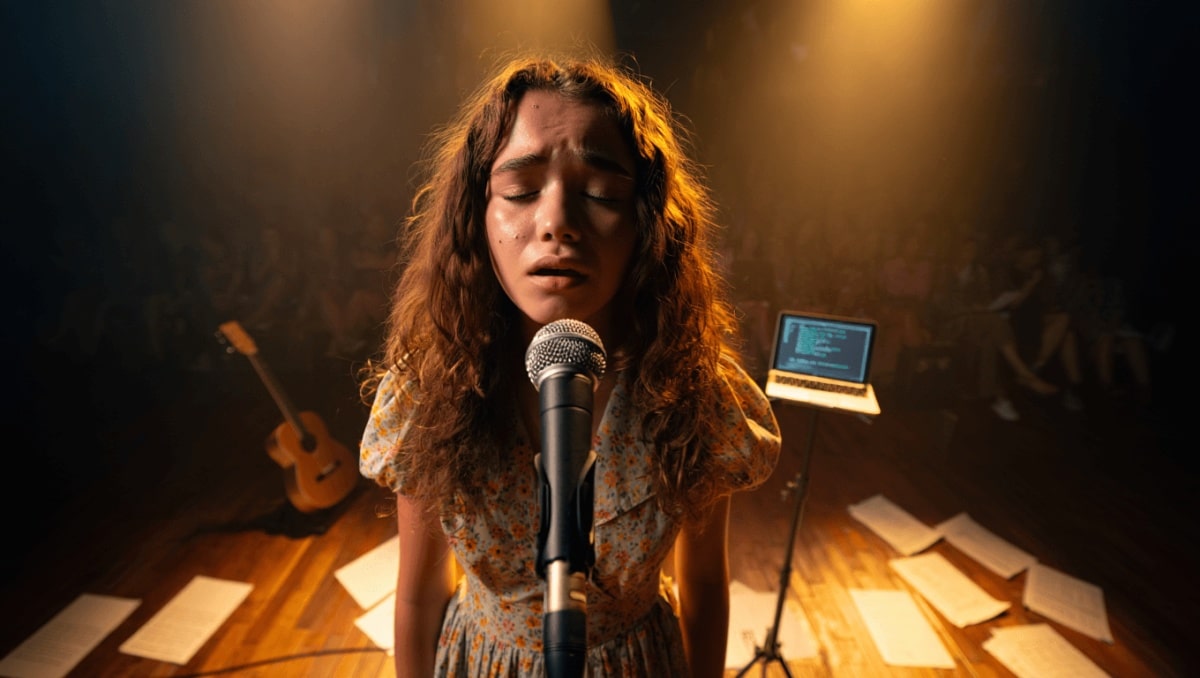
When a songwriter handed over a quirky, AI-generated love song to a live vocalist, the result was not a polished pop hit. It was a strangely moving and often awkward piece that exposed the limits of machine-made romance. The human touch amplified every odd line, and listeners found themselves laughing, cringing, and oddly invested all at once.
How the song came to be: AI tools, prompts, and intent
The track began life inside a generation model trained on thousands of songs. Prompts guided the mood, tempo, and lyrical themes. The creator aimed for a tender love song.
Nas slams music industry over disrespect: teases new music, vows to address it
1992 vocal performances: 3 jaw-dropping moments that still amaze
- The AI suggested metaphors that felt slightly off-kilter.
- Melodies looped in ways human writers usually avoid.
- Rhythmic patterns alternated between catchy and mechanical.
These elements combined into a blueprint. Then a performer stepped in. The goal was simple: sing it live and let listeners judge.
What changes when a real voice sings robotic lines
A human singer brought warmth and intention to lines the AI spit out. That warmth often clashed with the lyrics’ odd logic. The contrast created emotional dissonance.
- Human phrasing softened abrupt AI breaks.
- Breath and timing introduced natural, unpredictable pauses.
- Emotional inflection added meaning where the AI provided none.
At times the voice rescued the song. At others, it made the strangeness louder. The result felt both more humane and more uncanny.
Listeners react: laughter, discomfort, and fascination
Feedback came fast. Comments varied from amused to disturbed. Many listeners labeled the song “cringey.” They also described an odd fascination they couldn’t quite explain.
- Some applauded the novelty and candor.
- Others recoiled at lines that read like internet poetry gone wrong.
- A portion of the audience praised the performance as a satire of love songs.
Social shares and reaction videos amplified the effect. The human performance made the oddities more shareable. Viewers seemed compelled to watch and comment.
Why the mismatch between AI text and human delivery matters
The encounter highlights a core problem in AI art: context. Machines stitch patterns together but don’t always grasp subtext. A singer interprets that subtext.
Interpretation versus intent
When humans interpret machine output, they import goals and emotions the AI never intended. That gap can create humor or discomfort.
The emotional magnifier
A single vocal inflection can reframe a bizarre line as tender or mocking. The human voice acts as a magnifier for the AI’s odd choices.
Notable moments and standout lines
Certain phrases stuck in listeners’ minds. They were memorable for their unintended imagery.
- Lines that mixed metaphors in surreal ways.
- Repetitions that looped without narrative payoff.
- Sudden shifts from romantic to clinical diction.
These juxtapositions made the song feel alive in a chaotic, unpredictable way.
What this experiment suggests about the future of AI music
Mixing human performance with AI composition shows both promise and pitfalls. It points toward hybrid creative workflows.
- AI can produce raw material fast.
- Humans refine intent, tone, and coherence.
- Together they may invent new genres, and strange new hits.
Yet the experiment also raises questions about authenticity and taste.
Ethical and legal questions around AI-assisted songs
Beyond aesthetics are practical concerns. Who owns a melody the machine suggested?
- Copyright laws lag behind technology.
- Performers may be credited for interpretation, not composition.
- Platforms face pressure to moderate deepfake vocals and cloned styles.
Industry standards are still being negotiated as creators test new boundaries.
How creators can tame the awkwardness
Several strategies can reduce the cringe while keeping the novelty.
- Curate AI outputs carefully before performance.
- Rework odd metaphors into coherent imagery.
- Use the human voice to add irony or sincerity intentionally.
Some artists embrace the strangeness as a defining trait. Others edit until the AI’s fingerprints become invisible.










