
Show summary Hide summary
- From stage to silence, then back to sound with neural tech
- How the system turns thought into musical action
- What the musician can do now
- Design choices that favor live play
- Early hurdles and how researchers overcame them
- Real-world reactions and community response
- Broader implications for brain-computer interfaces and music
- Technical and ethical considerations shaping future releases
- What’s next for mind-controlled music
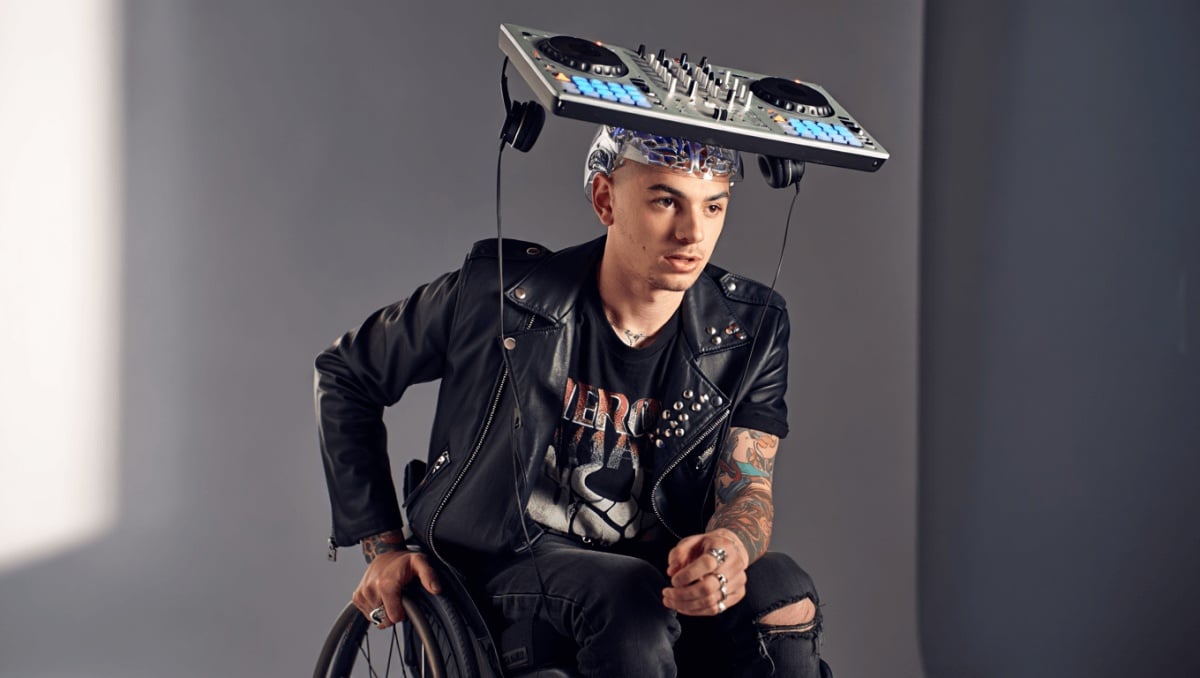
A former punk musician confined to a wheelchair has begun making music again thanks to an experimental brain implant. The device translates his neural signals into musical commands, letting him mix tracks, trigger samples, and shape sounds with only thought. What started as a research trial is becoming a striking demonstration of how brain-computer interfaces can restore creative agency.
From stage to silence, then back to sound with neural tech
Once known for spiky hair and raucous live sets, the musician lost motor control after a spinal cord injury. He could no longer play instruments or operate DJ gear. After months of rehabilitation, he enrolled in a study testing neural implants for creative expression.
Nas slams music industry over disrespect: teases new music, vows to address it
1992 vocal performances: 3 jaw-dropping moments that still amaze
The implant involves tiny electrodes placed in areas of the brain that encode intention and movement. Those signals are captured, processed, and mapped to musical functions. Instead of turning a knob or pushing a fader, the artist thinks about the action. The system translates that thought into sound.
How the system turns thought into musical action
Recording the brain’s electrical patterns
Surgically implanted sensors pick up electrical activity from the cortex. The signals are noisy and complex. Specialized algorithms clean and decode them in real time.
Machine learning maps intention to sound
Researchers train models to associate neural patterns with specific musical gestures. Over sessions, the system learns the user’s unique brain signatures. That training shortens command latency and improves accuracy.
- Think “increase volume” and a virtual fader rises.
- Imagine “scratch” and a sample responds.
- Visualize a rhythm change and the beat shifts.
What the musician can do now
He can cue tracks, apply effects, and layer loops without moving. The interface supports live performance and studio composition. Sessions blend improvisation with precise control.
He envisions a full DJ rig controlled directly by his thoughts. For him, the tech is not just adaptive gear. It is a new instrument.
Design choices that favor live play
- Low latency processing to preserve rhythmic feel.
- Customizable mapping so commands fit the artist’s style.
- Redundancy to avoid mistakes during performance.
Early hurdles and how researchers overcame them
Signal drift, muscle artifacts, and fatigue complicate decoding. Teams use continuous recalibration and adaptive filters. They also schedule short sessions to reduce cognitive load.
Another challenge is safety. The implant procedure carries surgical risk. The study follows strict protocols and long-term monitoring.
Real-world reactions and community response
Fans and fellow musicians have greeted the project with curiosity and support. The artist’s return to music resonates with advocates for disability access and assistive technology.
- Musicians praise the creative possibilities.
- Disability groups highlight the need for affordable solutions.
- Ethicists urge robust consent and oversight.
Broader implications for brain-computer interfaces and music
This experiment points to new forms of expression. Artists with limited mobility could compose, perform, and collaborate in novel ways. Mind-driven instruments may expand genres and performance practices.
Developers are exploring hybrid setups. These combine voice, eye tracking, and neural control for richer interaction. That approach reduces reliance on any single input.
Technical and ethical considerations shaping future releases
- Data privacy: neural data is deeply personal.
- Regulation: medical and entertainment uses blur lines.
- Accessibility: costs must not lock out users who would benefit.
Researchers emphasize informed consent. They also advocate open standards to prevent vendor lock-in.
What’s next for mind-controlled music
Teams plan to expand trials and refine algorithms. Developers aim to increase expressivity and reduce calibration time. Commercial products remain years away, but prototypes are already inspiring new collaborations.
For the musician at the center of the trial, each session is proof of concept. He is composing again, experimenting with sounds he had thought lost. The journey is technical and personal, blending neuroscience, music, and resilience.










