
Show summary Hide summary
- How behind-the-scenes writing shaped Rick Ross’s early craft
- Networking in studios: the chance encounter with Kanye West
- What the Kanye interaction meant for Ross’s career
- Ghostwriting as a practical education in rap
- Balancing behind-the-scenes work with building a public persona
- Lessons for emerging artists from Rick Ross’s early strategy
Rick Ross says his path to rap stardom began in unexpected ways. Early in his career he took on behind-the-scenes writing work, a move that sharpened his craft and opened doors. That period also led to a meeting with Kanye West that left a lasting mark on his trajectory.
How behind-the-scenes writing shaped Rick Ross’s early craft
Before he became a household name, Ross worked on songs without credit. Ghostwriting pushed him to study flows and hooks. He learned to write for different voices.
Nas slams music industry over disrespect: teases new music, vows to address it
1992 vocal performances: 3 jaw-dropping moments that still amaze
- He practiced concise storytelling in tight song structures.
- He absorbed production habits from established artists.
- He built a network through studio sessions and shared projects.
Working in the shadows helped him refine his sound. It also taught him how to adapt lyrics to varied beats and personas.
Networking in studios: the chance encounter with Kanye West
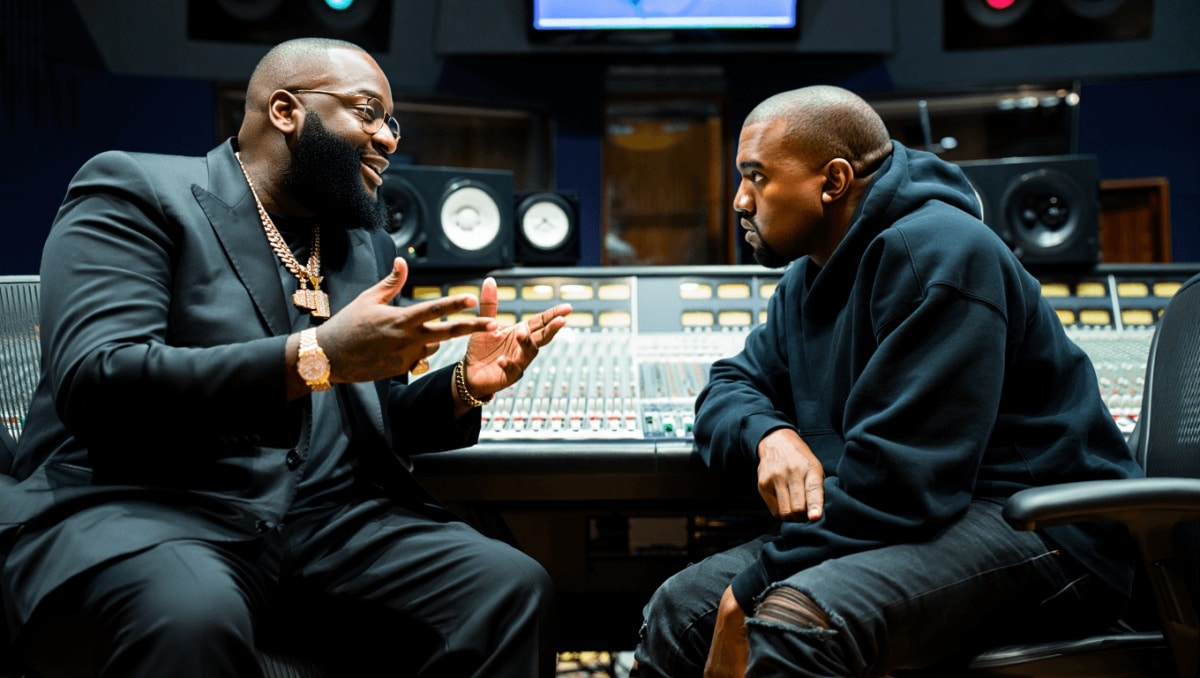
Ross credits studio work for bringing him into contact with major figures. One such encounter was with Kanye West. Meeting Kanye came through a series of studio sessions and mutual collaborators.
The two connected at a time when Kanye was shaping his own sound. That meeting gave Ross firsthand exposure to a forward-thinking creative process.
What the Kanye interaction meant for Ross’s career
The meeting did more than inspire. It validated Ross’s ambitions.
- Access to high-level producers who valued polished writing.
- Insight into arranging songs for mass appeal.
- Real-world lessons on branding and artistic identity.
For Ross the brief interaction became a reference point. It proved he could operate in elite creative circles.
Ghostwriting as a practical education in rap
Ross frames ghostwriting as a hands-on masterclass. Writing for others forced him to prioritize clarity and marketable hooks.
- Study other artists’ cadences.
- Match lyrical content to beat mood.
- Polish phrases to land on the first listen.
This routine of disciplined writing translated into stronger solo material once he stepped into the spotlight.
Balancing behind-the-scenes work with building a public persona
Ghostwriting can be invisible labor. Ross learned to leverage it without losing his voice. He transitioned from anonymous sessions to tracks that carried his identity.
Strategic moves included:
- Choosing beats that matched his brand.
- Using studio credits to meet influencers.
- Keeping some distinctive lyrical motifs for his own songs.
Lessons for emerging artists from Rick Ross’s early strategy
Young rappers can take cues from Ross’s approach. Starting with collaborative or uncredited work can be practical and instructive.
- Ghostwriting builds technical skill fast.
- Studio time equals networking time.
- Learning to write for others sharpens personal style.
Skill, timing, and relationships together accelerate a music career more than hype alone.
How public perception shifted as Ross moved forward
As Ross released his own records, listeners began to link the craftsmanship to his earlier labors. What started as behind-the-scenes work became a foundation for credibility.
Collaborations and high-profile meetings, like the one with Kanye West, signaled that he belonged among top-tier artists.










