
Show summary Hide summary
- How music drove the film’s emotional map
- Collaboration between Damon and Affleck: an old friendship, new methods
- Ben Affleck’s mother and a family influence on tone
- Soundtrack strategy: blends, beats, and silence
- Director and composer dynamics
- Scenes reshaped by single songs
- How music informed character choices
- Audience expectations and marketing
- Technical choices: mixing, mastering, and on-set playback
- Moments the actors remember most
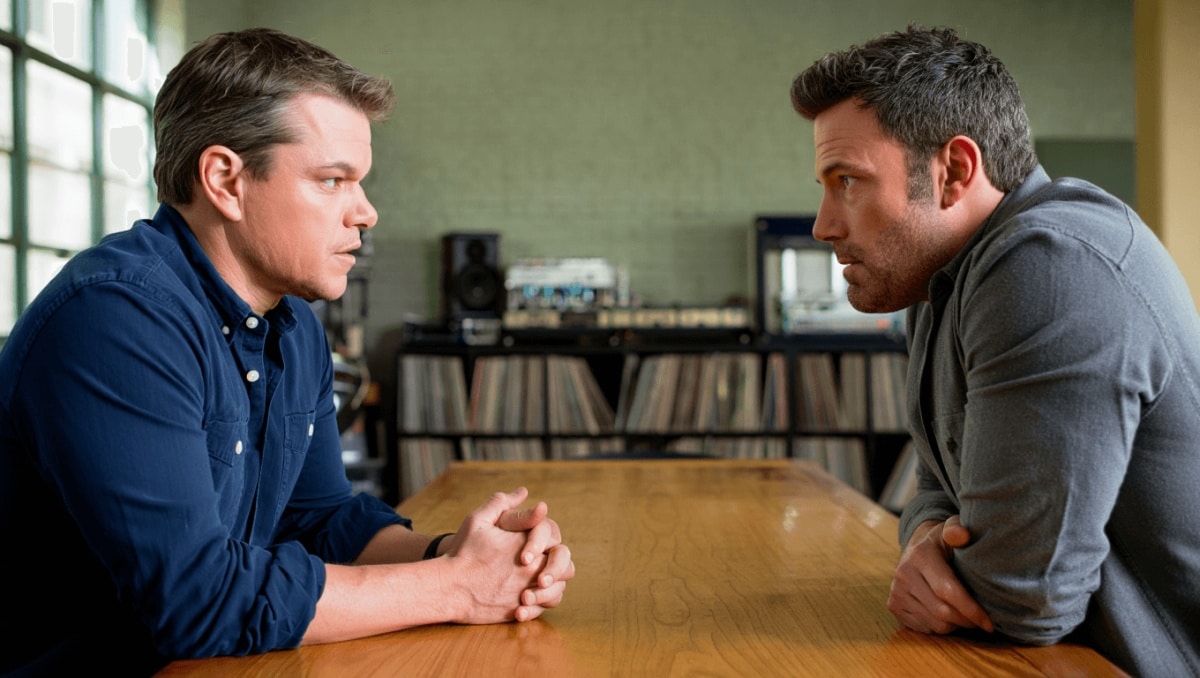
When Matt Damon and Ben Affleck recently sat down to talk about their new film, The Rip, the conversation kept circling back to one surprising collaborator: music. Between scoring sessions and family stories, the pair revealed how songs shaped scenes, guided performances, and even traced emotional beats that rewrote parts of the script. Their chat made clear that the movie’s pulse owes as much to melody as to dialogue.
How music drove the film’s emotional map
Damon and Affleck described music as the film’s invisible editor. Rather than adding tracks after scenes were cut, they let songs set the tone early. That approach changed scenes, sometimes drastically. A scene meant to be tense would become melancholic with the right tune. A montage found its rhythm because a beat fit the actors’ steps.
Nas slams music industry over disrespect: teases new music, vows to address it
1992 vocal performances: 3 jaw-dropping moments that still amaze
- Early scoring: Songs were chosen during rehearsals, not post-production.
- Live feedback: Actors listened on set to shape their performances.
- Scene rewrites: Lyrics and tempo prompted last-minute script changes.
Collaboration between Damon and Affleck: an old friendship, new methods
Their long creative partnership allowed them to experiment. They traded notes on which tracks felt authentic for a character. The give-and-take was practical. One of them would propose a piece. The other would say whether it landed emotionally. Sometimes they disagreed, and that tension improved the result.
Practical steps they used
- Curating playlists for each character.
- Playing music during table reads.
- Inviting the composer early into discussions.
Ben Affleck’s mother and a family influence on tone
Affleck opened up about how his mother’s taste shaped part of the movie’s atmosphere. She had a particular song collection that influenced several choices. Her memory and references became touchstones for scenes about home and regret. Affleck said these personal connections kept the film grounded.
- Personal archives: Old records and family playlists informed mood choices.
- Emotional authenticity: A mother’s memory gave scenes a lived-in feel.
- Behind-the-scenes guidance: Family anecdotes inspired line rewrites.
Soundtrack strategy: blends, beats, and silence
The Rip’s soundtrack blends vintage tracks with modern scoring. The team deliberately left room for silence. At times, a quiet interlude did more than a song ever could. They spoke about balance: too much music can overwhelm a scene. Too little can make it cold. They aimed for the sweet spot.
Elements of the soundtrack
- Period songs to anchor time and place.
- Original score pieces that mirror character arcs.
- Ambient sounds used as musical elements.
Director and composer dynamics
The director welcomed input from both actors and the composer. They treated music as part of the script’s architecture. Ideas passed back and forth in sketches, temp tracks, and written notes. The composer then translated those ideas into themes and motifs.
- Workshops: Collaborative sessions to test musical ideas.
- Temp tracks: Used as placeholders to guide tone.
- Iterative scoring: Themes evolved with the edit.
Scenes reshaped by single songs
Several pivotal scenes were altered when a song was introduced. A reunion scene, for instance, shifted from confrontational to rueful after a slow ballad was tested. Another sequence gained urgency once a driving rhythm was layered in. Damon and Affleck both said those moments surprised them.
How music informed character choices
Characters often made choices guided by music. A character’s playlist became a shorthand for backstory. Costume and lighting departments used those playlists as references. In effect, music became a documentary tool for building believable lives on screen.
- Playlists shaped wardrobe decisions.
- Songs informed camera movement and pacing.
- Actors used tracks to find emotional truth.
Audience expectations and marketing
Producers hope the soundtrack will be a marketing asset. Early festival reactions singled out the music. Clips released online emphasized song moments to draw attention. The team believes the soundtrack will help the film reach wider audiences.
Technical choices: mixing, mastering, and on-set playback
Technical details mattered. On-set playback systems had to be precise. Mixing choices ensured music did not wash out dialogue. Mastering preserved dynamics so tracks hit the same way in theaters as in headphones. These small decisions added up.
- High-fidelity on-set systems for precise cues.
- Close collaboration between sound mixer and composer.
- Test screenings focused on audio balance.
Moments the actors remember most
Both Damon and Affleck pointed to specific musical moments as unforgettable. A single cue made one scene unbearably honest. Another track made the cast laugh, loosening nerves during a tense shoot. They say those memories will stay with them longer than many technical feats.










