
Show summary Hide summary
- Details of the proposed “Trump-class” and the Golden Fleet concept
- Weapons and technology the president highlighted
- How the White House framed design and aesthetics
- Immediate public reaction: memes, criticism, and skepticism
- Practical hurdles: engineering, law, and budgets
- How the process moves forward in Washington
- Open questions that remain for policymakers and the public
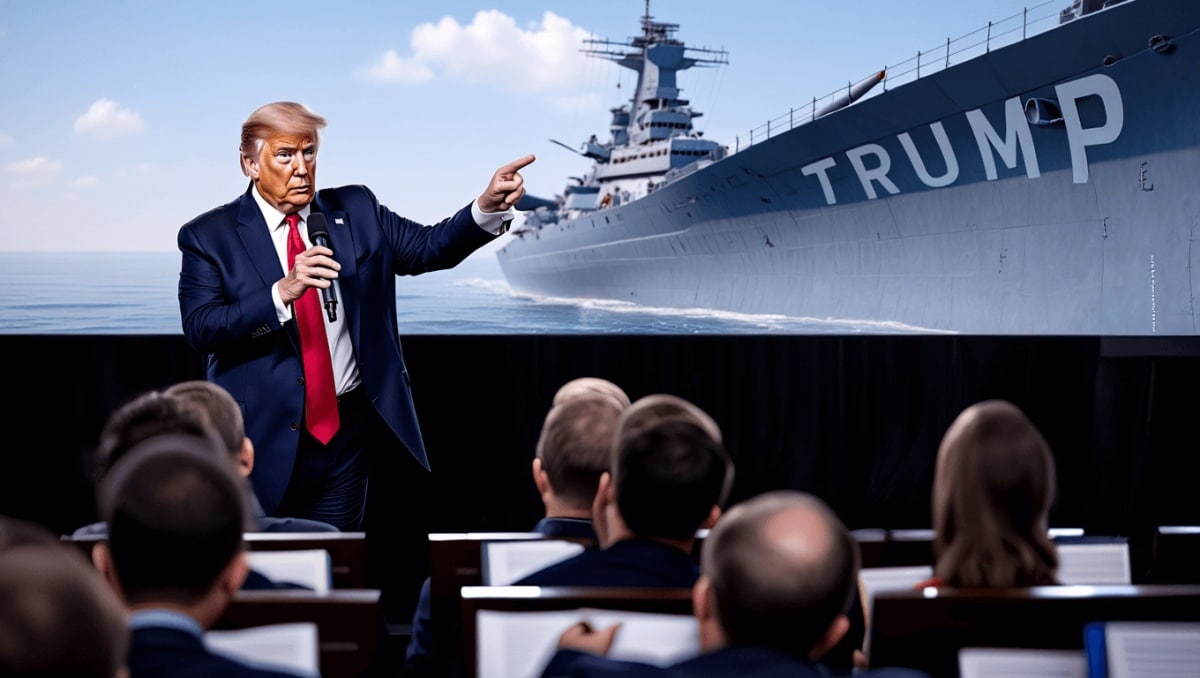
President Donald Trump has unveiled an ambitious plan for a new class of U.S. Navy warships that he says will push naval power into a high-tech era. The proposal — promoted with a White House rendering and bold claims about weapons and automation — has already ignited debate in Washington and online.
Details of the proposed “Trump-class” and the Golden Fleet concept
The administration describes the vessels as part of a broader “Golden Fleet” initiative. According to the White House material, the ships would be a new breed of guided-missile battleship.
KATSEYE postpones another concert: illness details remain undisclosed
Cupertino: a stylish legal drama packed with tech twists
- Class name: Referred to publicly as the “Trump-class.”
- Role: Marketed as heavily armed surface combatants with expanded strike options.
- Official framing: Presented on a dedicated Golden Fleet page and in presidential remarks.
Weapons and technology the president highlighted
The president outlined a list of high-end capabilities he expects to see on the ships. Many of these claims raise technical and policy questions.
- Hypersonic and nuclear-capable missiles: Described as deployable from the ships, a claim that would carry legal and strategic implications.
- High-powered lasers: Promoted as a core defensive and offensive system.
- AI-driven systems: The president said the vessels would rely heavily on automation and artificial intelligence.
How the White House framed design and aesthetics
The announcement framed the president as personally involved in the ships’ look. He emphasized that the Navy would work on the designs alongside him.
- Officials shared a public rendering to illustrate the concept.
- The administration stressed aesthetics as part of the sell, saying the president has direct input into design.
Immediate public reaction: memes, criticism, and skepticism
Responses ranged from mocking to sharply critical. Social media users and commentators picked up on the name and on the extraordinary capability claims.
- Many ridiculed the perceived self-aggrandizement of naming a ship class after the sitting president.
- Others questioned whether the advanced weapons and systems could actually be delivered.
- Critics also contrasted the plan’s cost with domestic spending priorities.
- Pop-culture quips compared the announcement to naval action movies.
Practical hurdles: engineering, law, and budgets
Transforming a concept into a sea-going platform involves multiple layers of review and hurdles. Analysts point to clear obstacles.
- Cost: Building large surface combatants with cutting-edge systems would be expensive.
- Technical integration: Merging hypersonic missiles, high-energy lasers, and advanced AI poses major engineering challenges.
- Arms-control and legal issues: Deploying nuclear-capable surface missiles would raise treaty and policy questions.
- Shipbuilding capacity: The industrial base must have bandwidth and funding to produce such vessels at scale.
How the process moves forward in Washington
No formal construction schedule or funding plan has been released. Several steps would be required before steel hits the dock.
- Detailed design and Navy acceptance of requirements.
- Budget requests submitted to and approved by Congress.
- Environmental and regulatory reviews, if applicable.
- Prototyping, testing, and phased production if the program gains traction.
Open questions that remain for policymakers and the public
Key points are unresolved and likely to shape the debate going forward.
- Will Congress authorize the funds needed for design and construction?
- Are the claimed weapons systems feasible on a surface combatant at scale?
- How would the Navy reconcile this program with existing fleet priorities?
- What legal constraints apply to any nuclear or strategic payloads?










