Show summary Hide summary
- Unexpected collaboration: a harmonica cue that stole the show
- How the audience and social channels responded
- Crossing genres: what this means for jazz and hip-hop culture
- Lupe Fiasco’s artistic shift and academic ambitions for rap
- Ghotiing: Lupe’s new project and the idea of recording outdoors
- Where spontaneity and planning meet in modern performance
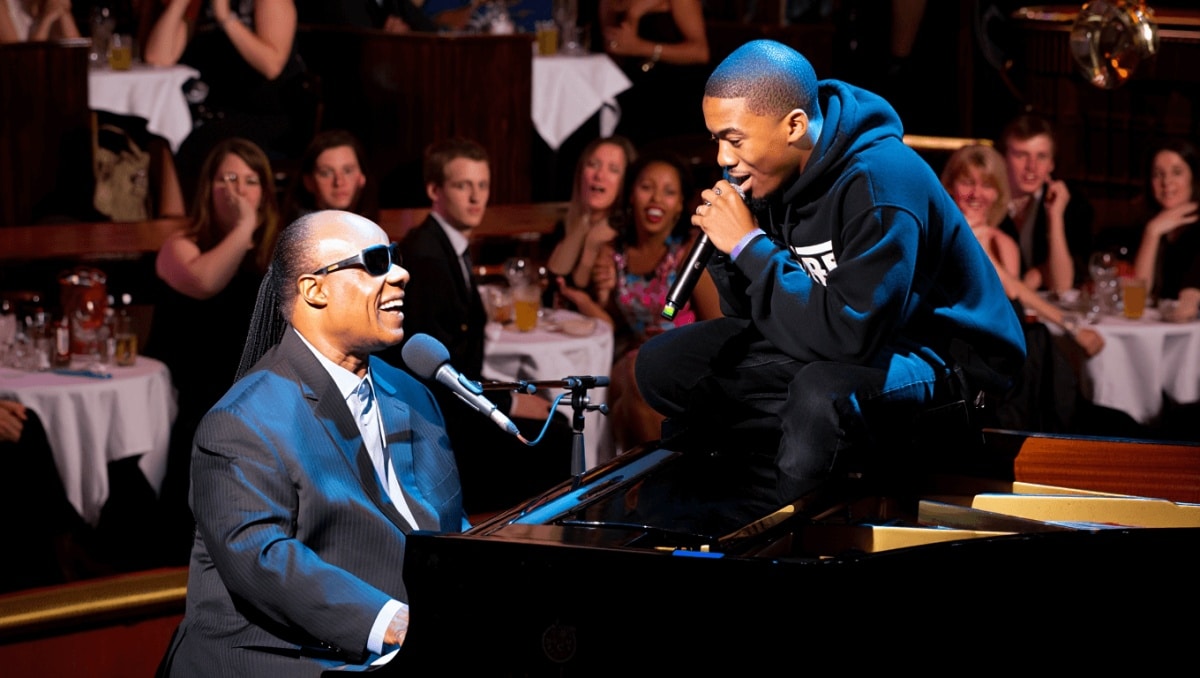
What began as a routine night of jazz at New York’s Blue Note suddenly turned into a headline-making moment when Robert Glasper’s set morphed into an impromptu cross-genre reunion. Lupe Fiasco opened with a relaxed freestyle over Glasper’s piano, and before long a harmonica line introduced a surprise guest. The room shifted from attentive to stunned as Stevie Wonder appeared and transformed the evening into something unforgettable.
Unexpected collaboration: a harmonica cue that stole the show
Lupe and Glasper were trading verses and musical cues when the harmonica entered the mix. At first the instrument blended into the set. Then its tone became unmistakable. Fans in the crowd started to react as the harmonica answered lines of the freestyle.
New music Friday: 5 must-hear songs this week
Street Fighter review: video game adaptation knocks itself unconscious
Stevie Wonder’s entrance felt organic and spontaneous. He stepped onstage and delivered a soulful rendition of “Golden Lady,” the classic track from his acclaimed 1973 album Innervisions. The performance landed like a gift for the audience.
After the song, Glasper paused to express his gratitude. Lupe watched from the sideline as the jazz pianist thanked Stevie for showing up and sharing the moment.
How the audience and social channels responded
The reaction was electric. Clips from the night circulated quickly online. Fans praised the spontaneity and the chemistry between the performers.
- Video snippets highlighted the harmonica reveal.
- Social posts focused on Stevie’s classic vocal delivery.
- Music writers framed the event as a rare cross-generational meeting.
Moments like this reinforce why live shows can still produce unpredictable, viral experiences.
Crossing genres: what this means for jazz and hip-hop culture
Robert Glasper has long blurred lines between jazz, R&B, and hip-hop. Lupe’s appearance underscored that dialogue. Stevie’s guest spot connected Motown-era melodies with modern rap sensibilities.
The night reminded fans that musical boundaries are porous. Artists from different eras and styles can elevate a set simply by listening and responding to each other in real time.
Lupe Fiasco’s artistic shift and academic ambitions for rap
Beyond the performance, Lupe is exploring the craft of rap with renewed seriousness. In recent interviews he described a long-term aim to see rapping studied at a higher level.
He imagines a future where hip-hop sits alongside other academic disciplines. He’s discussed the idea of formal programs that treat rap as a subject worthy of deep study and pedagogy.
Lupe envisions teaching techniques and theories of rap at an institutional level. That thinking informs the way he approaches new work and collaborations.
Ghotiing: Lupe’s new project and the idea of recording outdoors
Lupe’s next album, currently titled Ghotiing and pronounced “fishing,” pursues an experimental concept. He wants to write and record songs outside, letting the environment become part of the music.
“En plein air” rapping explained
The project borrows from visual-arts terminology. Instead of painting outdoors, Lupe aims to compose and complete tracks in natural public settings.
- Capture real-time sounds and ambiance.
- Respond to immediate stimuli for lyrical inspiration.
- Create finished pieces that reflect a specific place and moment.
Practical challenges and creative constraints
Recording outside introduces variables that a studio does not. Lupe has considered how to work with or around those elements.
- Onlookers: curious passersby can alter focus and energy.
- Ambient noise: traffic, voices, and urban soundscapes affect takes.
- Weather and insects: conditions can force changes in equipment and timing.
- Logistics: power, microphones, and permits may be required.
He asks practical questions about preparation and performance. How do you protect a vocal take from unexpected sounds? When does background ambiance enhance a track?
Where spontaneity and planning meet in modern performance
That Blue Note night illustrated the balance between surprise and structure. A loosely arranged freestyle can become historic when veteran artists join in. The same tension animates Lupe’s Ghotiing concept.
By testing limits—whether onstage with jazz legends or outdoors with a recorder—artists continue to rewrite what live and recorded music can be.