
Show summary Hide summary
- What happened on the plane: a reporter pressed, the president snapped
- Who the journalist was and how news organizations reacted
- Responses from the White House and media critics
- Timeline and key points in brief
- Legal and political context: Congress moves to release the files
- What to watch next as documents surface
Questions about newly released Jeffrey Epstein records sparked a heated exchange aboard Air Force One when a Bloomberg correspondent pressed President Donald Trump. The brief confrontation escalated, drew national attention, and prompted statements from Bloomberg and the White House as lawmakers moved to make the documents public.
What happened on the plane: a reporter pressed, the president snapped
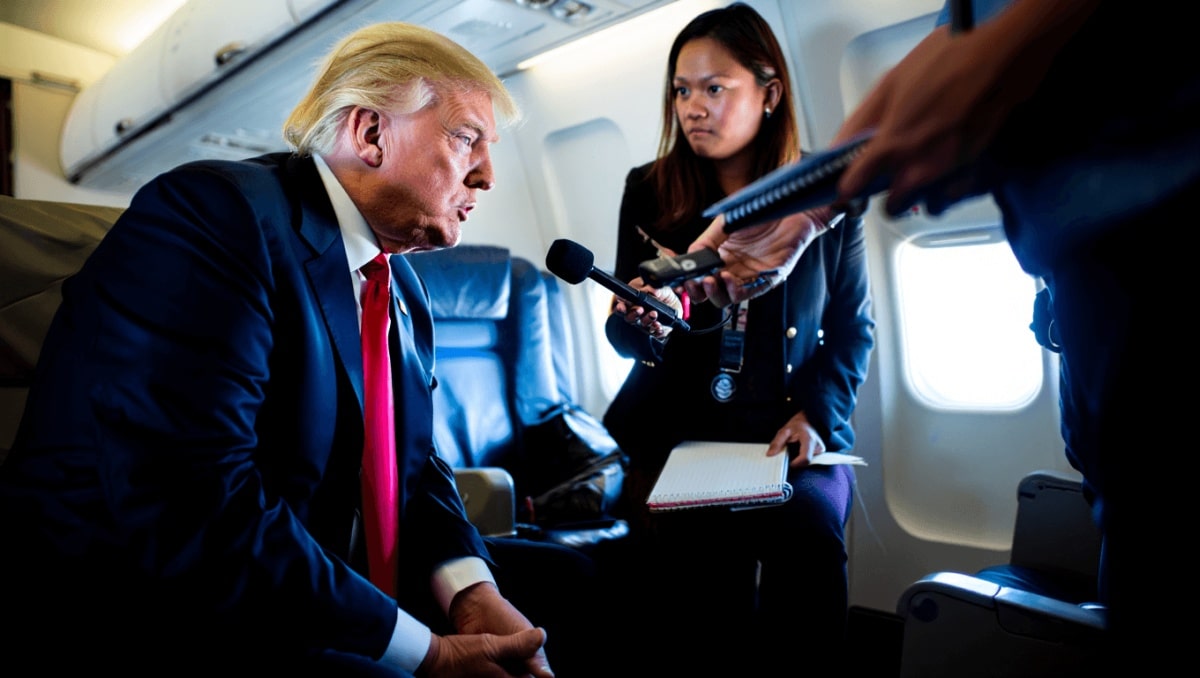
During a flight Friday, a reporter asked Mr. Trump to clarify an email in the Epstein files that appeared to mention “the girls.”
KATSEYE postpones another concert: illness details remain undisclosed
Cupertino: a stylish legal drama packed with tech twists
The president denied knowledge of the claim and described his relationship with Epstein as strained. When a Bloomberg correspondent followed up, the interaction turned sharp.
Video and eyewitness accounts show the president pointed at the reporter and said, “Quiet. Quiet, piggy.”
Who the journalist was and how news organizations reacted
The reporter identified by outlets was Bloomberg’s White House correspondent, Catherine Lucey.
- When contacted for comment, Lucey redirected inquiries to Bloomberg.
- Bloomberg issued a statement saying its White House team “perform a vital public service” and will keep reporting without fear or favor.
Responses from the White House and media critics
The White House defended the president’s response to criticism of the exchange.
A spokesperson told People magazine the reporter behaved in an “inappropriate and unprofessional way” toward colleagues and suggested that reporters must be able to “take” pushback.
Media observers and some elected officials condemned the president’s language and demeanor toward a female journalist.
Timeline and key points in brief
- Newly released emails from Jeffrey Epstein contain a line suggesting Mr. Trump knew about “the girls.”
- A reporter aboard Air Force One asked the president to clarify that passage.
- The president denied knowledge and made a personal jab at the reporter.
- Bloomberg publicly backed its correspondent.
- The White House offered a contrasting defense of the president’s remarks.
Legal and political context: Congress moves to release the files
Separately, Congress voted to make the full Epstein files public. That development raises the likelihood that more documents and context will become available.
Journalists and investigators say broader disclosure could clarify who knew what and when.
What to watch next as documents surface
With lawmakers authorizing release, media outlets are preparing to review thousands of pages for new leads.
Expect follow-up reporting on any names, timelines, or communications that shed light on the Epstein network.
Key angles reporters will pursue
- Whether new documents corroborate or contradict existing claims.
- Any previously undisclosed communications involving public figures.
- How officials respond when specific passages are raised in public questioning.










