
Show summary Hide summary
- Striking opening: visuals that grab you from the start
- Reworking Hamlet into a posthumous quest
- How Hosoda reshapes Shakespearean characters
- The film’s many moods: action, politics, and moral questions
- World design and standout set pieces
- Balancing spectacle and coherence
- Technical craft: animation, sound, and performance
- Who will enjoy Scarlet and why it matters
- Release details and viewing options
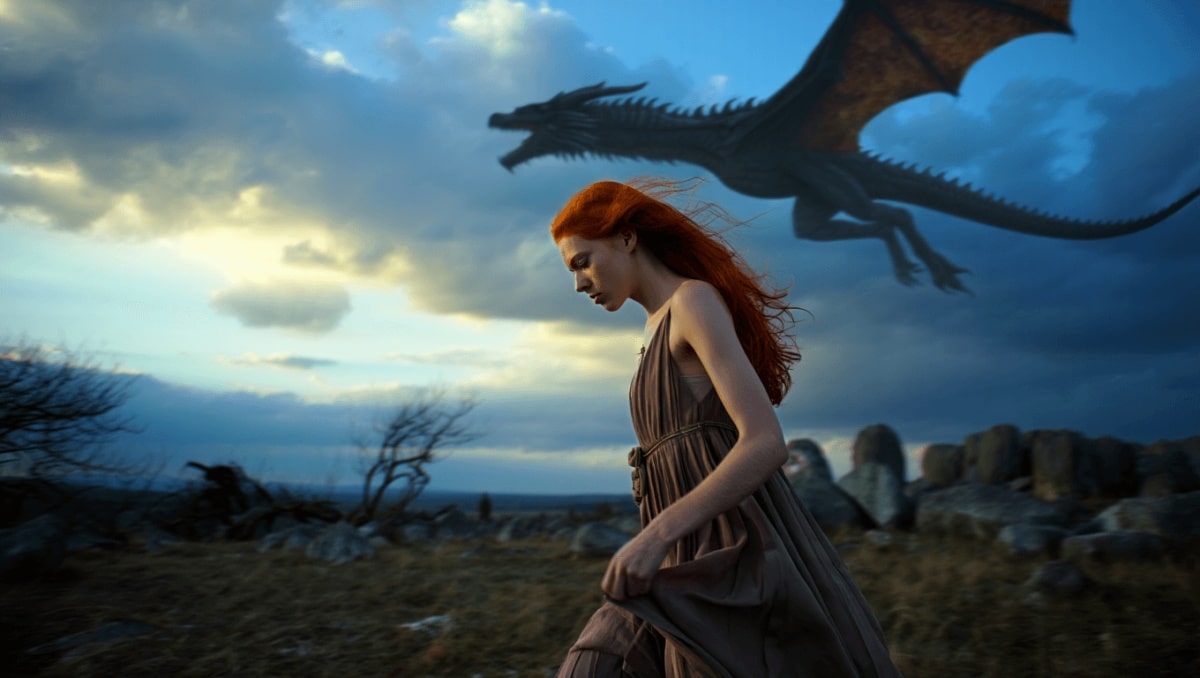
The first moments of Scarlet pull you into a world that feels both ancient and futuristic, where a lone red-haired heroine wanders a blasted landscape as a titanic dragon cruises the sky. That opening stretch is pure cinematic electricity, promising an expansive fantasy and a bold reimagining of a classic tragedy.
Striking opening: visuals that grab you from the start
Mamoru Hosoda wastes no time. The film launches with sweeping desert vistas littered with armor, rivers of slow magma, and clouds that ripple like an ocean. A dragon moves through the air with thunderous authority.
Nas slams music industry over disrespect: teases new music, vows to address it
1992 vocal performances: 3 jaw-dropping moments that still amaze
- Immediate worldbuilding: The contrast between ruined wasteland and luminous liminal space sets the tone.
- Iconic imagery: The heroine appears first as a survivor in rough garb, then flashes into a white gown, hinting at hidden identity.
- Animation blend: Hosoda mixes stylized 2D faces with textured 3D environments, creating a dreamlike dissonance.
Reworking Hamlet into a posthumous quest
Scarlet borrows elements from Shakespeare, but it does not play like a straightforward stage-to-screen transfer. The protagonist, a red-haired princess, witnesses her uncle seize power in a violent coup.
Unlike Hamlet’s suspicion and feigned madness, this Scarlet moves directly toward combat training and revenge. Her path diverges sharply when she is killed and wakes in a spectral Otherworld.
Death as a second act
The Otherworld collapses time. Past and future co-exist, and every dead soul inhabits the same liminal plane. There, Scarlet gets a chance to pursue vengeance, but the afterlife has rules.
- If you die in the Otherworld, you cease to exist.
- Claudius has fortified his hold, and armies of the dead block the route to justice.
- The quest becomes a perilous mixtape of memory, battle, and survival.
How Hosoda reshapes Shakespearean characters
Familiar names surface but are repurposed. Claudius is not a whispering assassin; he is overtly brutal. Secondary figures become set pieces, sometimes feeling like video-game bosses.
- Cornelius and Voltemand: minor roles inflamed into combat encounters.
- Queen Gertrude: a brief but striking presence that doesn’t fully expand.
- Ophelia: largely absent, shifting the story’s emotional center.
Lines lifted from Hamlet appear across the film. They register as sly nods for theater fans, but they rarely reshape the narrative’s core.
The film’s many moods: action, politics, and moral questions
Scarlet is several films at once. It is a high-octane fantasy, a meditation on revenge, and a political fable about borders and displacement.
- Action: The combat sequences are visceral and inventive.
- Politics: Walls and blocked paths stand in for contemporary anti-immigrant barriers.
- Ethics: The film asks whether vengeance perpetuates violence or breaks its cycle.
Hijiri, a present-day nurse who enters the Otherworld, serves as the story’s conscience. His commitment to healing contrasts with Scarlet’s thirst for retribution.
World design and standout set pieces
The Otherworld is the film’s strongest achievement. Cultures, clothing, and relics from different eras coexist, producing striking contrasts and small visual stories.
There are many memorable motifs: cairn-filled quarries, caravans of lost souls, and a fortress that blocks the path to Eternity. But the dragon steals every scene it enters.
- Dragon design: Adorned with embedded weapons, it feels like a moving ruin.
- Sound and score: Taisei Iwasaki’s score amplifies the beast’s presence with rumbling percussion.
- Stagecraft: Action sequences are edited to maximize shock and wonder.
Balancing spectacle and coherence
Scarlet is maximalist. Hosoda piles on ideas, genres, and visual concepts. That ambition fuels exhilarating highs but also creates narrative knots.
At times the Hamlet connections feel decorative rather than essential. The film often prioritizes spectacle and theme over a unified emotional throughline.
What works
- The Otherworld’s aesthetic is unforgettable.
- Action set pieces are bold and kinetic.
- The dragon sequences deliver genuine theater jolts.
What falters
- The Shakespearean backbone loosens into episodic territory.
- Key female roles from the play receive little attention.
- The moral debate about vengeance is sometimes underexplored.
Technical craft: animation, sound, and performance
Voice casting grounds the film. Mana Ashida gives Scarlet a fierce, conflicted energy. Kôji Yakusho shapes Claudius into a domineering presence.
Hosoda’s animation choices create an uncanny aesthetic. Close-up expressions read like hand-drawn sketches, set against richly textured 3D backdrops.
- Lighting and color shift to signal memory and identity.
- Action choreography blends martial clarity with chaotic brutality.
- The score heightens dread and wonder in equal measure.
Who will enjoy Scarlet and why it matters
If you love audacious animation that risks genre-mixing, Scarlet will reward you. It delights in spectacle and surprises with its moral tensions.
For viewers expecting a faithful Hamlet retelling, the film may frustrate. But those open to a mythic, afterlife-infused reimagining will find much to admire.
Release details and viewing options
Scarlet opens in limited IMAX theaters on Dec. 12. The film premiered at the New York Film Festival earlier this year.
UPDATE: Dec. 10, 2025, 3:24 p.m. This review first appeared on Oct. 7, 2025, following the film’s U.S. festival premiere. Viewing availability has been updated.










