
Show summary Hide summary
- What the White House released and why it stood out
- Key lines and claims that drew attention
- Visual storytelling: fast-food motifs and the American dream
- Was the White House image AI-generated?
- Social media reaction: memes, mockery, and sharp criticism
- Voices defending the approach and political calculations
- History: Trump’s McDonald’s moments and photo-op history
- What experts say about using brands in political messaging
- Legal and ethical considerations around using corporate iconography
- How this episode may shape future White House messaging
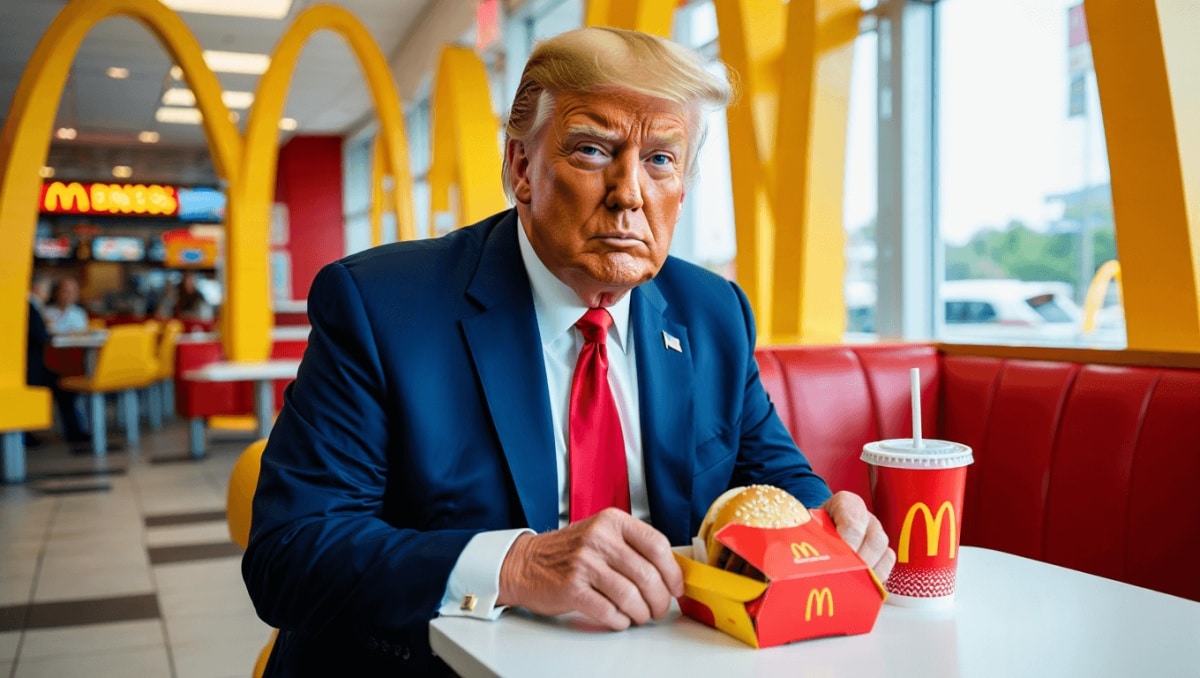
Donald Trump’s fondness for McDonald’s moved from photo ops to official messaging this week, as the White House debuted a stylized video tying the fast-food chain’s imagery to his administration. The clip, paired with a striking image posted on the White House X account, sparked sharp commentary online and renewed questions about the lines between political branding and pop culture.
What the White House released and why it stood out
The administration published a short video titled with a playful nod to fast food. It frames a familiar brand as a symbol for a political message. The narrator frames Trump’s past moments at McDonald’s as a metaphor for opportunity and renewal.
KATSEYE postpones another concert: illness details remain undisclosed
Cupertino: a stylish legal drama packed with tech twists
- The footage includes staged shots of Trump appearing to work at a counter and interacting with customers.
- A narrator praises a rise from “serving fries” to leading the country, using upbeat, cinematic language.
- The same day, the White House X account posted an image showing the White House topped by a giant McDonald’s golden arch.
The combination of polished video and a surreal image is rare for official communications. It blurred the lines between campaign-style advertising and presidential messaging.
Key lines and claims that drew attention
During a speech tied to the video rollout, Trump spoke about affordability and government programs. One claim — that his administration “lifted over 600,000 Americans off of food stamps” — was repeated in the event and echoed in the video.
That specific assertion and the larger narrative framing were central to the push to present the policies as directly improving everyday life.
Visual storytelling: fast-food motifs and the American dream
The video used McDonald’s symbols to craft a story about aspiration. Fries, a fryer, and drive-thru windows appear as recurring images.
- Scenes show cheering crowds near a McDonald’s, intended to convey popular support.
- Voiceover compares personal hustle to national renewal, linking a simple job to broader success.
- Closeups of fries and soda are used as visual hooks.
The result is a cinematic, nostalgia-driven message that leans heavily on brand familiarity. For many viewers, the imagery felt more like an advertisement than a government statement.
Was the White House image AI-generated?
The X post included an image of the White House with a giant golden arch on the roof. Its stylized look prompted debate over whether it was created with artificial intelligence.
Observers noted visual cues associated with AI art. Others said it read as tongue-in-cheek. Still, the post amplified the controversy and led to wide sharing across platforms.
Social media reaction: memes, mockery, and sharp criticism
Responses ranged from disbelief to mockery. Clips and screenshots from the video circulated fast.
- Some users called the material an actual White House ad and reacted with incredulous jokes.
- Others reposted the image and asked whether the government was serious or satirizing itself.
- A number of left-leaning commentators attached a nickname — the “Burger Reich” — to the image as a sharp rebuke.
For many, the tone and imagery were more embarrassing than persuasive. The message generated more mockery than measurable policy discussion.
Voices defending the approach and political calculations
Supporters argue the creative push is intentional. They say it uses popular culture to reach voters who respond to straightforward visuals.
Campaign strategists note that iconic brand symbols can make messages stick. They point out that fast-food imagery is instantly recognisable.
- Pros: It connects policy talk to everyday life, simplifying complex issues.
- Cons: It risks trivializing government and alienating undecided voters.
History: Trump’s McDonald’s moments and photo-op history
This is not the first time Trump and McDonald’s intersect publicly. He famously posed with a Big Mac and Diet Coke after clinching a 2015 nomination.
Last year he staged a shift at a franchise as a photo opportunity. Those episodes fed into the current imagery and lent a thread of continuity.
What experts say about using brands in political messaging
Political communication scholars warn about mixing corporate branding with governance symbols. The approach can be powerful, but also polarizing.
- Brand association can simplify complex policy into digestible images.
- Overuse of commercial aesthetics can backfire and appear insincere.
- AI-created visuals raise questions about authenticity and transparency.
Analysts recommend caution when official bodies borrow corporate motifs. The stakes rise when images are shared from government channels.
Legal and ethical considerations around using corporate iconography
Overlaying corporate logos on public buildings can prompt legal and trademark questions.
Even if used for satire, such imagery from an official account can blur ethical lines. The public expects distinctions between state communications and marketing.
Short-term impacts to watch
- How the image and video affect public perception of administration messaging.
- Whether opposition groups use the material in attack ads.
- Any formal responses from McDonald’s about the use of its imagery.
How this episode may shape future White House messaging
The experiment signals a willingness to lean into pop culture. Future messages may be bolder — or more carefully scripted to avoid ridicule.
Either way, the episode shows the power and peril of blending brand symbolism with political storytelling.










