
Show summary Hide summary
- Why old magnetic tape still matters and what’s destroying it
- The technician behind the recoveries: a profile of a master restorer
- How fragile tapes are revived: step-by-step methods used in the lab
- Custom rigs, clever tools, and makeshift machinery
- High-profile rescues and the kinds of collections at risk
- Trade secrets, company practices, and industry tensions
- Why damage often isn’t anyone’s fault
- Ongoing challenges: resources, scale, and the race against time
Magnetic tape recordings capture a huge slice of 20th-century music, but many of these master tapes are now at risk. A quiet race is under way to rescue fragile reels before they deteriorate beyond recovery. In New Jersey, one technician has become the go-to problem solver for impossible-sounding tape disasters.
Why old magnetic tape still matters and what’s destroying it
From the 1940s through the 1980s, studios stored performances on magnetic tape. These reels hold unique sessions, alternate takes, and master mixes. When they fail, the sound is often gone for good.
Nas slams music industry over disrespect: teases new music, vows to address it
1992 vocal performances: 3 jaw-dropping moments that still amaze
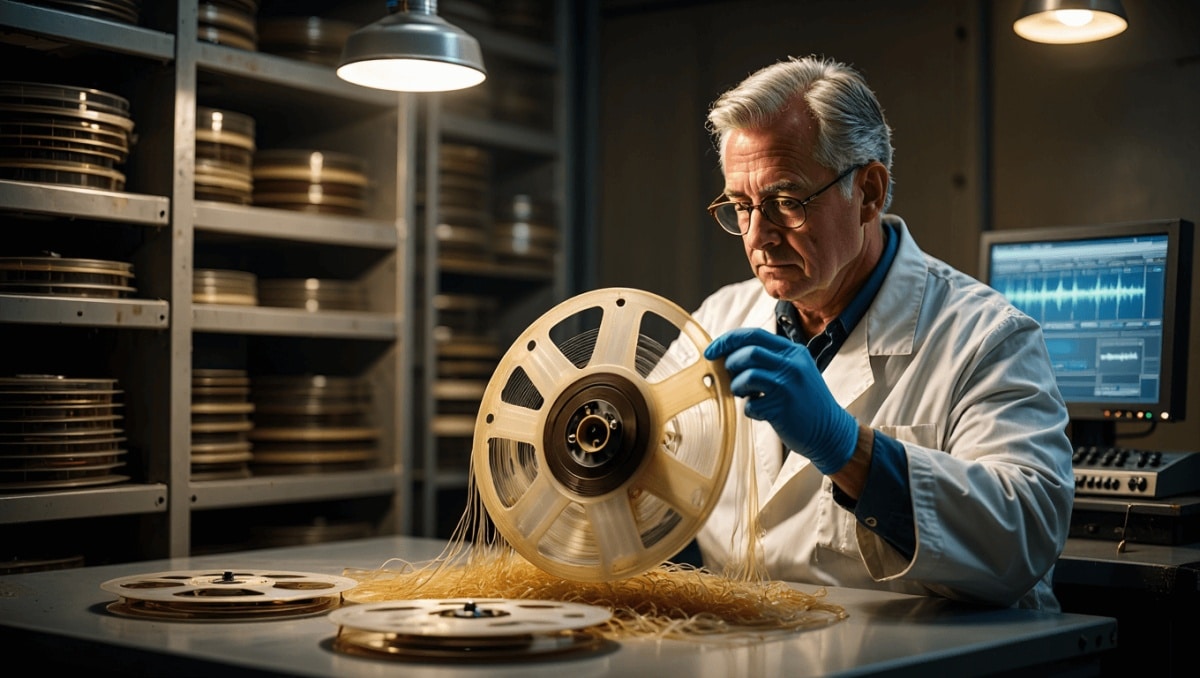
- Sticky shed syndrome: the binder that holds oxide flakes breaks down and makes tape cling to itself.
- Mold and mildew: uncontrolled humidity can rot tape backing and ruin recorded information.
- Loss of lubricant: tapes develop a tacky residue that gums up machines and degrades audio.
Proper climate control slows damage, but many tapes already suffer irreversible chemical changes. That makes specialized restoration urgent for estates, labels, and archives.
The technician behind the recoveries: a profile of a master restorer
Kelley Pribble is an archivist and audio engineer who works at Iron Mountain. Over years of difficult jobs, he developed hands-on methods to retrieve audio from tapes others had given up on.
His work draws interest from major clients and cultural institutions. They depend on him for cases where standard industry treatments fail. When a collection is severely degraded, Pribble is often the person called in.
How fragile tapes are revived: step-by-step methods used in the lab
Restoration usually follows a careful sequence. Each step reduces risk and prepares the tape for safe playback.
- Initial assessment of physical condition and contamination.
- Controlled heating to drive out moisture and temporarily stabilize the binder.
- Immersion in specially prepared solutions to loosen stuck layers and remove residues.
- Gentle ultrasonic cleaning to introduce microscopic agitation between adhered layers.
- Slow, controlled drying while rewinding to prevent reattachment.
These steps require careful timing, precision, and, at times, custom machinery. The goal is to get a single clean playback to digitize the audio before any further decay.
What baking does and why it’s only the start
Heating tapes in a dry oven is a long-standing practice. It reduces moisture in the binder and can temporarily restore pliability. But for severe chemical breakdown, baking alone is not enough.
The role of soaking and ultrasonic cleaning
Soaking in deionized or specially formulated solutions can dissolve glue-like residues. Ultrasonic baths then help the liquid penetrate tiny gaps between stuck layers.
Custom rigs, clever tools, and makeshift machinery
When off-the-shelf gear won’t do, restorers build their own equipment. Pribble has described devices that look improvised but work precisely.
- Wet rewind rigs that carefully retension tape while it dries.
- Fans and controlled heaters to speed uniform evaporation.
- Handheld tools for removing sticky deposits during transfer.
One inventive solution uses a strip of mixed-fiber fabric attached to PVC. The fabric acts like a mop to clear residue while the tape passes through a deck. These low-tech fixes buy time to digitize audio that would otherwise remain trapped.
High-profile rescues and the kinds of collections at risk
Major artists and archives have turned to specialized labs for tape recovery. Cases include live concert reels, master session tapes, and unreleased recordings.
- Classic rock and folk archives with decades-old masters.
- Jazz sessions whose only extant copies exist on reel-to-reel tape.
- Estate collections that sit in vaults but still suffer chemical breakdown.
These projects often uncover rare takes and historically important material. Without restoration, that content might never be heard again.
Trade secrets, company practices, and industry tensions
Some restoration steps and solution recipes are closely guarded. Large facilities may treat methods as proprietary, which frustrates smaller workshops.
Archivists argue for wider knowledge sharing to save more tapes. Companies counter that strict protocols protect fragile material and intellectual property.
The result is a mix of public best practices and private techniques. This split affects which tapes can be treated quickly and which require specialized referral.
Why damage often isn’t anyone’s fault
Chemical changes in tape binders can proceed even under proper storage. Temperature shifts, humidity events decades ago, and the composition of the original tape all influence outcomes.
Restorers stress that degradation is usually natural and not caused by mismanagement. Still, every rescued reel is a reminder of how precarious recorded heritage can be.
Ongoing challenges: resources, scale, and the race against time
Worldwide, millions of hours of analog recordings sit on vulnerable media. Labs with deep expertise are few, and each complex recovery demands time.
- Time: some treatments take weeks or months per reel.
- Equipment: custom rigs and ultrasonic systems are needed for the worst cases.
- Expertise: skilled hands and judgment remain essential.
As public interest in archival releases grows, so does the pressure to find scalable, shareable solutions for tape restoration.










