
Show summary Hide summary
- How a medical supply shop at Mall of America became Cobain’s obsession
- Why those morbid models mattered to Cobain’s creativity
- In Utero: the album that mirrored an awkward leap into stardom
- Bandmates recall the whirlwind: Grohl and Novoselic reflect
- Steve Albini’s role and the album’s raw production
- How the era changed Nirvana in months
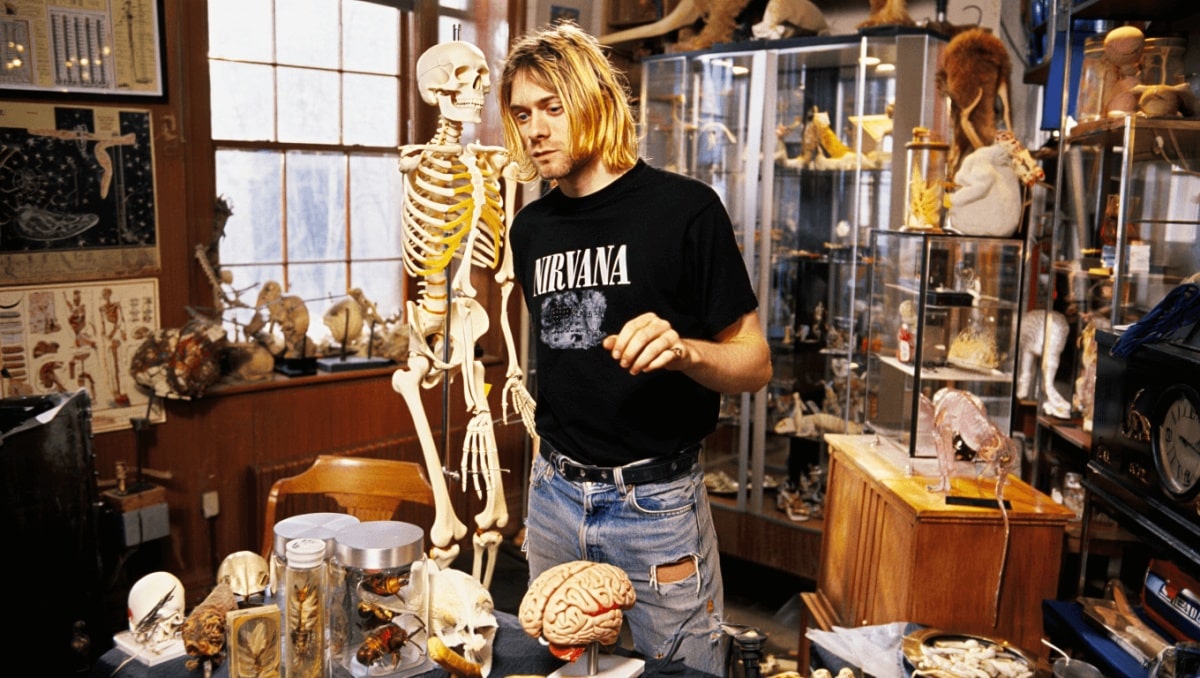
When Nirvana shot to global fame, Kurt Cobain suddenly had money to burn. Instead of flashy cars or mansions, he spent on the unexpected: anatomical models, preserved specimens and medical charts. That eccentric shopping habit would later seep into the band’s final album and haunt memories of their rapid ascent.
How a medical supply shop at Mall of America became Cobain’s obsession
In a resurfaced 1993 interview, Cobain described discovering a store in the Mall of America that sold medical equipment to the public. He treated the place like a treasure trove.
Nas slams music industry over disrespect: teases new music, vows to address it
1992 vocal performances: 3 jaw-dropping moments that still amaze
- Cobain bought anatomical mannequins and paper charts.
- He purchased preserved fetal specimens and display pieces.
- These items were unusual collectibles for a rock star.
He explained this buying spree as the result of sudden wealth. After years of scraping by, Cobain finally could afford objects he’d only seen secondhand.
Why those morbid models mattered to Cobain’s creativity
Cobain suggested the objects weren’t mere curiosities. He used them as visual inspiration.
- Some models appeared in photos and imagery tied to the band.
- The stark, clinical aesthetic fit the raw tone of their later work.
- He admitted buying far more than he needed, calling it a kind of indulgence.
Those anatomical pieces became part of the band’s artistic vocabulary, influencing album art and the unsettling mood around their last record.
In Utero: the album that mirrored an awkward leap into stardom
The band’s third record carried a rough, unpolished sound. Produced by Steve Albini, it didn’t smooth over the band’s discomfort with fame.
The music and imagery together created a portrait of a group unsettled by success. Cobain’s medical models fit that bleak, intimate aesthetic.
Bandmates recall the whirlwind: Grohl and Novoselic reflect
Years after Cobain’s death, drummer Dave Grohl and bassist Krist Novoselic spoke about that period on Conan O’Brien’s show. They emphasized how fast everything changed.
From vans to arenas
- They remembered touring in a cramped van before the breakthrough.
- By 1991, the band faced international fame while still barely older than their twenties.
- Grohl called the record an uneasy soundtrack to that transition.
The contrast was stark: young musicians who had lived modestly suddenly found themselves on a global stage, with art that reflected that tension.
Steve Albini’s role and the album’s raw production
Producer Steve Albini was part of the In Utero sessions and later joined conversations about the band’s trajectory. He favored a live, abrasive sound that amplified the record’s honesty.
That production choice reinforced the album’s themes. It matched Cobain’s fascination with clinical imagery and emotional exposure.
How the era changed Nirvana in months
- In a short time, the band’s lifestyle and audience transformed.
- Visual elements, like anatomical models, fed into their public image.
- The music captured both the exhilaration and unease of sudden success.
Within a year or two, everything felt completely different for the trio, from daily life to creative priorities.











