
Show summary Hide summary
- CEO message at UBS: confidence amid takeover drama
- Quick response to Paramount Skydance’s hostile approach
- What Netflix said about theatrical releases and exhibition windows
- Plans for Warner Bros. TV and content distribution
- How Netflix framed the acquisition rationale
- Industry reaction and the path ahead
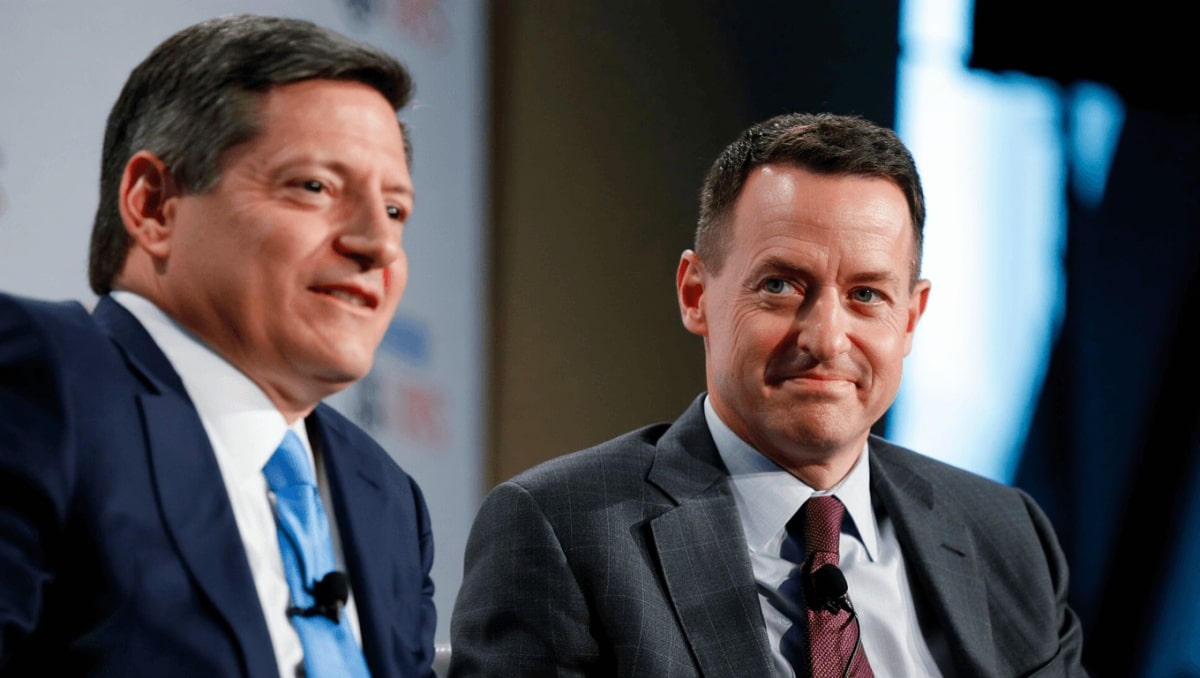
At a UBS media conference, Netflix co-CEOs Ted Sarandos and Greg Peters faced probing questions about the streamer’s bold plan to buy Warner Bros. Discovery just hours after Paramount and Skydance launched a hostile bid. The executives presented a calm, defensive case focused on jobs, theatrical releases and preserving the studio’s global reach.
CEO message at UBS: confidence amid takeover drama
Sarandos and Peters framed Netflix’s bid as a strategic, pro-industry move. They argued the acquisition would protect employment across film and television. The pair projected certainty about closing the deal while pushing back on critics who fear drastic change.
Nas slams music industry over disrespect: teases new music, vows to address it
1992 vocal performances: 3 jaw-dropping moments that still amaze
- Jobs and industry stability: Netflix said the acquisition is intended to sustain roles within studios, theaters and production crews.
- Shareholder value: Executives described the offer as favorable for investors and consumers.
- Regulatory path: They signaled confidence in clearing approvals and completing the transaction.
Quick response to Paramount Skydance’s hostile approach
The UBS remarks came hours after Paramount and Skydance unveiled a competing, unsolicited bid to Warner Bros. Discovery shareholders. Netflix used the stage to reassure markets that its plan remains viable despite the rival offer.
Executives emphasized that the Netflix proposal is not meant to upend the studio. They framed their move as complementary rather than destructive, and sought to address shareholder doubts raised by the competing bid.
What Netflix said about theatrical releases and exhibition windows
A central concern from filmmakers and theater owners is whether Netflix would shrink theatrical windows at Warner Bros. The streaming giant’s leaders pushed back hard on that worry.
- They promised to respect Warner Bros.’s theatrical release patterns.
- They highlighted the importance of premieres and box-office performance for marquee titles.
- Maintaining the theatrical ecosystem was presented as a core commitment, not an afterthought.
Plans for Warner Bros. TV and content distribution
Sarandos and Peters stressed Netflix values Warner Bros.’s television arm for its global distribution and diverse buyers. They said the company was buying those strengths, not erasing them.
- Warner Bros. TV would keep selling shows to other streamers and networks.
- Netflix pledged to keep multiple revenue streams intact for studio content.
- Global distribution reach and the studio’s international footprint were cited as key reasons for the acquisition.
How Netflix framed the acquisition rationale
The CEOs argued the purchase is driven by Warner Bros.’s production infrastructure and global market access. They positioned Netflix as a buyer seeking to enhance, not dismantle, existing value.
- Acquire a large, diversified content engine.
- Leverage global distribution to maximize returns.
- Preserve flexible sales patterns that benefit creators and third-party buyers.
Industry reaction and the path ahead
Sarandos and Peters aimed to calm immediate backlash from filmmakers worried about theatrical releases. They pointed to recent box-office successes as proof that Warner Bros.’s film strategy produces value worth keeping.
Executives also indicated they see the Warner Bros. operating group as a distinct, vital unit inside a larger Netflix structure. That distinction, they said, matters for how films and TV shows will continue to be developed and sold.










