
Show summary Hide summary
- What unfolded at Good Things Festival in Melbourne
- How social media and outlets reacted to the incident
- Shirley Manson’s public response and why she stood firm
- Why performers often object to beach balls and similar antics
- Anecdotes and the festival culture behind audience antics
- What the controversy signals for live-show etiquette
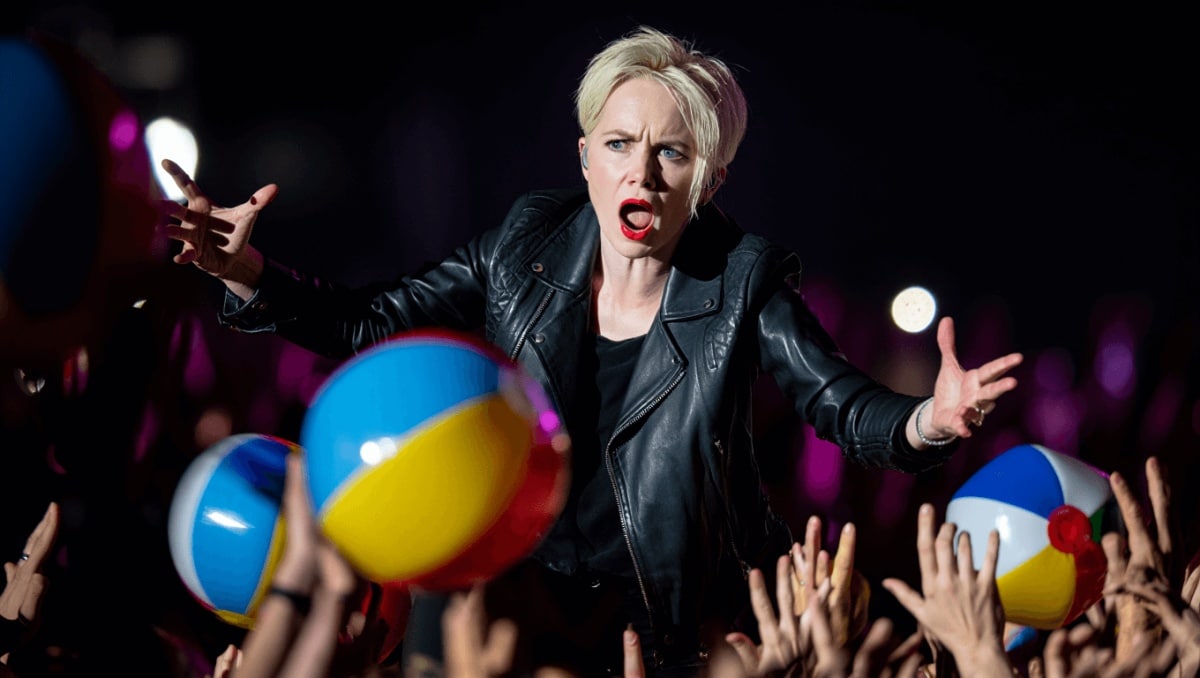
Shirley Manson turned a moment of festival fun into a headline after she stopped a Garbage set in Melbourne over bouncing beach balls. Her blunt reaction to an audience member sparked outrage online and reopened a debate about decorum at live shows. The exchange spread quickly across social platforms and left fans and critics picking sides.
What unfolded at Good Things Festival in Melbourne
During Garbage’s performance at the Good Things Festival on December 5, 2025, Manson noticed a large beach ball moving through the crowd. She singled out a man and scolded him for disrupting the set.
Nas slams music industry over disrespect: teases new music, vows to address it
1992 vocal performances: 3 jaw-dropping moments that still amaze
Her onstage rebuke included sharp language and a threat — framed as a joke — that she would ask others to physically intervene. She then tempered the remark by pointing to her own restraint.
How social media and outlets reacted to the incident
Video clips circulated within hours, and coverage ranged from amusement to calls for apology. Reports noted several distinct reactions:
- Some viewers said Manson’s language and tone were excessive.
- Others defended her right to protect a performance from distractions.
- A few accounts suggested the beach balls were launched by another band, not festivalgoers.
Music sites and comment threads debated whether the singer’s response was rude or justified. The claim that Bay Area metal act Machine Head had tossed the beach balls added another layer of confusion.
Shirley Manson’s public response and why she stood firm
Manson took to social platforms to explain her side rather than apologize. She said she will not regret calling out behavior that harms the live-music experience.
She emphasized her commitment to artistic integrity, describing why she fights against what she sees as frivolous distractions. In her posts she referenced the darker, mood-driven music that inspired her and the reason she joined a band in the first place.
She also praised other acts that she felt respected the audience environment, singling out a set where there were no inflatable interruptions.
Key points from her statements
- She refused to apologize for being annoyed by beach balls.
- She framed the issue as one of respect for musicians and fans who came to listen.
- She contrasted her ideal concert experience with what she sees as a carnival atmosphere.
Why performers often object to beach balls and similar antics
What looks like harmless fun can disrupt a show in several ways:
- Visual distraction for both artists and other audience members.
- Potential safety hazards when thrown or bounced in dense crowds.
- Interruption of a band’s emotional or sonic flow during songs.
- Perception that live music has been reduced to spectacle rather than craft.
Musicians who build aura and atmosphere around their songs often find such interruptions particularly grating.
Anecdotes and the festival culture behind audience antics
Longtime concertgoers know that onstage callouts are not new. Several artists have publicly reprimanded fans for similar behavior over the years.
I witnessed a comparable moment years ago at a Nashville festival. Manson halted the performance, addressed the goofing crowd, and mixed scolding with deadpan humor. The exchange felt both stern and entertaining, illustrating how some artists police their own stages.
What the controversy signals for live-show etiquette
The episode highlights a tension between festival culture and artists’ expectations. Large events invite playful behavior, but that same play can clash with the intentions of a band.
As clips and commentary continue to circulate, the conversation centers on these questions:
- Should audiences police each other, or should event staff step in?
- When is fan behavior harmless, and when does it cross a line?
- How much leeway do performers have to call out individuals mid-set?
The answers vary depending on the show, the artist, and the crowd — and the debate shows no sign of quieting.










