
Show summary Hide summary
- How a Fictional Station Became Real: WSQK The Squawk on Air
- What You Hear: Retro Hits, Jingles and In-Universe Shows
- Technical Craft: Making the 80s Sound Modern Streams
- Timing and Tie-Ins with Season Five Releases
- Marketing That Doubles as World-Building
- Audience Impact and Accessibility
- Creative Choices That Stand Out
- What This Means for Future Campaigns
The world of Stranger Things keeps reaching beyond the screen. For season five, Netflix and U.K. broadcaster Global turned Hawkins into a working radio station. The stunt recreates an 80s town soundscape and invites fans to step inside the show’s era. It’s a marketing move built on mood, music, and nostalgia.
How a Fictional Station Became Real: WSQK The Squawk on Air
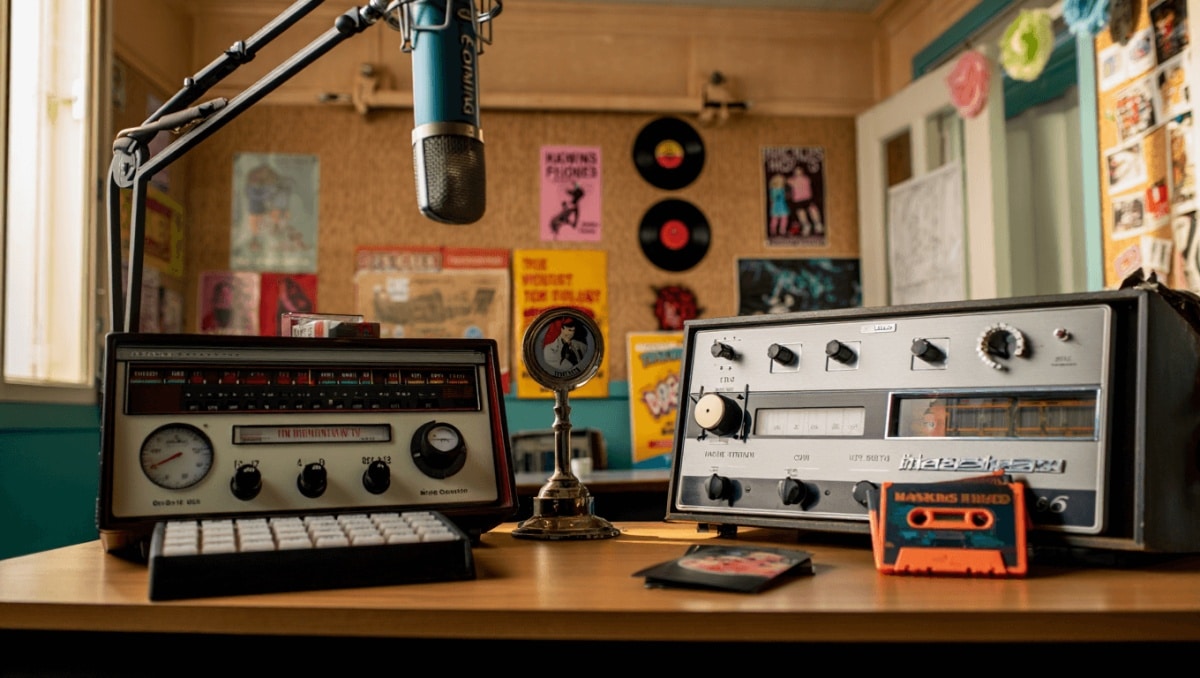
Global Player launched WSQK The Squawk on November 24. The station streams 24/7 and runs until January 1. Its aim is simple: make Hawkins feel tangible for listeners.
Nas slams music industry over disrespect: teases new music, vows to address it
1992 vocal performances: 3 jaw-dropping moments that still amaze
The broadcast is branded as a local radio outlet from the show’s universe. It sounds like an American small-town FM station from the 1980s. Yet the project was created by Netflix U.K. in partnership with Global. That cross-border effort underscores how big the show’s cultural reach has become.
What You Hear: Retro Hits, Jingles and In-Universe Shows
WSQK plays a continuous mix of 80s music. The playlist and segments are crafted to feel authentic. Hosts and features come straight from Hawkins’ fictional airwaves.
- DJs Vance Goodman and Mindy Flare lead the music and banter.
- “Rewind at 9: Turning Hawkins Upside Down” plays a reversed song for listeners to identify.
- “Talk To Tammy” offers blunt advice in the era’s radio style.
- “Dial‑A‑Dedication” lets fans dedicate songs, adding an interactive touch.
- Throwback adverts and station jingles appear between songs to heighten realism.
The mix of curated music and fictional programming makes WSQK feel like a living piece of the Stranger Things world.
Technical Craft: Making the 80s Sound Modern Streams
To recreate an authentic period sound, the station uses vintage-style processing. Global employed an Inovonics FM250 audio processor.
That gear first launched in 1983 and shaped the sound of many radio stations. Processing through the FM250 gives WSQK a warm, slightly compressed FM character. The sonic texture helps convince listeners they’ve tuned into a real 80s broadcast.
Why the Audio Matters
Sound design is a core part of immersion. Music, jingles, and even the imperfections of radio processing contribute to atmosphere.
Producers chose elements that echo the era and the show’s Midwestern setting. The result is a nostalgic tableau that supports the season’s storytelling without revealing plot details.
Timing and Tie-Ins with Season Five Releases
WSQK went live just ahead of the season five rollout. Netflix released Stranger Things Vol. 1 in the U.S. on November 26. Vol. 2 arrives on December 25. The finale is slated for December 31.
By operating the station across this window, Netflix keeps the series top of mind. The radio stunt serves both fans and casual listeners who stumble across the feed.
Marketing That Doubles as World-Building
This activation is more than promo. It’s an extension of the show’s production design into the real world. Costume, set, and soundtrack have long helped Stranger Things feel lived-in. Now the series’ creators brought one element—local radio—out of fiction and into the listener’s home.
That choice plays to the series’ strengths. Stranger Things thrives on mood and period detail. A credible radio broadcast amplifies those qualities in a low-key, persistent way.
Audience Impact and Accessibility
The station is available through Global Player. Listeners in the U.K. and beyond can tune in via the app or web player. Because it runs continuously, the experience is easy to find and share.
- Fans get extra immersion between episode drops.
- New listeners may discover the show through music and curiosity.
- The American flavor of the broadcast helps ground the series’ Indiana setting.
Creative Choices That Stand Out
WSQK leans into small touches to sell the illusion. Jingles, pre-recorded personality bits, and the reversed-song game are low-cost but effective devices. They invite participation and spark social chatter.
Recreating a radio station is a clever way to bridge nostalgia and discovery. It taps emotional memory while nudging listeners toward new episodes.
What This Means for Future Campaigns
Stranger Things shows how immersive marketing can extend a show’s universe. Instead of billboards, producers are building experiences. Those experiences can be interactive, sharable, and platform-native.
As streaming launches become rarer and more event-driven, creative stunts like WSQK will likely grow in popularity. They offer a way to convert cultural attention into viewing behavior.










