
Show summary Hide summary
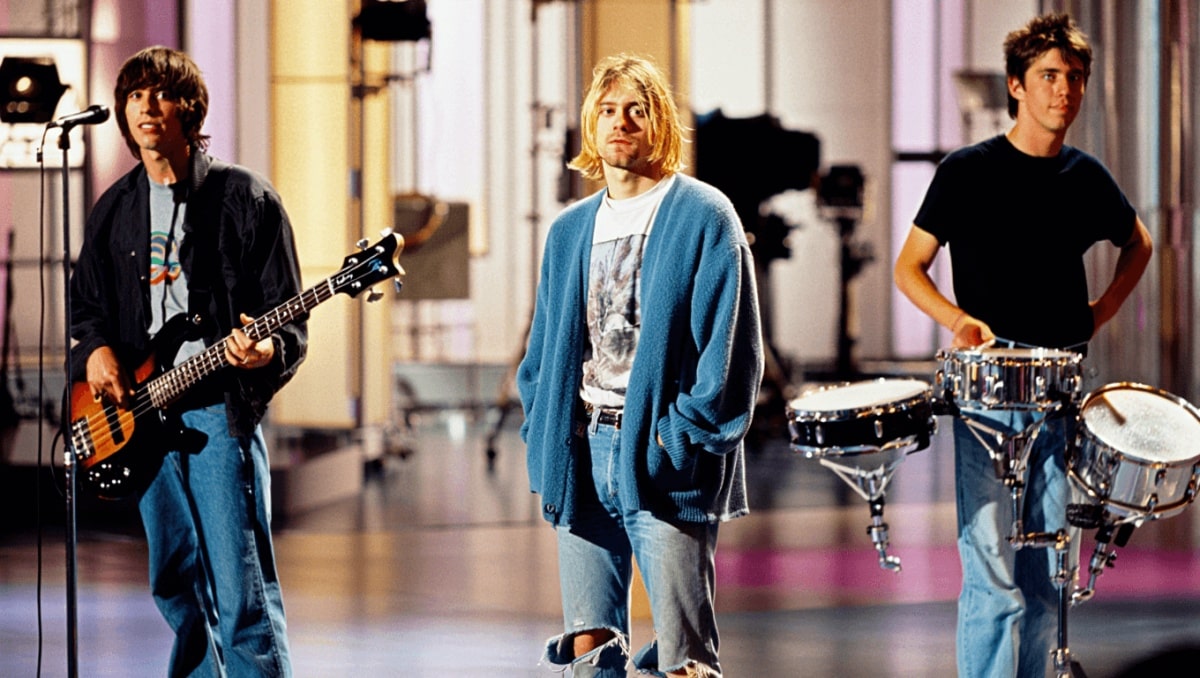
When Nirvana walked onto a BBC soundstage in November 1991, they brought more than a hit single. The band’s appearance on Top of the Pops turned into an unpredictable clash between TV choreography and grunge rebellion, and the brief, chaotic performance has been replayed and debated ever since.
Why Top of the Pops demanded mimed performances
For decades the BBC program Top of the Pops presented chart-topping acts under tight production rules. The show, broadcast from 1964 until 2006, often required artists to mime to the studio recordings. Producers argued this preserved broadcast quality and avoided technical problems. Many rock and alternative artists found those constraints restrictive.
Nas slams music industry over disrespect: teases new music, vows to address it
1992 vocal performances: 3 jaw-dropping moments that still amaze
By late 1991 Nirvana was no ordinary guest. Their album Nevermind had pushed them into the mainstream. Still, the band carried the anti-establishment attitude of the Seattle scene. Being told to fake a performance rubbed against that identity.
How producers compromised — and what the band did instead
Producers eventually allowed a middle ground: Kurt Cobain could sing live, but the instruments would be the recorded track. The band accepted the condition but resisted the spirit of it.
- Backing track: Guitars and drums came from the studio recording.
- Live vocals only: Cobain was permitted to deliver his voice live over the playback.
- Defiant acting: Each member visibly undercut the illusion of a live set.
On‑stage behavior that turned heads
- Kurt Cobain mimed guitar moves in a robotic way, then stopped pretending entirely.
- Dave Grohl played the drums in an exaggerated, careless manner.
- Krist Novoselic swung his bass behind his head and performed theatrical gestures.
- At one point Cobain muffled the vocal mic by putting it in his mouth, obscuring the only live element.
Vocal choices and the “weird voice”
When Cobain began to sing, his delivery shifted into an odd, lower register. The phrasing became lazy and drawn out. Some viewers thought he sounded ill. Cobain later said he was spoofing another singer, which added a layer of intentional irony to the odd timbre. Band members and crew later suggested the whole setup was provocation aimed at a program that expected polish.
Immediate response: shock, amusement, and headlines
The studio audience reacted with typical teen exuberance. Many in the crowd danced and cheered, making the clip feel like a live gig despite the playback. Critics at the BBC and some music press called the TV set piece a fiasco. Industry insiders described the moment as a missed opportunity for the band’s big televised moment.
Yet reaction was not uniformly negative. A portion of the U.K. audience saw the performance as authentic expression. For fans who valued attitude over perfection, the episode reinforced Nirvana’s anti-commercial image.
How people described the scene
- Some promoters and executives said the stunt ruined what could have been a landmark TV moment.
- Others celebrated it as a memorable pushback against pop production values.
- In later retrospectives, participants framed the performance as deliberate and iconic.
Legacy: why the Top of the Pops appearance endures
The clip of Nirvana on Top of the Pops has taken on mythic status. It’s replayed in documentaries and shared on social feeds. The moment captured tensions between mass media and a band that rejected radio-friendly presentation. For many, it’s proof that live TV can be a battleground for artistic control.
- New fans: The incident broadened Nirvana’s U.K. following.
- Cultural shorthand: The performance is cited when discussing authenticity in rock.
- Television history: It remains among the program’s most talked-about segments.
Image credit: Goedefroit Music/Getty Images











