
Show summary Hide summary
- What the sequel repairs from stage to screen
- Elphaba’s journey: Cynthia Erivo’s commanding turn
- Glinda’s evolution and Ariana Grande’s surprising range
- Supporting cast and fresh origin details
- A sharper political message for today’s viewers
- Visual design: from practical craft to glossy effects
- How the film handles iconic musical moments
- Why you should watch both parts
- Standout sequences and moments critics will talk about
- Where the adaptation takes liberties with the original
- Technical achievements and creative risks
- Key cast and creative credits
- What audiences will take away
The long-awaited second half of Jon M. Chu’s two-part adaptation delivers a richer payoff than many feared. Wicked: For Good tightens the musical’s shaky second act, gives Cynthia Erivo more room to soar, and leans harder into a political critique that feels timely and sharp.
What the sequel repairs from stage to screen
Theatrical productions often struggle when translated to film. This follow-up avoids that trap by reworking the musical’s rushed latter half. Where the Broadway show felt abbreviated, the movie expands scenes and adds new music. The result is a fuller arc and clearer emotional logic.
Nas slams music industry over disrespect: teases new music, vows to address it
1992 vocal performances: 3 jaw-dropping moments that still amaze
- Expanded character scenes make motivations clearer.
- Two new songs add emotional weight to key moments.
- The pacing gives the climax room to breathe.
Elphaba’s journey: Cynthia Erivo’s commanding turn
Cynthia Erivo returns as the green-skinned rebel with a complicated conscience. Her dramatic solos anchor the film. In one standout number, she confronts the burden of being labeled evil. Erivo’s voice and acting turn internal conflict into catharsis.
New music that deepens her arc
Erivo receives original material not on the Broadway stage. These additions clarify her motives and expand the theme of moral ambiguity. The songs keep the audience invested in Elphaba’s decisions.
Glinda’s evolution and Ariana Grande’s surprising range
Ariana Grande’s Glinda grows beyond bubble-headed charm. The screenplay gives her a genuine emotional journey. New scenes reveal vulnerability and moral choice. These moments help balance the film’s emotional center.
- Glinda’s fragility is shown in a tender new ballad.
- Her relationship with Elphaba becomes more complex.
- Both witches share additional duets, improving the payoff.
Supporting cast and fresh origin details
The movie fleshes out the backstories of familiar Oz figures. The Cowardly Lion, Tin Man, and Scarecrow receive fuller origin scenes. These sequences explain their later behavior and add sympathy to characters once treated as jokes.
- Marissa Bode’s Nessarose gains political power, with dark results.
- Ethan Slater’s Boq faces heartbreaking consequences.
- Peter Dinklage’s Dr. Dillamond lends gravitas to the animal rights subplot.
A sharper political message for today’s viewers
Wicked: For Good turns its spotlight on propaganda, manipulation, and scapegoating. The Wizard of Oz here is less a kindly ruler and more a skilled performer of deceit. Scenes that track the persecution of animals and dissenters recall 20th-century horrors and modern misinformation.
The filmmakers do not hide the comparison. A musical number frames the Wizard’s charisma as spectacle. The song and staging suggest how a charismatic leader can reframe facts to stay in power.
Visual design: from practical craft to glossy effects
The art direction swings between tactile sets and heavy CGI. The film’s production design is lavish. Costumes and art-nouveau flourishes are exquisite. Yet some moments rely more on virtual tricks than on practical props, changing the texture from the first part.
- Set design mixes old-fashioned detail with digital flourish.
- Costumes remain show-stopping and character-driven.
- CGI use is bolder, sometimes at the expense of tactile realism.
How the film handles iconic musical moments
Cult-favorite tunes still land, and new songs are woven into the fabric of the story. The film addresses the long-standing stage critique that the second act lacked an anthem on par with “Defying Gravity.” While no later number eclipses that classic, added duets and solos give the finale heft and emotional clarity.
Why you should watch both parts
The two films are meant to be companion pieces. Part 1 establishes the myth and the friendship. Part 2 completes character arcs and expands the world’s politics. Seen alone, each film feels incomplete. Together, they form a modern, revisionist take on Oz.
- Part 1 builds relationships and sets stakes.
- Part 2 resolves conflicts and clarifies motives.
- Both parts reward viewers with a fuller emotional pay-off.
Standout sequences and moments critics will talk about
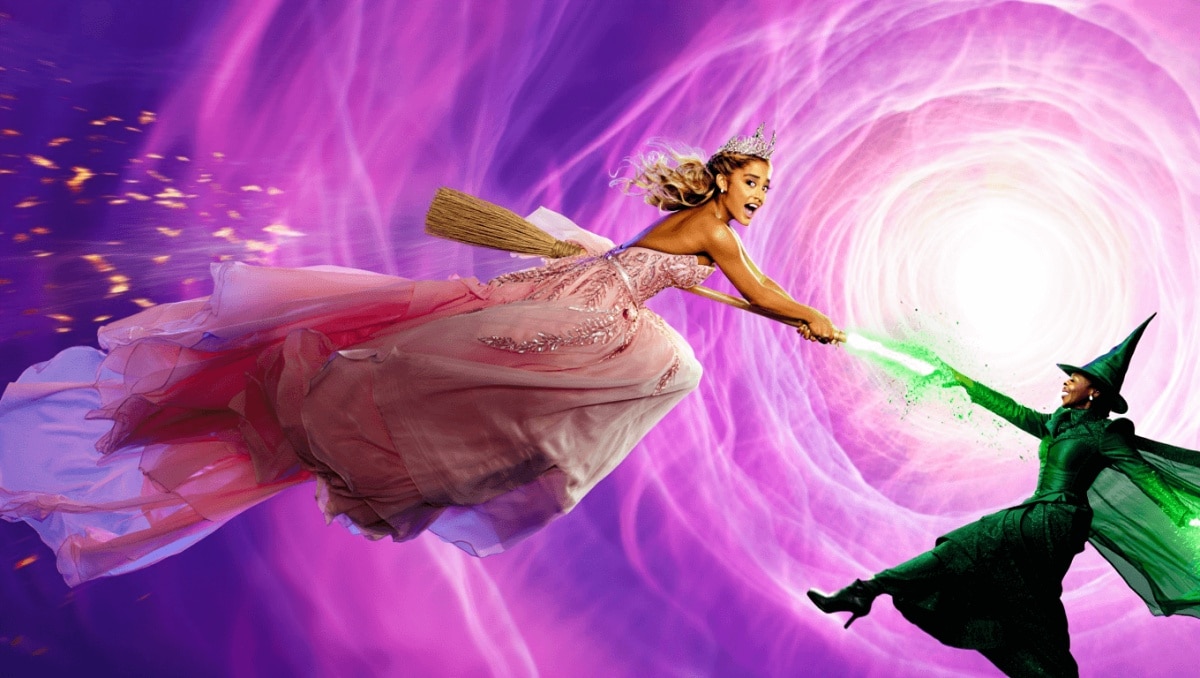
Certain scenes will stay with audiences. A liberating broomstick rescue, a public roundup that channels historical atrocities, and a climactic witch duel provide dramatic peaks. These sequences combine spectacle with moral urgency.
The film’s most affecting scenes are those that balance spectacle with sincere emotion. When the characters confront loss and betrayal, the musical beats land hard.
Where the adaptation takes liberties with the original
Rather than sticking precisely to Gregory Maguire’s novel or the Broadway book, Chu and his writers reshape elements to suit cinema. New songs and added scenes alter the emphasis on certain relationships. The movie privileges political satire and character nuance over literal fidelity.
Technical achievements and creative risks
Wicked: For Good pushes scope and ambition. The production assembles large-scale choreography, vocal performances, and cinematic spectacle. Some choices feel riskier than others, but the overall craftsmanship supports the film’s emotional aims.
- Music direction elevates several new numbers.
- Choreography remains inventive and cinematic.
- Editing smooths transitions between spectacle and intimacy.
Key cast and creative credits
- Director: Jon M. Chu
- Elphaba: Cynthia Erivo
- Glinda: Ariana Grande
- The Wizard: Jeff Goldblum
- Madame Morrible: Michelle Yeoh
What audiences will take away
The sequel is crafted to please fans and newcomers alike who see both films. It deepens the witch-versus-wizard myth, centers friendship, and asks uncomfortable questions about leadership. For viewers drawn to big musical cinema, it offers emotional moments and political bite.










