Show summary Hide summary
The Global Sumud Flotilla left Barcelona in early September carrying around 500 activists, including Greta Thunberg. Its goal was to pierce the blockade on Gaza and deliver aid. Instead, the mission ended with an Israeli naval interception and heated international debate about the treatment of detainees.
Why the flotilla set sail toward Gaza
Organizers said the convoy aimed to bring food, medicine, and global attention to Gaza’s humanitarian crisis. Activists described the voyage as a nonviolent protest against the blockade.
Pusha T slams today’s rap: everyone can just be good and be the same
80s British indie bands that changed American alternative rock forever
Their departure came as a United Nations inquiry reported serious violations in Gaza. The commission said Israel’s actions over nearly two years raised alarms and found patterns that it considered to be extreme breaches of international law.
Interception at sea and immediate fallout
On Oct. 1, Israeli naval forces intercepted several vessels from the flotilla. Crews boarded ships, detained many on board, and escorted some activists to shore. No ship reached Gaza.
Among those taken into custody was activist Greta Thunberg. The arrests sparked protests, media attention, and conflicting accounts about what transpired during detention.
Greta Thunberg’s detailed allegations of mistreatment
In a later interview with Swedish newspaper Aftonbladet, Thunberg described a sequence of events she said occurred during five days in custody.
- Physical force: She reported being struck, kicked, and handled roughly when arriving at a detention facility.
- Public humiliation: Thunberg said guards forced her into situations meant to demean, including placing an Israeli flag in contact with her and restricting her movements.
- Verbal abuse: She alleged officers used insults in Swedish, invoking phrases that translate to derogatory slurs.
- Searches and exposure: According to her account, detainees were taken to buildings for searches and were made to undress.
- Destruction of belongings: Thunberg says officials cut up personal items and tossed vital medicines into garbage bins.
- Dehydration and neglect: She described extreme heat, repeated pleas for water, and guards mocking those requests by displaying full bottles outside cells.
- Confinement in extreme conditions: Dozens were reportedly packed into a small cage under the sun. Some fainted, and guards allegedly threatened to use a gas cylinder.
- Restraints and transport: She recounted being tightly bound with cable ties, blindfolded, and placed in a freezing vehicle en route to a prison.
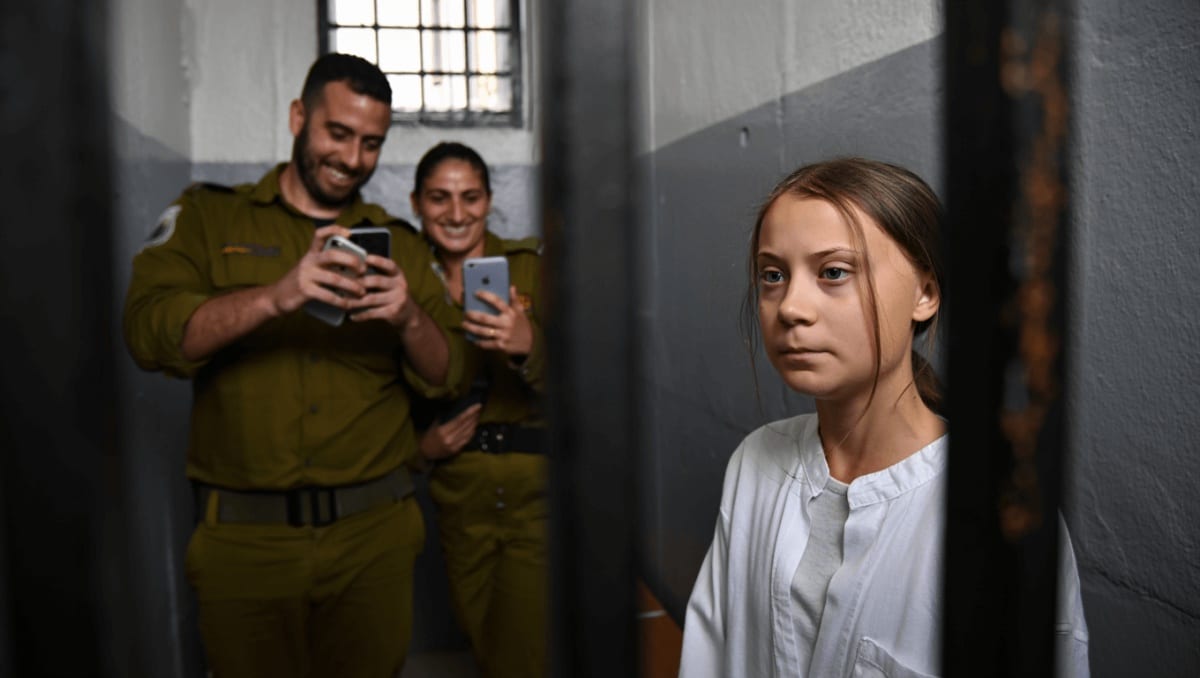
- Public spectacle: Thunberg says guards lined up to take photos while she sat restrained.
What she said about the detention environment
Thunberg described the scene inside the facility as chilling and chaotic. She reported seeing people forced to kneel with their foreheads to the ground. Injuries and bloodstains, she said, bore witness to past violence.
She emphasized that the experience left her in shock and struggling to recall every detail. Still, she stressed that the treatment she and other flotilla members received was only a fragment of what Palestinians reportedly endure.
Reaction from Israeli officials
Israeli authorities dismissed the allegations. A statement reported by international outlets said detainees’ legal rights were observed. The statement added that Thunberg declined to fast-track her deportation and did not file formal complaints while in custody.
The Israeli foreign ministry framed the detentions as routine security actions and rejected descriptions of abuse as false.
Greta’s public posture after deportation
After her release and deportation on Oct. 6, Thunberg initially avoided focusing on her personal ordeal. She repeatedly redirected attention to Palestinians facing long-term detention without trial.
Later, in the Aftonbladet interview, she chose to speak more openly. Her account aimed to spotlight the broader human rights concerns she and others say they witnessed.
Broader implications and international debate
The incident has intensified a global conversation about maritime protests, the Gaza blockade, and the treatment of detainees. Supporters of the flotilla argue that the interception underscores the restrictions faced by Palestinians.
Critics and some governments defend Israel’s right to control access to Gaza on security grounds. The differing narratives have fueled diplomatic disputes and media scrutiny.
Voices calling for accountability
Human rights groups and activists have urged independent investigations into reports of mistreatment. They point to hospital reports, detainee testimonies, and findings from international bodies as part of the evidence base that requires scrutiny.
For many observers, the episode raises questions about how states handle nonviolent protest at sea and how detainees’ rights are protected in practice.