
Show summary Hide summary
- What happens in Train Dreams: a plain man’s life against a changing West
- Characters and performances: Joel Edgerton leads a spare, emotional journey
- Major themes explored: solitude, memory, progress and guilt
- Visuals and production design: how the film builds a lived-in West
- Music and sound: Bryce Dessner’s score pulls the story together
- Direction and adaptation: Clint Bentley and Denis Johnson’s story
- Audience experience: who will connect with this film
- Release details and festival reception
Joel Edgerton anchors a quietly powerful film that slips between memory and landscape to trace a single life shaped by the fading frontier. Train Dreams moves slowly, but it rewards patience with restless emotions, striking visuals, and a score that lingers long after images fade.
What happens in Train Dreams: a plain man’s life against a changing West
Set from 1917 to 1968, Train Dreams follows Robert Grainier, a stoic railroad hand working the timber and tracks of Idaho. The film pulls us into small moments: a courtship in a tiny village, the building of a modest cabin, and long stints on dangerous railroad projects. It is a portrait of a life interrupted and reshaped by modern forces.
Nas slams music industry over disrespect: teases new music, vows to address it
1992 vocal performances: 3 jaw-dropping moments that still amaze
Key plot points include:
- Robert’s early years on the Spokane International Railway and in logging camps.
- His relationship with Gladys Olding and the birth of their daughter.
- A traumatic act of racial violence that haunts him throughout the story.
- Years of searching for meaning after personal loss and social change.
The film departs from Denis Johnson’s novella in a few crucial moments. On screen, Robert’s choices around a racist murder are shown with restraint. That omission reshapes his internal guilt and the film’s moral landscape.
Characters and performances: Joel Edgerton leads a spare, emotional journey
Joel Edgerton carries the film in a deeply inward portrayal. He rarely explodes; instead he conveys sorrow and stubbornness through small gestures and steady presence. This restraint lets the film breathe.
Standout supporting roles
- Felicity Jones as Gladys Olding, who brings warmth to domestic scenes.
- Nathaniel Arcand as Ignatius Jack, a Kootenai friend who helps rebuild Robert’s life.
- Kerry Condon as Claire, a forest service worker who offers late companionship.
- William H. Macy in a memorable turn as Arn Peeples, a reflective wanderer.
Will Patton’s narration supplies a weathered voice that connects the film’s past with its future. His tone adds a folklike authority without flattening the story.
Major themes explored: solitude, memory, progress and guilt
Train Dreams touches on several themes that feel timely and timeless. The film interrogates how a man navigates loneliness and the erosion of familiar ways of life. It also looks at the human cost of industrial expansion.
- Solitude: Long stretches of silence underscore Robert’s isolation.
- Memory: Recollections and regret shape his identity.
- Modernity vs tradition: Tools and machines creep into landscapes once tamed by hand.
- Racial violence: The film refuses to ignore a brutal event that defines Robert’s conscience.
Visuals and production design: how the film builds a lived-in West
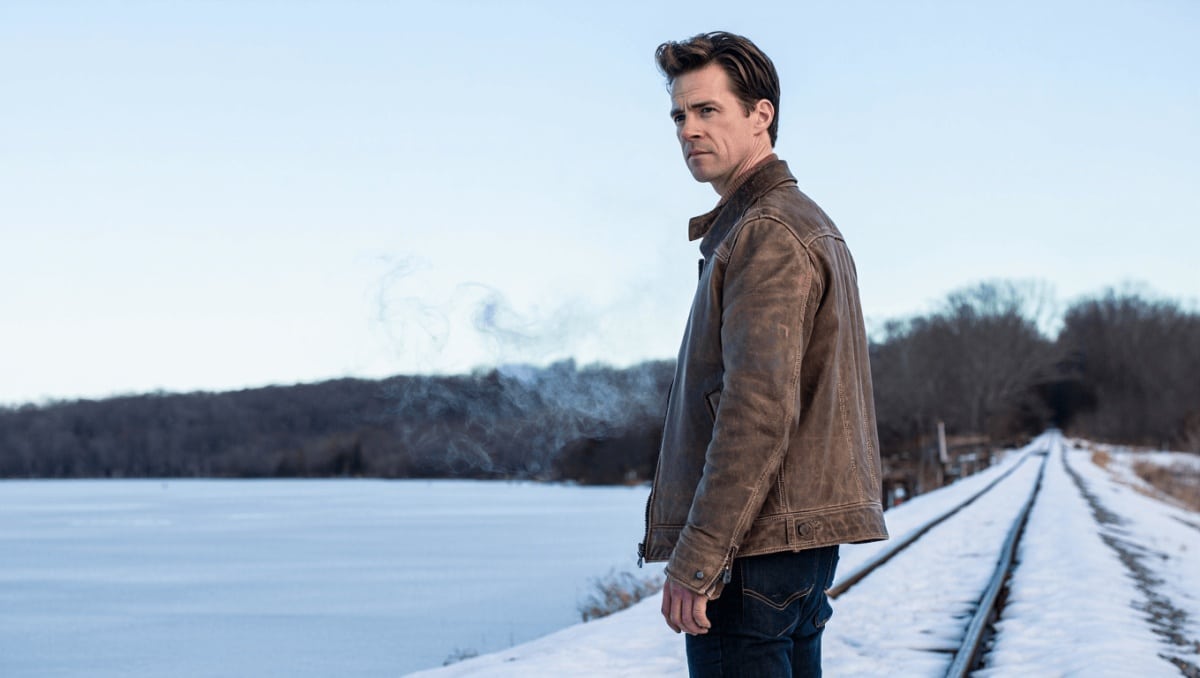
Adolpho Veloso’s cinematography captures both the small textures of domestic life and the grandeur of Idaho’s forests. Camera choices shift between intimate handheld frames and composed wide shots.
Production designer Alexandra Schaller recreates a world in transition. The Graniers’ cabin has handmade details. Logging camps show the shift from muscle to mechanised work. These choices make the setting feel authentic.
Memorable image motifs
- Falling ancient trees shot from close angles to convey danger.
- River stones and floral fields that mark home and memory.
- Train tracks and bridges as symbols of progress and loss.
Music and sound: Bryce Dessner’s score pulls the story together
Bryce Dessner supplies an atmospheric score that serves as the film’s emotional anchor. His music alternates between delicate lyricism and brooding drone.
The soundtrack does more than support mood. It interprets Robert’s inner life when dialogue is sparse. Dessner’s strings and textures turn silence into a narrative force.
Nick Cave collaboration: The film closes with an original song by Nick Cave and Dessner. That haunting ballad compresses the movie’s themes into a few minutes of lyric and mood.
Direction and adaptation: Clint Bentley and Denis Johnson’s story
Clint Bentley directs with patience and a focus on small human acts. He reunites with co-writer Greg Kwedar, their collaboration shifting away from the brisker tone of previous work. The result is meditative and observant.
Adapting Denis Johnson’s novella means choosing which interior moments to show and which to leave implied. Bentley leans into silence and suggestion rather than explicit exposition. That choice reshapes the novella’s texture and asks viewers to fill in emotional blanks.
Audience experience: who will connect with this film
Train Dreams is not a fast entertainment piece. It will appeal to viewers who prefer character-driven stories. If you enjoy films that unfold slowly and reward close attention, you will likely find its rhythms satisfying.
- Fans of literary adaptations and quiet dramas will appreciate it.
- Viewers looking for blockbuster pacing may find it slow.
- Those who value strong sound design and cinematography will be rewarded.
Release details and festival reception
The film screened at the BFI London Film Festival to early critical attention. It opens in select U.S. theaters on Nov. 7. A global streaming release on Netflix follows on Nov. 21.
Early reviews emphasize Edgerton’s performance, Dessner’s score, and Veloso’s visuals. The film’s deliberate tempo and moral weight are common talking points in press responses.










