
Show summary Hide summary
- Spotify’s subtle rollout of translated lyrics
- Which languages appear on LUX and why the multilingual approach matters
- How the MusixMatch tie-in could be powering translations
- Potential benefits and pitfalls of live lyric translation
- Industry context: testing translations beyond music
- What artists and listeners should watch next
- Why LUX is an unusual catalyst
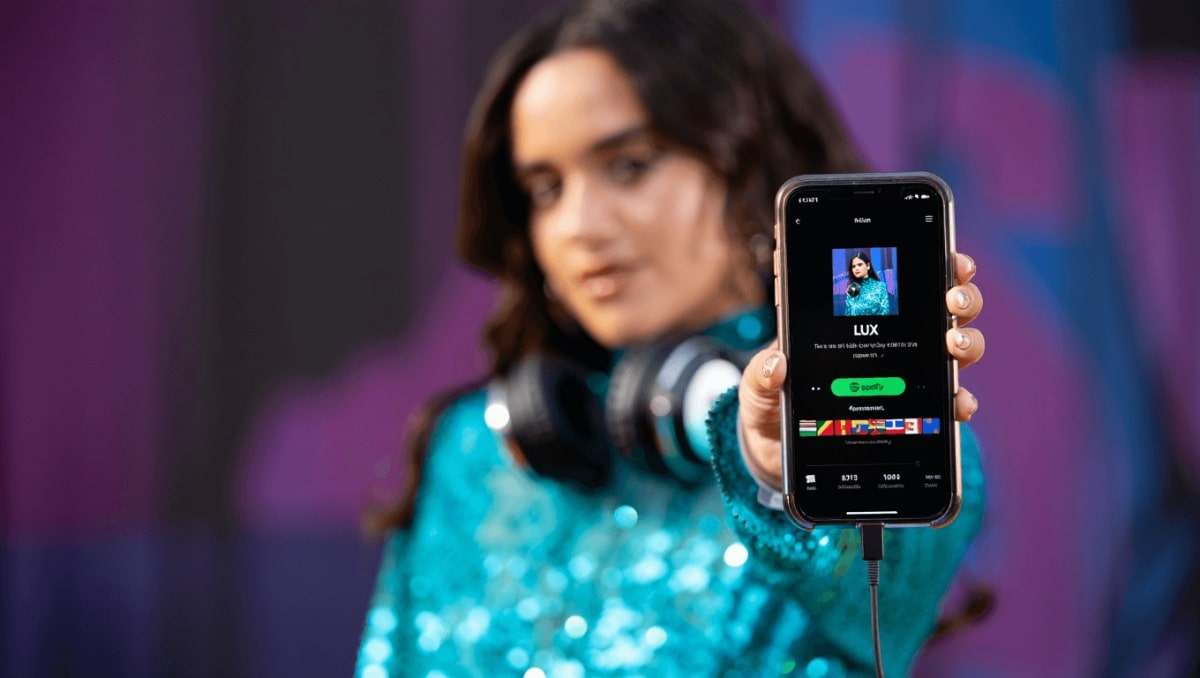
Spanish star Rosalía dropped her fourth studio album, LUX, and listeners noticed more than catchy hooks. The record features vocals in 13 different languages, and on streaming platforms like Spotify, fans began spotting a new translation option for the album’s lyrics. That mix of linguistic daring and a subtle tech rollout has reignited industry talk about automatic lyric translation.
Spotify’s subtle rollout of translated lyrics
Shortly after LUX arrived, some listeners on Spotify reported an on-screen choice to view English translations of lyrics. The feature did not appear for everyone. Early reports suggested availability varied by country, with the United States and Spain among the markets where translations showed up first.
Nas slams music industry over disrespect: teases new music, vows to address it
1992 vocal performances: 3 jaw-dropping moments that still amaze
Spotify has not issued a wide public announcement about launching a universal lyric-translation tool for music. Still, industry contacts point to an expanded relationship with MusixMatch that made LUX a practical test case.
The headline: songs from LUX can be displayed with translated lyrics in multiple languages. That has led listeners and press outlets to wonder whether Spotify is quietly scaling up an automatic translation capability across its catalog.
Which languages appear on LUX and why the multilingual approach matters
Rosalía performs on LUX in her native Catalan and Spanish, and also sings in languages such as Japanese, Ukrainian, Arabic, Latin, and Sicilian. The album’s linguistic range is rare for a mainstream pop release.
- Catalan and Spanish anchor the record in her roots.
- Japanese and Arabic introduce sonic and cultural textures.
- Latin and Sicilian add historical or regional flavor.
- Other languages deepen the album’s global reach.
For listeners who don’t speak those languages, embedded translations can change how a record is received. Lyrics carry cultural references and emotional detail that often get lost in performance alone. Translation can help bridge that gap — if it is done with sensitivity.
How the MusixMatch tie-in could be powering translations
Spotify’s partnership with MusixMatch supplies lyric metadata for millions of tracks. Sources familiar with the companies say the expanded integration now supports translated lyric displays in certain markets.
- MusixMatch provides the text layer that can be mapped to audio.
- Translation can be generated automatically or curated by humans.
- Key markets appear to be prioritized for early releases.
LUX’s release on November 7 seems to have activated that integration in select regions. Whether the translations are machine-generated or reviewed by editors will affect their fidelity and the listener experience.
Potential benefits and pitfalls of live lyric translation
Automatic translation at scale promises to reshape discovery and accessibility for global music.
- Benefits:
- Listeners can understand songs beyond their language skills.
- Artists gain clearer global exposure for lyrical content.
- Streaming platforms can increase engagement and session length.
- Risks:
- Machine translation can miss nuance or poetic meaning.
- Regional idioms and wordplay may be mistranslated.
- Copyright and licensing must be handled across languages.
For a record like LUX, where the choice of language is integral to mood and storytelling, translation quality matters as much as availability.
Industry context: testing translations beyond music
Spotify has explored translating spoken-word content before. Work on podcast translation tools was reported in 2023, and the concept of automated translation has circulated inside streaming firms for years.
Using a multilingual album as a test makes sense. An album spanning many tongues gives engineers a complex data set to evaluate timing, alignment, and cultural correctness.
What artists and listeners should watch next
Rolling the feature out more broadly would require solving technical and editorial problems. Key questions remain:
- Will translations be labeled as machine-generated or human-reviewed?
- How will platforms credit lyric providers and translators?
- Can cultural nuance be preserved in automated outputs?
Artists who mix languages could see a direct boost in global understanding. Fans can expect a faster connection to non-native lyrics, but they should also watch for inconsistencies and errors as the technology scales.
Why LUX is an unusual catalyst
Albums sung in a dozen-plus languages are scarce in the pop arena. That rarity makes LUX an ideal stress test for any translation feature. Its release forced streaming services and lyric partners to confront the practicalities of multilingual display and translation quality.
Whether Spotify extends the capability to more releases depends on technical readiness and demand. For now, listeners who encounter translated lyrics on LUX are seeing a small window into how music consumption might evolve.










