
Show summary Hide summary
- How del Toro retools Shelley’s tale for modern audiences
- The film’s central themes: inheritance, abuse, and the drive to defy death
- Standout cast: a short guide to the performances
- Visual worldbuilding: sets, prosthetics, and costume design
- Sound and music that push emotional tides
- Shifts in perspective: narrative choices that redefine the story
- Costume, color, and creature aesthetics that tell a deeper story
- Why this adaptation matters now
- Practical details: festival response and release plan
Guillermo del Toro returns to familiar territory and reshapes it into something both tender and terrifying. His new take on Mary Shelley’s Frankenstein premiered in Toronto, and it reimagines the classic as a story about family, power, and the cost of trying to play god. The film pairs haunting visuals with intense performances, giving a well-known tale fresh emotional stakes.
How del Toro retools Shelley’s tale for modern audiences
Del Toro builds a version of Frankenstein that keeps the original’s bones but reconfigures its heart. He frames the narrative with a maritime rescue that quickly becomes a confessional. From there the story moves through memory and desire.
Nas slams music industry over disrespect: teases new music, vows to address it
1992 vocal performances: 3 jaw-dropping moments that still amaze
The director leans into themes of lineage and repetition. Science and romance collide. Violence and yearning sit side by side. The movie treats horror as a language for family trauma.
The film’s central themes: inheritance, abuse, and the drive to defy death
At the core is a man shaped by his past. His choices echo the discipline he once endured. The film uses personal history to explain monstrous acts.
- Parenting as pattern: Childhood punishment becomes adult cruelty.
- Grief as motivation: Loss fuels obsession with bringing life back.
- Creation and responsibility: Crafting life forces the creator to confront his failures.
Del Toro makes the cycle of abuse feel intimate and inevitable. The monster is not only a scientific experiment. He is the living result of unresolved family wounds.
Standout cast: a short guide to the performances
The film assembles a strong ensemble that anchors del Toro’s emotional extremes.
- Oscar Isaac as Victor Frankenstein — driven, haunted, and exacting.
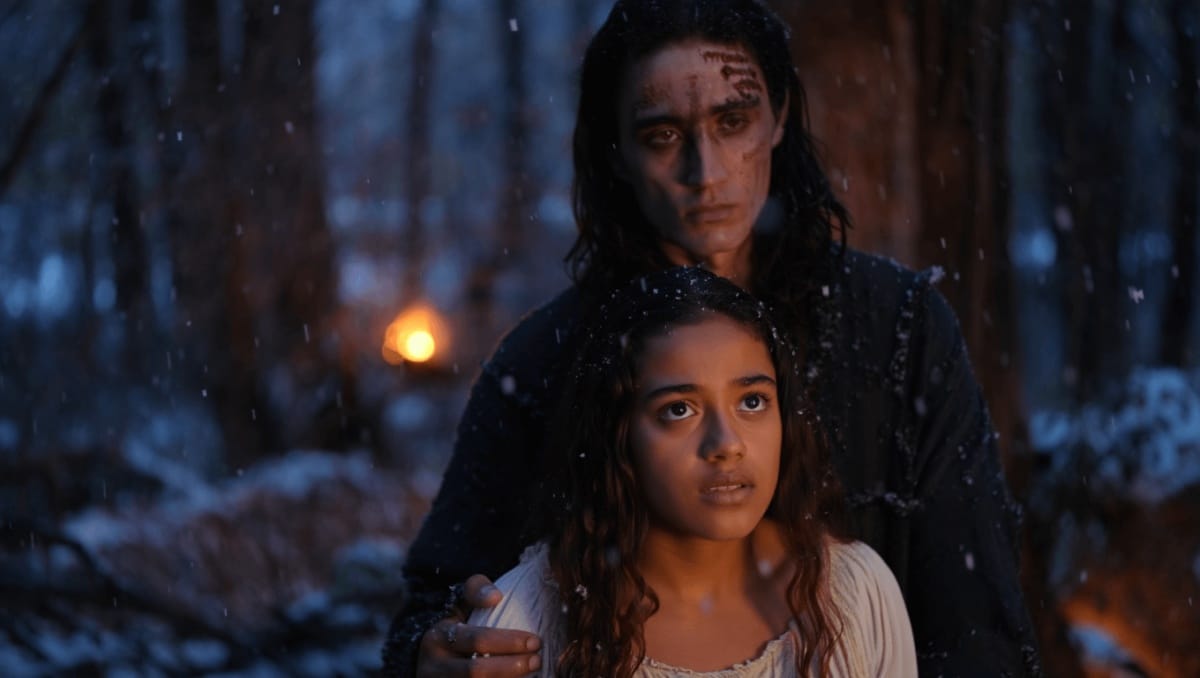
- Jacob Elordi as the Creature — physical, vulnerable, and heartbreakingly expressive.
- Mia Goth in dual shades — both the beloved and the intellectual counterpoint.
- Charles Dance and Christoph Waltz in pivotal supporting roles.
Oscar Isaac: a driven creator haunted by his past
Isaac avoids simple mad-scientist clichés. He plays Victor as a man intent on control. Ambition masks a deep fragility. Moments of tenderness sit close to his ruthlessness.
Isaac’s performance reads as both architect and victim of the drama he unleashes. You sense the thinker obsessed with rectifying a childhood wound.
Jacob Elordi: the physical poetry of the Creature
Elordi’s monster is a study in contrasts. Towering and graceful, he moves with curious, childlike wonder.
Much of his work is nonverbal. Body language and subtle vocal textures carry emotional weight. When the Creature finally speaks at length, the voice carries ache and hope.
Elordi turns the monster into a figure of empathy. You see both the danger and the humanity at once.
Mia Goth: intelligence and warmth as moral spark
Goth plays a character who shares Victor’s curiosity but differs in compassion. She becomes a mirror for what Victor lacks.
Her chemistry with the men on screen gives the film a mournful grace. She sees the Creature with more clarity than its maker does.
Visual worldbuilding: sets, prosthetics, and costume design
Del Toro’s films are known for their lush craft. This one is no exception.
- Set design blends the grotesque and the elegant.
- The Creature’s prosthetics emphasize scars and symmetry.
- Costumes range from soot-dark garments to airy gowns.
Many props and textile choices feel deliberate. Red recurs as an emblem of life, blood, and passion. Black and white contrasts recall the film’s moral extremes.
The visuals walk a line between fairy tale opulence and clinical horror. At times the production design reads like both a myth and a machine.
Sound and music that push emotional tides
The score and sound design do more than accompany scenes. They shape how we feel about them.
- Strings underscore longing and loss.
- Foley work gives violence a visceral edge.
- Silence is used sparingly and to strong effect.
Music swells where the film asks for empathy. When the Creature discovers the world, orchestral lines swell in awe and sorrow.
Audio elements amplify the emotional stakes without overwhelming the performances.
Shifts in perspective: narrative choices that redefine the story
Del Toro experiments with viewpoint. The tale moves between creator and created. A maritime framing device provides distance and urgency.
By alternating perspectives, the film asks the audience to weigh truth against feeling. Who is reliable? Whose version of events should we trust?
These structural choices let the movie feel both intimate and epic. Memory, confession, and myth blend into a nonlinear tapestry.
Costume, color, and creature aesthetics that tell a deeper story
Costume designer choices are symbolic. Outfits reveal character and status.
- Worn leather and gloves suggest control and containment.
- Gossamer fabrics signal vulnerability and romanticism.
- The Creature’s coat and scars read as armor and evidence.
Color, particularly red, keeps appearing in small, sharp moments. The repetition works like a visual refrain.
Why this adaptation matters now
The film returns to questions that echo through our times. It probes the ethics of creation. It examines how trauma passes from one generation to another.
Del Toro frames the monster as a mirror. Society’s reaction to difference becomes the true horror. Acceptance or rejection fuels each character’s fate.
Practical details: festival response and release plan
The movie had its North American premiere at the Toronto International Film Festival to strong reactions. Critics praised the visuals and the lead performances.
- Limited theatrical release: Oct. 17.
- Streaming arrival on Netflix: Nov. 7.
- Runtime and ratings varied by market; check local listings for details.
Early buzz centers on del Toro’s reinvention and the emotional power of the performances. Audience chatter highlights the film’s blend of romance and horror.










