
Show summary Hide summary
- Third detention in Saint Petersburg: what happened to the young musician
- Legal tactic behind the detentions: the so-called judicial carousel
- Viral performances and a growing circle of defenders
- How laws changed: censorship and harsher penalties since 2019
- Criminalization and language limits placed on public debate
- Repression beyond pop-up concerts: nationwide arrests and prominent cases
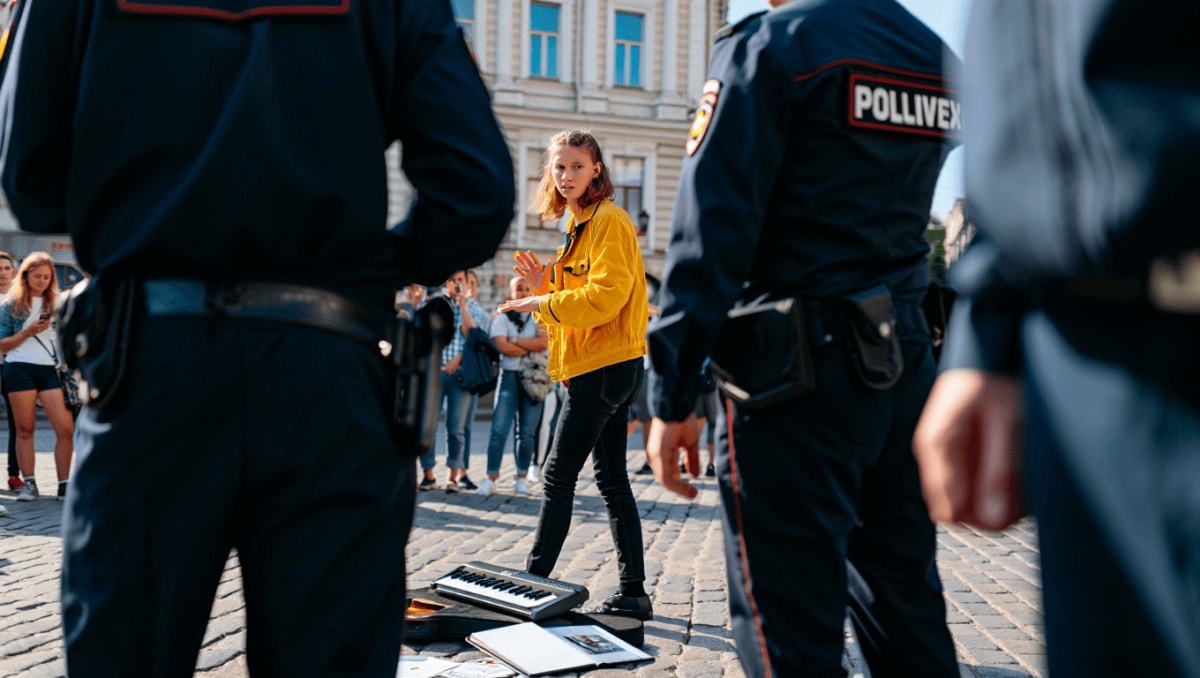
An 18-year-old street performer in Saint Petersburg was detained again after staging spontaneous concerts that criticized Moscow’s policies. Diana Loginova, known on stage as Naoko, has become a visible face of youth protest through short, public pop-up shows. Her songs — many written by artists now living abroad — draw crowds and attention. Authorities say the performances break public order; supporters call the detentions political repression.
Third detention in Saint Petersburg: what happened to the young musician
Loginova, a music student, has been taken into custody for the third time in recent weeks.
Nas slams music industry over disrespect: teases new music, vows to address it
1992 vocal performances: 3 jaw-dropping moments that still amaze
- Stage name: Naoko.
- Age: 18.
- Location: Saint Petersburg, Russia.
- Primary allegation: organizing a mass public gathering.
Officials say she will serve another 13 days in jail. This arrest came right after she completed two earlier short sentences. Authorities previously punished her for what they termed “disrupting public order” and “petty hooliganism.”
Legal tactic behind the detentions: the so-called judicial carousel
Human rights lawyers describe a pattern that keeps activists cycling through brief jail terms.
By charging people with a sequence of minor offenses, the state can hold them repeatedly without long trials. Advocates call this the judicial “carousel”. The method prolongs detention and discourages further public action.
Viral performances and a growing circle of defenders
Loginova first drew wider notice after video clips of her street concerts spread online. The footage captured her voice, a guitar, and crowds gathered around impromptu sets.
That visibility prompted other young musicians to speak up. Some joined public shows in solidarity. A number of her bandmates from Stoptime have faced police attention as well.
- Alexander Orlov, Stoptime guitarist, was arrested and given 13 days.
- In Perm, about 900 miles from Saint Petersburg, Yekaterina Romanova, 20, received 15 days for staging concerts in support of Loginova.
- Romanova had already served a separate 7-day sentence earlier in the month.
How laws changed: censorship and harsher penalties since 2019
Russian statutes adopted from 2019 onward outlawed what authorities call “blatant disrespect” toward the army, the president, and national symbols.
Those measures already allowed short jail terms for repeat breaches. After the 2022 invasion of Ukraine, the state strengthened these rules.
- New provisions increased penalties for public criticism.
- Official efforts targeted what the government labeled “fake news” about military operations.
- State directives discouraged independent reporting on the conflict.
Criminalization and language limits placed on public debate
The tightened laws made public dissent riskier. Speaking against the armed forces or government became punishable by long prison terms in some cases.
Authorities also restricted how the conflict can be described in Russia. Words like “war” and “invasion” were discouraged in official and many media contexts. Reporting that challenged the official line could be treated as a criminal act.
Repression beyond pop-up concerts: nationwide arrests and prominent cases
Since the legislative clampdown, tens of thousands of people have faced detention for protests and anti-war statements.
High-profile exile groups have not been spared by legal action. Members of the punk collective Pussy Riot were tried in absentia and handed long sentences. Those rulings ranged from several to more than a decade behind bars, though they would apply only if defendants return to Russia.
The convicted artists rejected the verdicts and described the judgments as politically motivated. Human rights groups say the broader pattern chills independent art and public debate across the country.










