
Show summary Hide summary
At a Florida beach hotel in 1980, a two-day meeting of scientists, politicians and activists tried to translate mounting climate science into action. Tom McCarthy’s film reimagines that tense, procedural moment, asking whether bureaucratic caution, pride and short-term politics doomed the chance to act.
From dusty transcripts to a taut climate drama
Based on Nathaniel Rich’s Losing Earth, the movie stages a real conference at the Don CeSar hotel. The central challenge is simple: craft a single statement that explains the danger of rising carbon dioxide and proposes next steps.
90s R&B: 3 artists who prove you have great taste
Drakeo the Ruler’s estate settles after fatal stabbing

McCarthy leans on the original meeting records for authenticity. A stenographer types the proceedings, and bits of the transcript appear onscreen to remind viewers the film echoes real debate.
Still, this is not a dry reenactment. The director, cinematographer and editor reshape long technical discussions into a film that feels urgent.
How factual material becomes cinematic tension
- Camera movement turns a roundtable into a choreography of glances and power plays.
- Sharp editing compresses dense scientific explanations into rising anxiety.
- A percussion-forward score nudges the audience toward impatience.
Performances that keep the meeting alive
The cast injects life into procedural debate. Paul Rudd plays the moderator trying to hold a fractious room together.
Actors create clear emotional stakes for otherwise technical talk. Evan Peters’s activist is restless and urgent. Paul Giamatti gives a weary pragmatist a surprising moral depth in a key private scene.
Standout roles
- John Turturro as an MIT engineering professor, mixing dark humor with bleak warnings.
- Jason Clarke as a meteorologist who minimizes future harms and foreshadows denial.
- Tatiana Maslany and Amy Ryan as two of the few women in the room, their measured interventions highlighting gendered silences.
- Nina Arianda as the stenographer, whose work anchors the film’s record-keeping frame.
These performances turn policy arguments into human conflict, revealing fear, stubbornness and genuine care in roughly equal measure.
Where the film succeeds technically
Stuart Dryburgh’s camera traces the debate like a detective, never letting the viewer drift. Jane Rizzo’s editing keeps scenes brisk. Bryce Dessner’s score adds rhythm and menace.

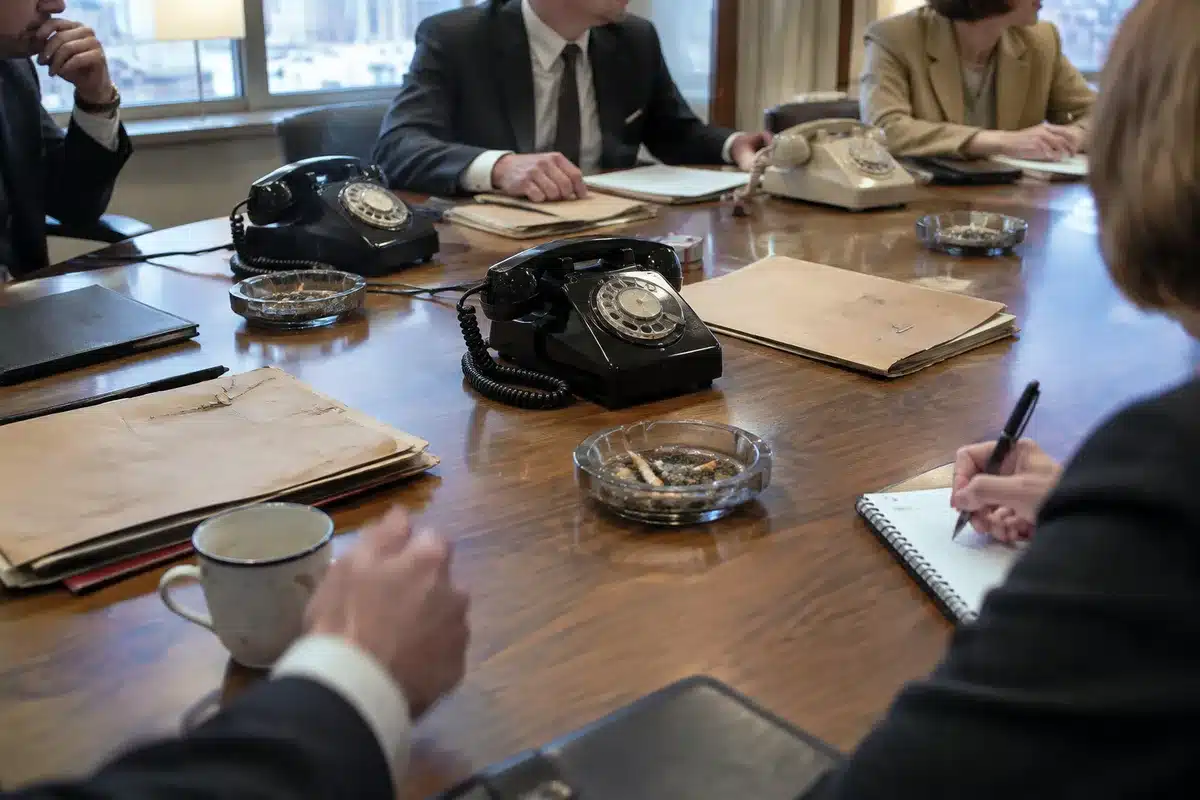
The production design and costuming quietly reinforce the era. Small details — cigarette smoke, rotary phones, worn folders — root the film in 1980 while stressing the modern echoes.
When the drama slips from the transcript
McCarthy departs from verbatim material in several scenes. Those invented moments sometimes land, but sometimes feel sentimental or contrived.
- A comic or romantic detour can undercut the film’s urgency.
- Broad one-liners aim for clarity but risk flattening complex arguments.
One sequence that leaves the conference and follows characters into the hotel’s social spaces tries to humanize the stakes. It also jolts the film toward melodrama.
The film’s moral temperature: a critique
The movie exposes many reasons the meeting produced weak outcomes. Speakers worry about costs, national coordination, personal sacrifice and an uncertain political future.
Those explanations still resonate. Debates about economic burden, collective action and political turnover echo today.
Yet the film rarely expresses the full moral outrage the audience might feel. It captures confusion, regret and irony, but often stops short of sustained anger or clear indictment.
What the story says about collective inaction
The narrative traces how plausible objections hardened into decades of delay. It suggests a pattern: knowledge emerges, debate follows, then paralysis sets in.
McCarthy dramatizes that pattern with close-ups on hesitation and lapses in courage. He shows how institutional rhythms and personalities matter as much as the science.
Questions the film leaves open
By focusing on one meeting, the movie invites broader reflection. How do tiny, procedural choices shape global outcomes? When do warnings become mandates?
Audiences are left to weigh whether dramatizing history can spur more action today, or whether cineaste caution mirrors the real-world hesitation it depicts.










