
Show summary Hide summary
- Frequent scenes after Trump rallies and inaugurations
- Clean crowds: the “No Kings” protests example
- Social media reactions and local stories
- Why post-event cleanup shapes public perception
- Organizers, volunteers, and municipal roles
- Practical steps to reduce litter at large gatherings
- Image and accountability in political movements
- Join the conversation
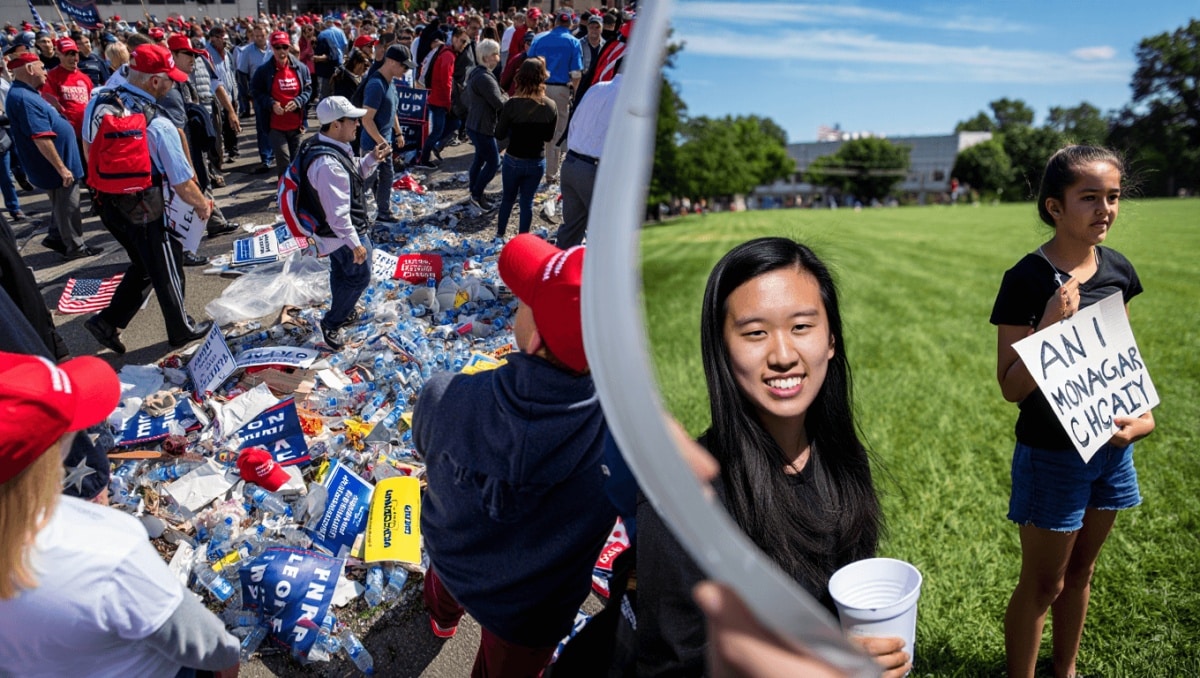
Photos from recent political gatherings have sparked a heated debate online about who cleans up after large crowds. Images of litter-strewn streets after some Trump-aligned events sit in sharp contrast with spotless fields following massive anti-monarchy demonstrations in Chicago. The visual gap has reignited conversations about civic responsibility, event management, and political image.
Frequent scenes after Trump rallies and inaugurations
Multiple images circulating on social media show trash, discarded flags, and food wrappers left in public spaces after rallies tied to former President Trump. These scenes are not isolated to one college or city. Observers pointed to similar piles after the 2017 inauguration parade and other campaign appearances.
KATSEYE postpones another concert: illness details remain undisclosed
Cupertino: a stylish legal drama packed with tech twists
Critics argue these photos undermine the movement’s message and feed into wider public frustration.
Clean crowds: the “No Kings” protests example
By contrast, photos from a large Chicago protest—reported to draw over 100,000 people—depict sidewalks and parks left largely free of litter. That spotless aftermath has been widely shared as evidence of organized, conscientious turnout.
Key facts about the protest cleanup
- Attendance estimates exceeded 100,000.
- Public spaces were photographed with minimal trash.
- The clean images prompted praise from across the political spectrum.
Social media reactions and local stories
Voices online quickly weighed in. Some users celebrated the tidy aftermath as a sign of dignity and civic pride. Others contrasted it with earlier photos of trash left at conservative gatherings.
- One user said volunteers in a small town stayed late to pick up stray litter and found little to collect.
- Another commented that seeing a clean venue gave them a rare sense of pride amid recent disappointments.
- Opponents used the images to highlight what they see as hypocrisy between slogans and behavior.
The conversation mixed applause and criticism, with many noting that optics matter as much as turnout numbers.
Why post-event cleanup shapes public perception
Litter after marches and rallies becomes a visual shorthand. It informs media coverage and influences how undecided observers judge a movement.
- Clean sites suggest organization and respect for community spaces.
- Messy sites can fuel negative narratives and local resentment.
- Municipal cleanup costs and environmental impacts are real and measurable.
Organizers, volunteers, and municipal roles
Event cleanup often falls to a mix of organizers, grassroots volunteers, and city services. The level of planning determines outcomes.
- Pre-event logistics: number of bins, waste sorting options.
- On-site teams: volunteer crews and contracted cleanup squads.
- Post-event follow-up: rapid pickup reduces long-term damage.
Well-executed cleanup reduces costs and helps maintain community trust.
Practical steps to reduce litter at large gatherings
Communities and organizers can adopt straightforward measures to keep public spaces tidy.
- Install more trash and recycling stations.
- Deploy visible volunteer teams with branded vests.
- Require vendors to follow waste-reduction rules.
- Offer incentives or deposit schemes for reusable items.
- Coordinate with city sanitation for rapid removal after the event.
Image and accountability in political movements
How supporters behave in public becomes part of a movement’s narrative. Images of post-event conditions travel fast and shape long-term reputations.
Actions on the ground often speak louder than slogans in the court of public opinion.
Join the conversation
Readers on social platforms have been sharing thoughts and local experiences about cleanup efforts. Share your take or a similar local example in the comments to add to the discussion.










