

Show summary Hide summary
- What The Social Reckoning is really about: a whistleblower film, not a sequel
- Aaron Sorkin steps into the director’s chair and shapes a timeless story
- How Mikey Madison built Frances Haugen from research to red carpet
- Making Zuckerberg human again: choices about tone and portrayal
- On-set dynamics: intense performances and collaborative energy
- Storytelling choices that shape audience response and reach
- Freedom, limits, and the reality of regulation in the tech era
- Misinformation, mental health, and the film’s cultural urgency
- Industry context: studio consolidations and the future of political films
- Cast choices, career moves, and audience hopes
- Preparing audiences and handling expectations
Aaron Sorkin’s latest film arrives this October with a different aim than the movie many viewers remember about Facebook’s origin. The Social Reckoning steps away from origin drama and instead tracks the fallout of the social network’s rise through the eyes of a whistleblower. The result is a tense, character-driven film that places Frances Haugen’s moral crisis and public testimony at the center, while keeping familiar names and forces in supporting roles.
What The Social Reckoning is really about: a whistleblower film, not a sequel
The new feature reframes the Facebook story. Rather than retelling the platform’s founding, it examines consequences. Frances Haugen, a mid-level former employee turned whistleblower, anchors the narrative.
Nas slams music industry over disrespect: teases new music, vows to address it
1992 vocal performances: 3 jaw-dropping moments that still amaze

Key distinctions:
- Mark Zuckerberg is present but no longer the central viewpoint.
- The film follows Haugen’s path from believer to critic.
- Reporting on the company’s internal research — widely known as the Facebook Files — drives major scenes.
Jeremy Strong portrays Zuckerberg in a supporting role. Mikey Madison takes the lead as Haugen. The film also dramatizes the journalistic work that published Haugen’s disclosures, with Jeremy Allen White playing a reporter based on Wall Street Journal journalist Jeff Horwitz.
Aaron Sorkin steps into the director’s chair and shapes a timeless story
Sorkin wrote and directed this project, succeeding David Fincher, who directed the earlier Facebook drama. Sorkin made deliberate stylistic choices to avoid dating the film.
- He chose not to name contemporary politicians directly. The intent was to prevent distraction and to keep themes lasting.
- The opening vignette was inspired by a real moment Haugen described: a friend radicalized by social media.
- Sorkin wanted audiences in future years to watch the film and still find its core relevant.
Sorkin’s approach blends investigative detail with dramatic structure. He spent months interviewing Haugen and reporters to gather material. Those conversations helped him find the emotional inciting incident that launches the film.
How Mikey Madison built Frances Haugen from research to red carpet
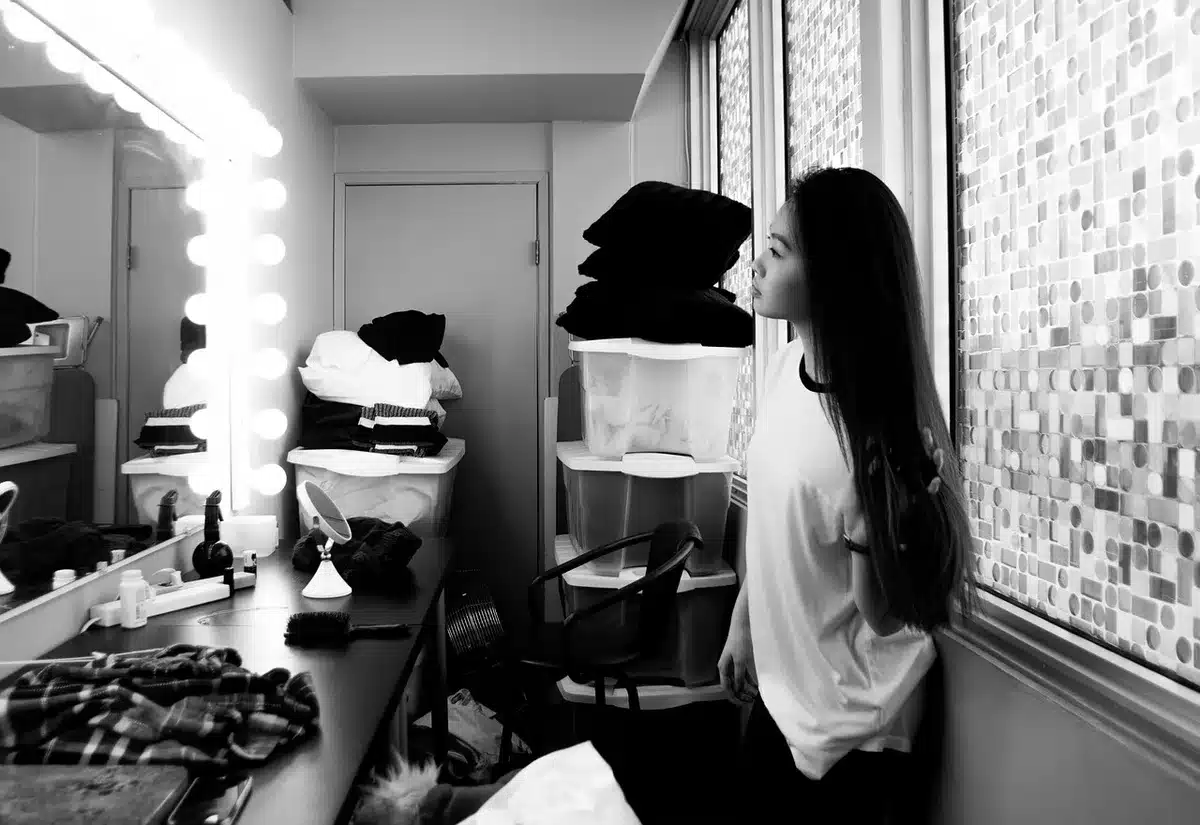
Madison prepared for the role without immediately meeting the real person she would play. She exchanged notes with Haugen by email, then met her in person before the premiere.
- Madison chose to shape the character first, fearing a direct meeting might alter the performance.
- She later met Haugen on the film’s New York premiere night and plans additional conversations.
- Madison studied Sorkin’s dense, rhythmic dialogue and embraced its demands on performance.
On research and craft: Madison said dense scenes early on helped her adapt to Sorkin’s style. She described those days as intense and rewarding, and appreciated the intellectual challenge of fast, information-rich exchanges.
Making Zuckerberg human again: choices about tone and portrayal
In contrast to previous treatments that centered Zuckerberg as the protagonist, this film treats him as an antihero. Sorkin and actor Jeremy Strong aimed to present a complex figure rather than a one-dimensional villain.
- Zuckerberg’s goal — to connect people — is shown as well-meaning but misapplied.
- Jeremy Strong reportedly wrote to Mark Zuckerberg to explain his intent to portray him respectfully.
- The filmmakers resisted easy moral judgments, instead dramatizing how noble aims can become distorted.
Effect on story: By shifting the moral center to Haugen, the film examines corporate choices and cultural effects rather than personal origin myths.
On-set dynamics: intense performances and collaborative energy
Madison praised Strong’s process and presence. She described watching him work as instructive and inspiring, even when she occupied a quiet corner of a scene.
Observations from the set:
- Strong stayed in character off-camera to maintain the scene’s tone.
- His intensity helped elevate other performances.
- Madison valued his generosity toward fellow actors, noting how that improved on-screen interplay.
Storytelling choices that shape audience response and reach
Sorkin intentionally avoided naming certain political figures. He argued that explicit references can anchor a film to a single moment and limit its shelf life.
The production aimed to balance accessibility with urgency. Sorkin acknowledged that some viewers form conclusions without seeing the film, yet he expressed confidence the movie will surprise many who do attend.
The opening vignette plays a crucial role in setting tone. Much like the earlier film’s opening, this mini-story crystallizes the stakes and sets the emotional path for the protagonist.
Freedom, limits, and the reality of regulation in the tech era
Sorkin addressed the political hurdles to regulating platforms. He noted a structural challenge: wealthy tech figures often support political campaigns.
That reality complicates legislative solutions. Still, Sorkin and the film suggest change is possible but difficult.
On optimism and activism: The film ends on an ambiguous but not wholly bleak note. It depicts public exposure and journalism as forms of resistance that can alter the balance of power.
Misinformation, mental health, and the film’s cultural urgency
The Social Reckoning lays out two central harms tied to large social platforms: the spread of false information and the mental health impact on young users. Those themes are rooted in the real-world reporting that followed Haugen’s disclosures.
- The film dramatizes internal studies and decisions that prioritized engagement over safety.
- It shows how product choices ripple into civic life and personal well-being.
- Journalism, whistleblowing, and congressional scrutiny are depicted as key levers for accountability.
Emotional core: Through Haugen’s journey, the film asks whether individual conscience can change vast systems.
Industry context: studio consolidations and the future of political films
Sorkin worried about consolidation in Hollywood. He suggested mergers reduce the number of studios willing to support bold, politically themed projects.
That shrinking space could make it harder to produce films that tackle controversial subjects. Still, Sorkin argued that making such films remains essential.
Cast choices, career moves, and audience hopes
Madison’s role represents a departure from the parts that raised her profile. After acclaim for another film earlier in the year, she said this project felt like the right next step.
- Mikey Madison: took a calculated artistic risk in playing a real person and a very public whistleblower.
- Jeremy Strong: brings a focused, immersive performance to a role with heavy public baggage.
- Jeremy Allen White: embodies the journalist who helps carry the story into public view.
Distribution and release: The film opens in theaters on Oct. 9. The team hopes viewers will see it on the big screen to experience its dramatic weight.
Preparing audiences and handling expectations
Both writer-director and lead actor acknowledged the risk that viewers will come with fixed opinions. They urged audiences to watch before passing judgment.
Madison described maintaining optimism about human capacity to change. She said that belief in improvement informed her portrayal.
On social media and preparation: Madison does not use social platforms and did not adopt them to research the part. She felt that distance helped her focus on the character’s internal world.
This interview has been condensed and edited.










