
Show summary Hide summary
- How Iñárritu flips satire into a stage-bound thriller
- Tom Cruise's radical makeover and the actor inside the tycoon
- The big reveal: a play called Fuel Fools
- Key plot elements and the film’s layered structure
- Jesse Plemons and a reveal that rewires the story
- Why Fuel Fools exists: satire, memory, and spectacle
- Major scenes that define the film’s moral center
- Visual effects, production design, and what the sets reveal
- The world outside the theater and the film’s grim ecology
- Performance, guilt, and audience complicity
- Watchpoints and spoilers worth noting
- Why Digger matters in today’s cultural conversation
Digger defies its first impression. What starts as a broad political farce quickly peels back layers to reveal a daring, theatrical experiment about performance, guilt, and environmental collapse.
How Iñárritu flips satire into a stage-bound thriller
Alejandro G. Iñárritu opens with a satirical tone that recalls Kubrick’s dark comic touch. Early scenes promise a biting send-up of greed and political power.
Smashing Pumpkins reunite with legendary 90s producer Butch Vig on new Hunger Games track
U.K. terror plot: what we know and why the Gulf remains in limbo
But almost immediately, the film refuses a single identity. Its cinematic grammar shifts. Theater mechanics and backstage life become central.
That change reframes the story and forces the audience to reassess what they saw.
Tom Cruise's radical makeover and the actor inside the tycoon
Tom Cruise appears nearly unrecognizable. Prosthetics hide his usual visage and give weight to a grotesque oil magnate.

He plays Curtis, an actor, who portrays the real-world figure Digger Rockwell in a revived stage production.
Cruise’s physical transformation serves two purposes: it sells the fictional tycoon and it flags the movie’s obsession with identity.
The big reveal: a play called Fuel Fools
Early plot beats place an environmental disaster at the center of the drama. But a staged mishap makes the artifice visible.
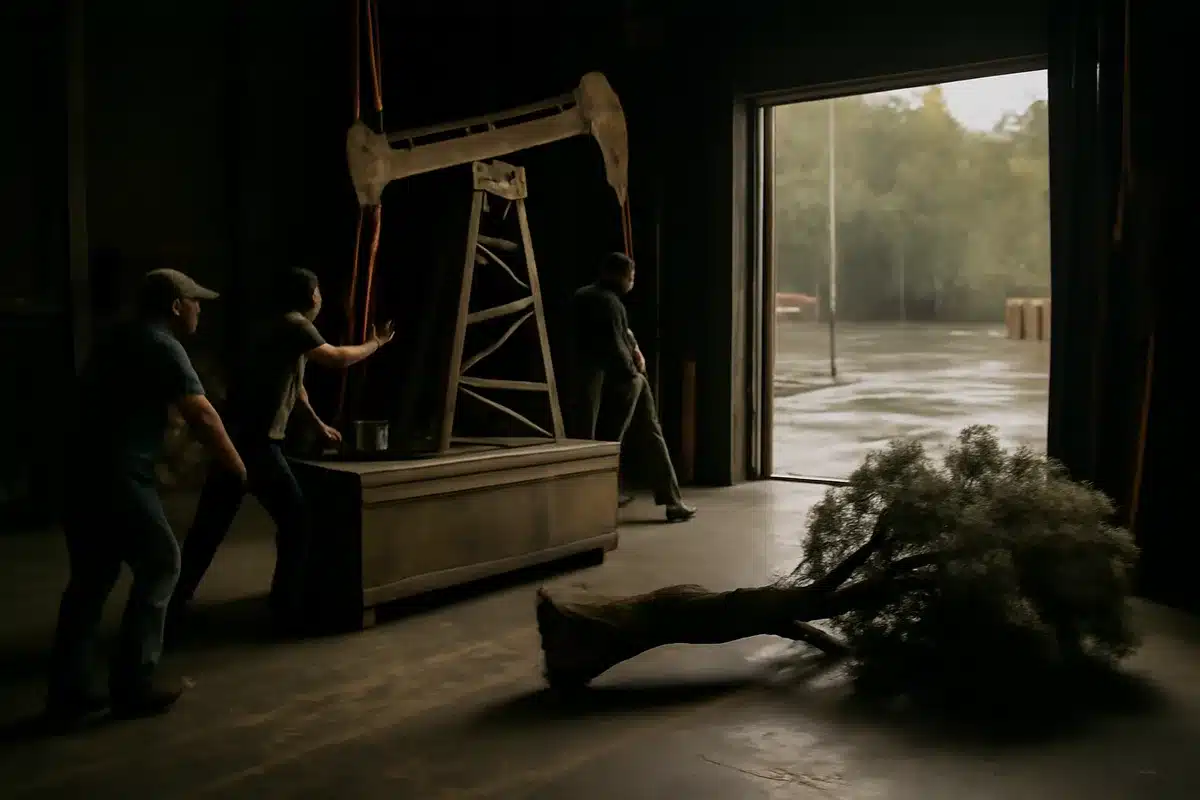
A tree falls in view of a bay window. A gigantic hand appears to replace it. The illusion collapses. The story is a play within a film.
That play is titled Fuel Fools. The audience inside the movie watches a spectacle designed to lampoon a damaged industry.
Key plot elements and the film’s layered structure
- Curtis alternates between his role onstage and private moments offstage.
- Backstage technology mixes futuristic props with stagecraft, like video calls projected on mirrors.
- The production is a lavish, immersive revival of a once-small cult play.
- Set design shifts constantly, revealing additional layers of performance.
Jesse Plemons and a reveal that rewires the story
Jesse Plemons appears as a stiff, observant man who claims to be an investor at first.
As the drama unfolds, his connection to the real Digger becomes clear. He is not just a backer. He is family.
Plemons’ character is revealed to be Kenny, the tycoon’s nephew. That twist reframes his motives for staging the spectacle.
Why Fuel Fools exists: satire, memory, and spectacle
The play was conceived as a way to laugh at the powerful who devastated the environment. Its revival wants a larger, more immersive reach.
Kenny remembers the original audience’s reaction. He’s obsessed with recreating that sense of righteous mockery on an epic scale.
Money and showmanship blur the line between remembrance and exploitation.
Major scenes that define the film’s moral center
- The Greenland drilling incident and the shattered ice shelf.
- Curtis’ private life, including a fraught relationship with his daughter.
- The play’s final act, where Digger’s fortune collapses on an isolated oil rig.
- The theatrical suicide that becomes a spectacle, watched and cheered by the in-world audience.
Visual effects, production design, and what the sets reveal
Iñárritu layers conventional film sets atop theatrical constructions. Some rooms look like movie sets with four walls.

At other times, the green-screen and model backdrops are exposed. Crew members appear to repair scenery mid-show.
The effect is disorienting by design. The movie interrogates how art shapes memory about real harm.
The world outside the theater and the film’s grim ecology
After the curtain call, the fiction gives way to a battered reality. Lower Manhattan is flooded. Streets sit knee-deep in water.
People rummage for supplies. Cars are abandoned. Military patrols prowl the avenues.
This is the tangible aftermath of the tycoon’s actions. The spectacle inside the theater clashes with the ruin outside.
Performance, guilt, and audience complicity
Digger asks who gets to laugh and who must live with the consequences. It places the viewer inside both the auditorium and the disaster zone.
At times, the movie resembles Birdman in its obsession with actors’ inner turmoil. But here that turmoil is anchored to ecological catastrophe.
Blame, spectacle, and memory are braided together, leaving audiences to decide whether mockery is enough.
Watchpoints and spoilers worth noting
- Keep an eye on small backstage details. They signal the shift from film to theater.
- Plemons’ character carries the film’s emotional reveal.
- The final stage sequence turns theatrical effects into a commentary on real-world damage.
- The film constantly blurs performance and reality, so reassess scenes you thought you understood.
Why Digger matters in today’s cultural conversation
The film blends spectacle with social critique. It probes how entertainment handles collective trauma.
By folding a stage play into a cinematic form, Iñárritu tests the boundaries of each medium.
Digger forces an uneasy question: can satire that laughs at catastrophe ever fully reckon with its victims?










