
Show summary Hide summary
- Metropia as protagonist: why the city matters in Ray Gunn
- Architectural DNA: mixing Ferriss and Streamline Moderne for a unique skyline
- Neighborhoods with character: from neon mayhem to organic labyrinths
- VFX strategy: why the team had to build a real city, not a painting
- Movement and mechanics: how living in the sky changes daily life
- Camera choreography and the “vertical chase” challenge
- Design choices that serve narrative beats
- Cast, sound and release details
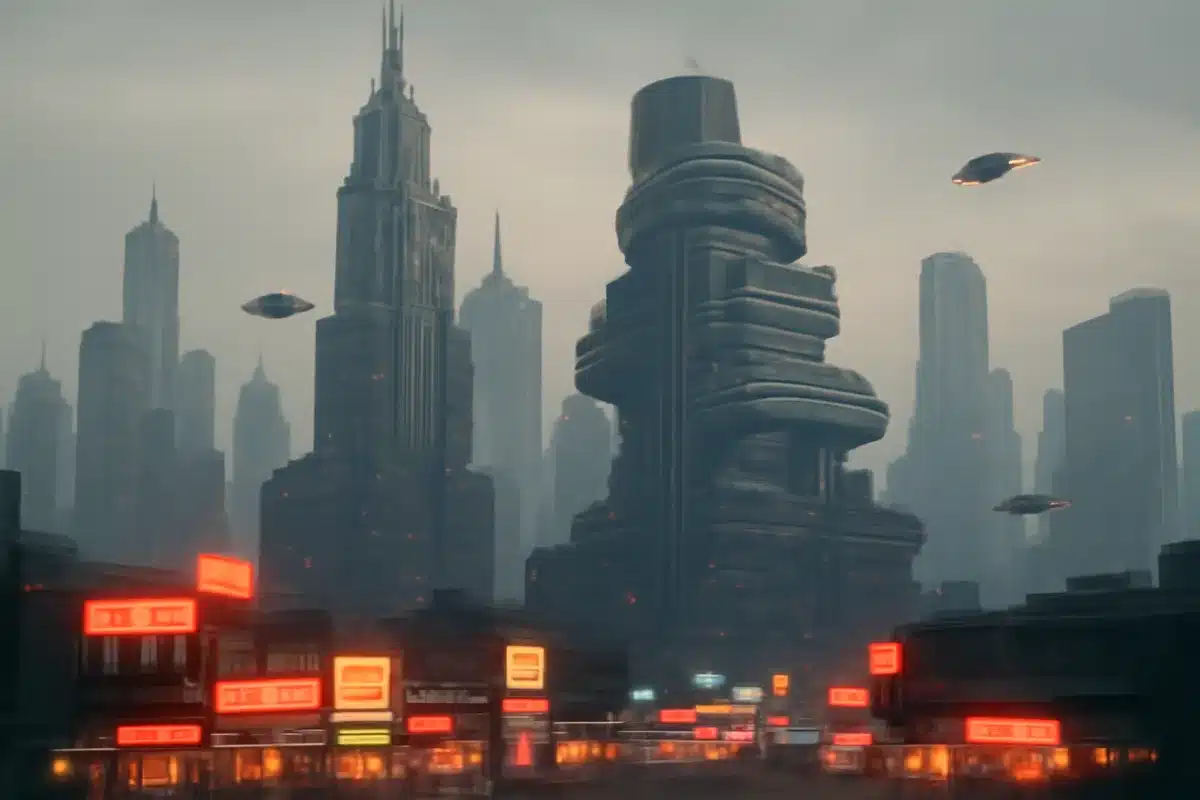
The first thing audiences meet in Brad Bird’s new film Ray Gunn is not the detective himself, nor his eccentric alien partner, nor the pop star caught up in the plot. It’s the city: a towering, retro-futuristic metropolis that dominates every frame. From the opening moments, Metropia announces itself as more than a backdrop — it behaves like a living, breathing character that shapes every choice the filmmakers make.
Metropia as protagonist: why the city matters in Ray Gunn
Brad Bird has treated Metropia as central to the story since the project began in the 1990s. Early drafts show he struggled to describe the city on paper. On screen, Metropia answers that problem. The film opens with sweeping passages between mile-high towers, a reminder that the city’s scale drives the visuals and the plot.
Smashing Pumpkins reunite with legendary 90s producer Butch Vig on new Hunger Games track
U.K. terror plot: what we know and why the Gulf remains in limbo
Metropia isn’t just scenery — it’s an engine of story and design. Every chase, joke, and character choice reacts to the city’s vertical logic.
Architectural DNA: mixing Ferriss and Streamline Moderne for a unique skyline
Art direction paired two distinct historical styles to craft Metropia’s silhouette. One source is the early-20th-century visions of Hugh Ferriss. Ferriss imagined monumental, stepped skyscrapers that emphasize mass and shadow. The other source is Streamline Moderne, a sleek offshoot of Art Deco rooted in curves and speed.
How the styles combine
- Ferriss influence: massive forms, dramatic setbacks, bold verticality.
- Streamline Moderne: rounded corners, aerodynamic surfaces, a futuristic gloss.
- Result: towering, curved monuments that feel familiar yet new.
Art director Wendell Luebbe and the team grafted these ideas together to create skylines you’ve never seen, but somehow already know.
Neighborhoods with character: from neon mayhem to organic labyrinths
Metropia was crafted as a mosaic of districts, each with its own mood and rules. The film contrasts crowded, hyper-illuminated entertainment zones with quieter, village-like enclaves. That diversity makes the city feel inhabited and used.
- Entertainment district: riotous, over-stimulated, like Times Square turned up to eleven.
- Residential enclaves: low-rise, intimate pockets where people find refuge from vertical chaos.
- The Maze: a twisting, alien quarter inspired by molten glass sculptures and organic forms.
The Maze’s sculptural look came from modern glass art, giving alien-built spaces a fluid, otherworldly presence.
VFX strategy: why the team had to build a real city, not a painting
Visual effects supervisor E. Abada and colleagues faced a practical problem. Ray Gunn’s camera work moves constantly. Long, complex shots — including a strenuous vertical chase — demand three-dimensional depth. A flat matte painting would fail when the camera dives, rolls, or climbs.
So the team modeled physical geometry for entire districts. That meant creating believable building interiors, layered terraces, and flyways so animators and cinematographers could plan shots with real spatial anchors.
Movement and mechanics: how living in the sky changes daily life
Metropia’s height forces new habits. The writers and designers invented practical rules that feel logical inside this world.
- Airborne lanes packed with flying cars and commuter jets.
- Personal jetpacks for short hops between platforms.
- High-speed elevators that require riders to brace themselves against the cabin walls.
Brad Bird drew inspiration from his experience filming a skyscraper sequence on Mission: Impossible — Ghost Protocol. That sense of vertigo and the way elevators make your ears pop informed Metropia’s transit design. In Ray Gunn, buildings dwarf the tallest real towers, so vertical travel must be fast and intimidating.
Camera choreography and the “vertical chase” challenge
A crucial sequence demanded sustained vertical camera movement. To preserve perspective and motion parallax, the VFX team could not shortcut with composites. Instead, they rendered full 3D environments so the camera could race through alleys and up facades without breaking immersion.
The result is kinetic filmmaking that relies on environment as a character. Streets, platforms, and airways all serve as obstacles and staging for action beats.
Design choices that serve narrative beats
Every visual decision ties back to story intent. The enormous scale amplifies loneliness, intimacy, danger, and spectacle at different moments. World-building details also inform character behavior and plot logistics.
- Architecture shapes mood: heavier massing for authority, softer curves for leisure districts.
- Transit rules create obstacles and opportunities for chase set pieces.
- Alien districts establish cultural contrast through material and form.
Those choices keep the city believable while supporting the plot.
Cast, sound and release details
Ray Gunn features Sam Rockwell as the private eye, Tom Waits as his alien partner, and Scarlett Johansson as a pop idol who factors into the mystery. The film uses sound and voice performances to add texture to Metropia’s streets.
Ray Gunn premieres Dec. 18 on Netflix.










