

Show summary Hide summary
The new film By Any Means arrives with big ambitions and a messy moral compass. It mixes real historical moments with invented threads, aiming for a potent drama about race, justice, and the limits of the law. The result is part courtroom thriller, part buddy-procedural, and often uneven in tone.
Fact vs. fiction: how the film plays with history
By Any Means uses the language of “based on true events” but reshapes facts to suit a narrative. The movie references the 1960s civil rights era and specific crimes. Yet it frequently substitutes speculation for documented history.
Nas slams music industry over disrespect: teases new music, vows to address it
1992 vocal performances: 3 jaw-dropping moments that still amaze

- The film opens by evoking the climate of Klan violence and the infamous 1964 disappearances.
- It then fast-forwards into a dramatized investigation that centers on a fictionalized Black FBI agent.
- An infamous mob enforcer is folded into the plot as a violent informant, positioned as the film’s wild card.
That blend gives the filmmakers freedom, but it also raises questions. When a picture borrows the aura of historical truth while filling gaps with imaginative leaps, viewers should expect creative license — not documentary accuracy. The movie asks us to accept a speculative partnership as plausible.
Two mismatched leads and an uneasy partnership
The film pairs Yahya Abdul-Mateen II as a measured Black federal agent with a brash white mob informant played by Mark Wahlberg. The chemistry shifts between friction and forced camaraderie.
Character dynamics
- Abdul-Mateen’s agent is steady, principled, and visibly burdened by the realities of Mississippi in the 1960s.
- Wahlberg’s character is loud, reckless, and presented as a streetwise solution when legal channels stall.
The mismatch is the engine of the plot. The movie leans into buddy-picture conventions, where opposites clash and then come to depend on one another. But that structure also carries pitfalls. Sometimes the partnership illuminates the dangers of taking the law into one’s hands. Other times it validates vigilante impulses by treating them as effective shortcuts to justice.
Race, power, and the film’s muddled politics
At its core, the film tries to wrestle with systemic racism and the moral costs of combating it. Yet its messaging is inconsistent.
- The portrayal of white privilege is occasionally pointed, as when officers treat the two men differently during routine stops.
- But the movie often retreats into a tired trope: the idea that violence can be justified when institutions fail.
This creates a troubling moral symmetry. The film implies violence as a remedy, a stance that can echo the very justifications used by racist extremists. When a story depicts extralegal force as an effective tool, it risks flattening the ethical complexity of resistance and law enforcement.
At times the script nods to historical figures and ideologies, setting up a debate about nonviolence versus militant resistance. These scenes are undercooked and serve more as shorthand than as serious inquiry. The result is a political thread that feels unsettled and, at moments, self-contradictory.
Performances: who shines and who distracts
The cast delivers a mixed bag. Several actors give powerful, grounded work even when the script wobbles.
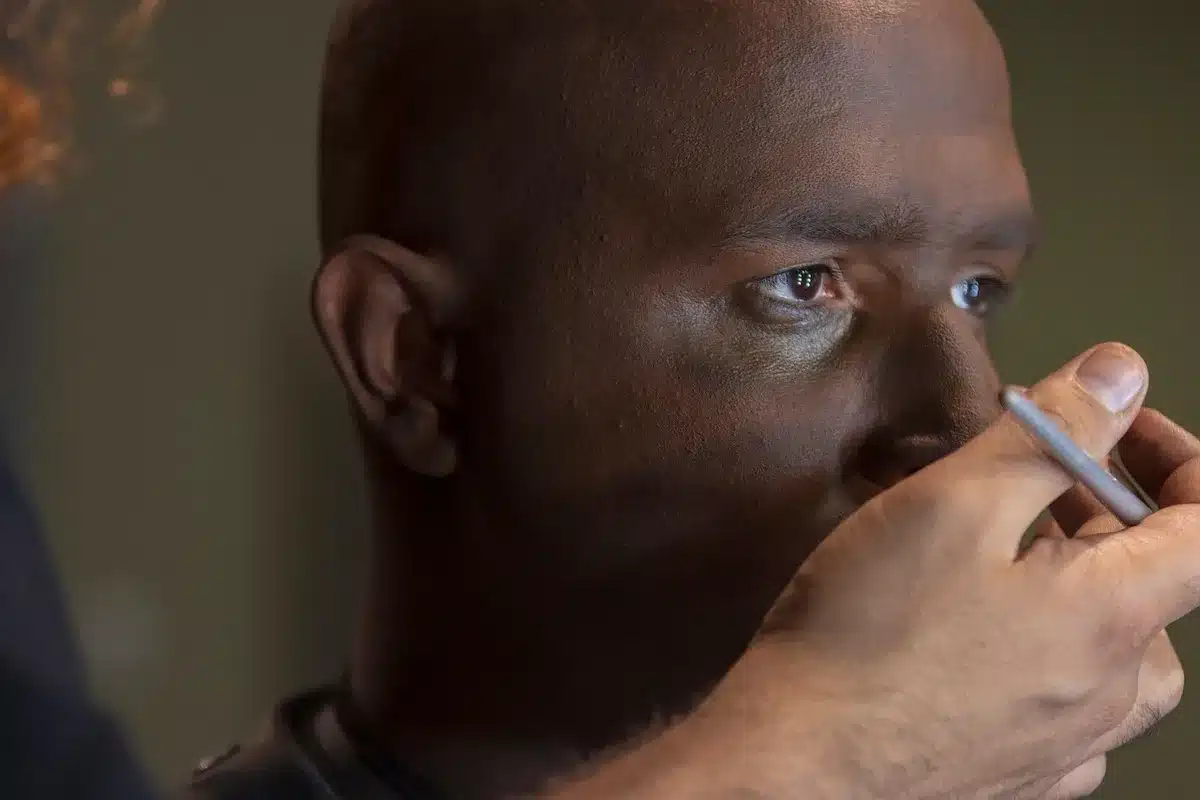
- Yahya Abdul-Mateen II offers a restrained center. His presence anchors many of the film’s most affecting sequences.
- Nicole Beharie, in a supporting role as the agent’s spouse, brings quiet urgency to scenes about fear and family.
- Giancarlo Esposito appears in a key role that adds weight and moral clarity.
Wahlberg’s turn is more contentious. He imbues his mob informant with energy and blunt humor, but the portrayal leans heavily on caricature. Physical alterations — prosthetics, a wig, and altered posture — are meant to transform him, but often distract from subtler choices. At times he reads as if performing a movie-star riff on toughness rather than inhabiting a complex human being.
Stylistic choices and tonal friction
The director’s aesthetic mixes archival textures with pulpy violence. A moody score underscores scenes of dread and determination. Cinematic shifts between authentic-looking documentary material and stylized set pieces keep viewers off balance.
What works
- Atmospheric production design evokes the era.
- Some interrogation and family scenes feel intimate and urgent.
What falters
- Inconsistent tone: the script can’t decide whether it’s a moral drama or a crime-action movie.
- Moments of comic relief undercut serious subject matter.
The net effect is a film that sometimes lands emotionally, and sometimes slips into tonal mismatch. When the picture commits to human stakes, it’s most successful. When it defaults to crowd-pleasing contrivances, it loses focus.
Legal questions and narrative choices
The screenplay centers on clandestine methods and off-the-books tactics. That angle raises legal and ethical issues that the movie touches on but rarely explores deeply.
- It positions the informant as a necessary evil chosen when formal investigations stall.
- It dramatizes the failure of local communities to cooperate out of fear or complicity.
- It proposes retributive action as a route to answers.
These narrative choices prompt stronger inquiries: Who gets to take justice into their own hands? What are the consequences for bending rules? The film gestures at those questions, but it stops short of full examination.
Why the film divides viewers
By Any Means asks audiences to accept a speculative pairing, embrace morally gray tactics, and tolerate abrupt tonal swings. Those demands split reactions.
- Some viewers will praise its performances and its willingness to depict racial danger.
- Others will find the film’s political signals muddled and its use of violence troubling.
The movie opens a conversation. But it rarely commits to rigorous reflection.










