
Show summary Hide summary
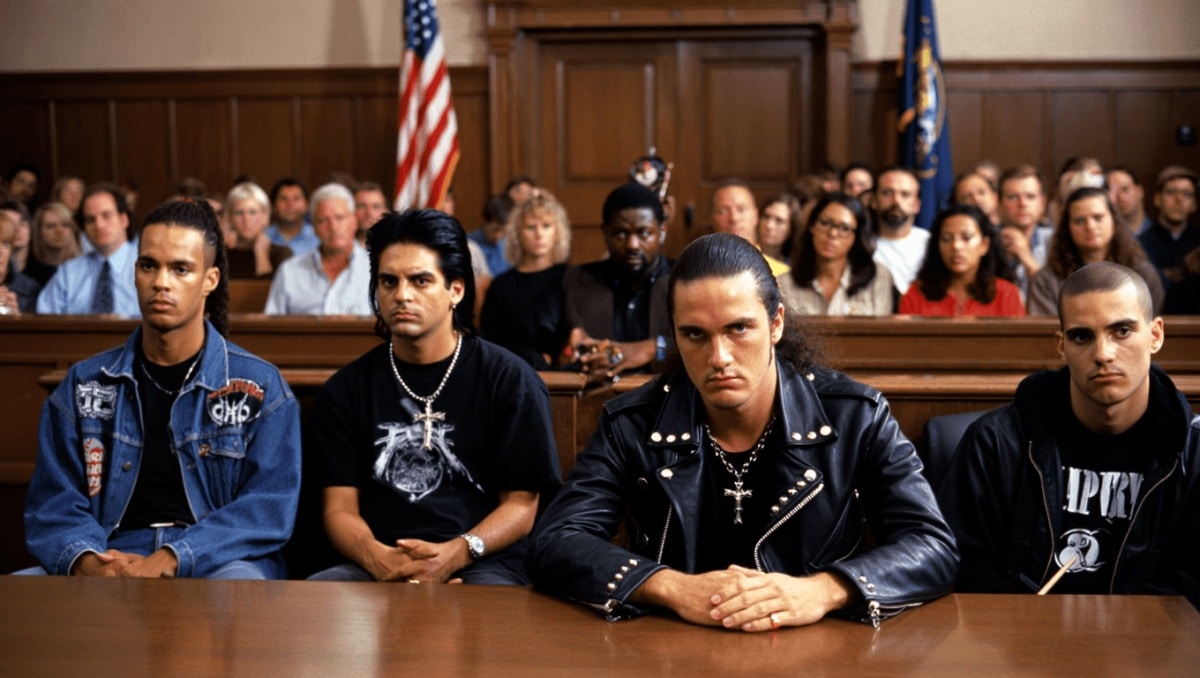
In 1990 a courtroom became the stage for a clash between heavy metal culture and the law. A well-known British band faced accusations that their music hid messages that drove two teenagers to a deadly pact years earlier. The trial reignited public fears about music’s power over young minds and raised fresh questions about responsibility, mental health, and free expression.
How a rock song landed in a lawsuit
The suit centered on a song from a late-1970s album that critics and families claimed contained a hidden command. Plaintiffs argued the track featured a backward or subconscious phrase that pushed two young men into a suicide pact.
Nas slams music industry over disrespect: teases new music, vows to address it
1992 vocal performances: 3 jaw-dropping moments that still amaze
- Album and track: The disputed song came from a heavy metal record released in the 1970s.
- The allegation: Plaintiffs said a supposed subliminal cue — often described as backmasked audio — influenced the boys’ actions.
- Timing: The tragic events took place years before the 1990 trial, but the families waited until evidence and public attention made a legal case possible.
What the families claimed and the human cost
Two teenagers entered into a pact that ended in serious harm and one death. The grieving families believed external influences played a role and named the band as part of a search for answers and accountability.
- They sought damages and a legal ruling that might curb similar content.
- The case put a spotlight on how parents and communities interpret music lyrics and imagery.
- The tragedy became a public debate about youth vulnerability and media influence.
Science, audio engineering, and the backmasking debate
Experts were central to the trial. Audio engineers, psychologists, and linguists gave testimony about whether the alleged message could be intentionally embedded or could affect behavior.
- Audio technicians demonstrated how sounds can be reversed and how perception can be shaped by suggestion.
- Psychologists weighed in on evidence for subliminal commands and real-world impact.
- Both sides cited studies, but the defense emphasized limits in proving cause-and-effect.
Key point: The scientific community remained divided on whether any hidden phrase could reliably trigger violent or self-destructive acts.
The courtroom drama and legal result
The trial unfolded amid intense media scrutiny. Lawyers for the band argued that no intentional hidden message existed and that music alone cannot be held legally responsible for independent actions.
- Defense witnesses explained music-production techniques and denied intentional backmasking.
- Plaintiffs presented testimony linking the song to the boys’ behavior.
- The judge and jurors had to weigh complex technical and psychological evidence.
Ultimately, the court declined to hold the band liable. The ruling emphasized the lack of proof that any hidden words compelled the teens’ actions.
Long-term fallout: music, responsibility, and public opinion
The case left a lasting mark on debates about art and accountability. It fueled calls for parental vigilance and inspired renewed conversations about mental health support for youth.
- Artists’ defenses: Musicians warned against blaming art for personal tragedies.
- Public reaction: Some saw the ruling as a victory for free expression; others worried about cultural harm.
- Policy and culture: The trial fed into broader movements pressing for content warnings, better youth mental health services, and media literacy education.
Why the case still matters today
Decades on, the episode is often cited when controversies arise over music, movies, or games and their effects on behavior. It remains a touchstone in discussions about causation, legal responsibility, and how society balances artistic freedom with the desire to protect vulnerable people.
Legacy: The lawsuit shaped how artists, courts, and audiences approach claims that media can directly cause harmful acts.










