
Show summary Hide summary
- How the story sets the stage and draws you in
- What unfolds in the final act and why it confounds
- Decoding the Backrooms: natural dimension or psychological landscape?
- How the creative team frames the mystery
- Key performances and characters to watch
- Visuals, sound, and the film’s online roots
- Where the film leaves questions open
- Practical details and where to see it
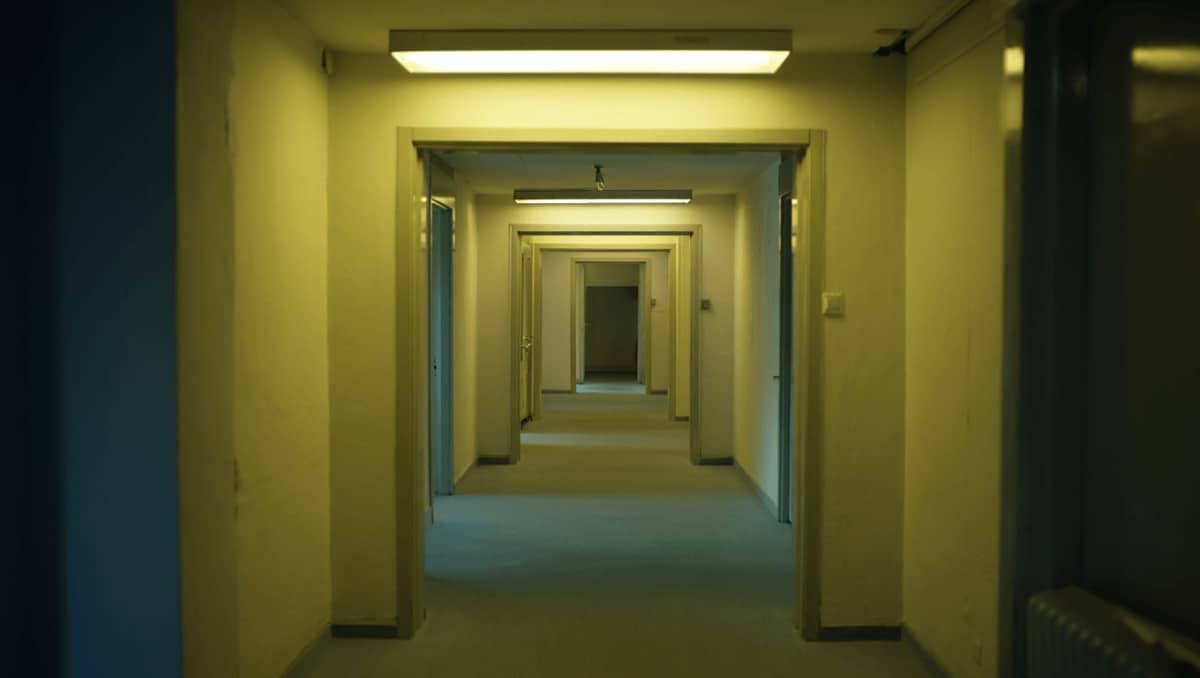
Office corridors bathed in sickly fluorescent light can be as unsettling as any haunted attic. Kane Parsons’ film Backrooms turns the ordinary into a slow-burning nightmare, using endless, office-like spaces to tap into the uncanny feeling known as liminal space. The movie expands a viral internet idea into a full-length horror that asks more questions than it answers.
How the story sets the stage and draws you in
At its core, Backrooms follows Clark, a former architect who now runs a furniture store. He’s struggling with alcohol and the fallout of a breakup. His therapist, Mary, is trying to help him pick up the pieces.
Nas slams music industry over disrespect: teases new music, vows to address it
1992 vocal performances: 3 jaw-dropping moments that still amaze
Late one night Clark finds a narrow strip of light in his shop’s basement. That slit leads to a vast, shifting labyrinth of rooms. These spaces look like warped office buildings and endless storage areas. They feel familiar and wrong at once.
- Clark is driven to explore despite clear danger.
- He brings two employees, Kat and Bobby, to document what they find.
- The team’s mission turns chaotic when the Backrooms reveal hostile, unseen forces.
The film uses Clark’s unraveling as a way into the maze. His personal fractures mirror the world he discovers. The more he walks the halls, the less stable reality becomes.
What unfolds in the final act and why it confounds
The climax spins several threads at once. Clark and his coworkers become separated. Bobby disappears through a doorway. Kat and Clark lose contact. The camera work and sound design keep tension high.
Mary later follows Clark’s trail into the Backrooms. Her perspective shifts the story and raises new doubts. Inside, she is attacked and wakes restrained. Clark appears altered. He sits at a table with other malformed figures.
Clark makes a strange claim about the nature of the place. He calls it a sort of repository for people’s impressions and memories. Before Mary can parse this, a large, grotesque figure—one that mimics Clark in a warped, mascot-like form—emerges. It kills Clark and pursues Mary.
Her escape brings her into contact with a team in protective suits. The film ends with Mary speaking to a scientist who suggests a full-scale study is underway. The final shot returns to the Backrooms, where a broken, distorted version of Mary sits alone.
Decoding the Backrooms: natural dimension or psychological landscape?
What the film makes clear
The movie insists the Backrooms are not merely a hallucination. Scientists and recovery teams appear to treat the space as a physical phenomenon. This pushes the story toward a sci-fi interpretation.
The Backrooms is presented as a place that responds and adapts. It often resembles memories or echoes of real environments. That adds to the film’s creepiness. The spaces feel like reflections of a life lived, but they are distorted and often hostile.
Popular theories viewers will discuss
- Alternate dimension: The Backrooms exist as a parallel realm that sometimes overlaps with our reality.
- Memory echo: The spaces are constructed from fragments of people’s recollections or identities.
- Biological threat: Creatures in the Backrooms may be emergent phenomena tied to the environment.
- Video-game logic: The maze behaves like a level-based system, with traps, copies, and mutable rules.
None of these explanations are fully confirmed in the film. Instead, Parsons leans into ambiguity. He frames the world as a natural but uncanny occurrence rather than a moral afterlife.
How the creative team frames the mystery
Director Kane Parsons and the film’s producers have emphasized that the Backrooms is not meant to be a spiritual punishment. On a podcast with producer James Wan, Parsons described the place as a maze-like phenomenon without moral weight. People don’t end up there as a result of sin or judgment.
Parsons compares the experience to getting stuck in an unending video game. That idea helps explain why the space seems to reset and reconfigure itself. It also underscores the film’s cold, atheistic dread rather than a metaphysical one.
Key performances and characters to watch
- Chiwetel Ejiofor as Clark: A man whose grief and flaws lead him deeper into the maze.
- Renate Reinsve as Mary: The therapist who becomes a reluctant explorer and witness.
- Lukita Maxwell and Finn Bennett: Kat and Bobby, whose expedition goes fatally wrong.
- Supporting cast: Includes a scientist figure who hints at institutional involvement in studying the phenomenon.
The actors anchor the film’s emotional stakes. Their performances make the uncanny spaces feel personally threatening rather than abstract set pieces.
Visuals, sound, and the film’s online roots
Backrooms builds on an internet-born creepypasta and a viral series of YouTube shorts. The film keeps that grassroots horror vibe. It swaps jump-scare theatrics for sustained unease.
- Lighting uses jaundiced fluorescents to create a clinical, oppressive look.
- Sound design favors distant thuds, distant voices, and abrasive hums.
- Camera work often reads like someone lost and filming as they go. That choice heightens immediacy.
These elements reinforce the film’s central conceit: everyday spaces can become alien and menacing when scale and repetition strip them of their context.
Where the film leaves questions open
Backrooms ends with several loose ends. The origin of the dimension remains mysterious. The rules that govern who is copied or replaced are vague. The goals, if any, of the malformed inhabitants are never fully revealed.
Viewers and critics are likely to debate these gaps. Some will see them as deliberate, enhancing the mythic quality. Others will want firmer answers. Meanwhile, the film has already sparked theories across social media and forums.
Practical details and where to see it
Backrooms was released theatrically by A24. It expands a short-form internet idea into a wide-release horror. Audiences who found the original creepypasta online will notice the film’s care in translating atmosphere to the big screen.
The movie balances slow-burn dread with striking set pieces. Its ending is designed to linger in the mind rather than tie up every plot thread.










