
Show summary Hide summary
- Roots and family ties that anchor his work
- How the city informs his music and style
- Public service and civic commitment
- Daily life: how fame blends with neighborhood routines
- Navigating celebrity while staying close to the community
- The cultural weight behind “it’s more than just a city”
- What his stance means for other artists
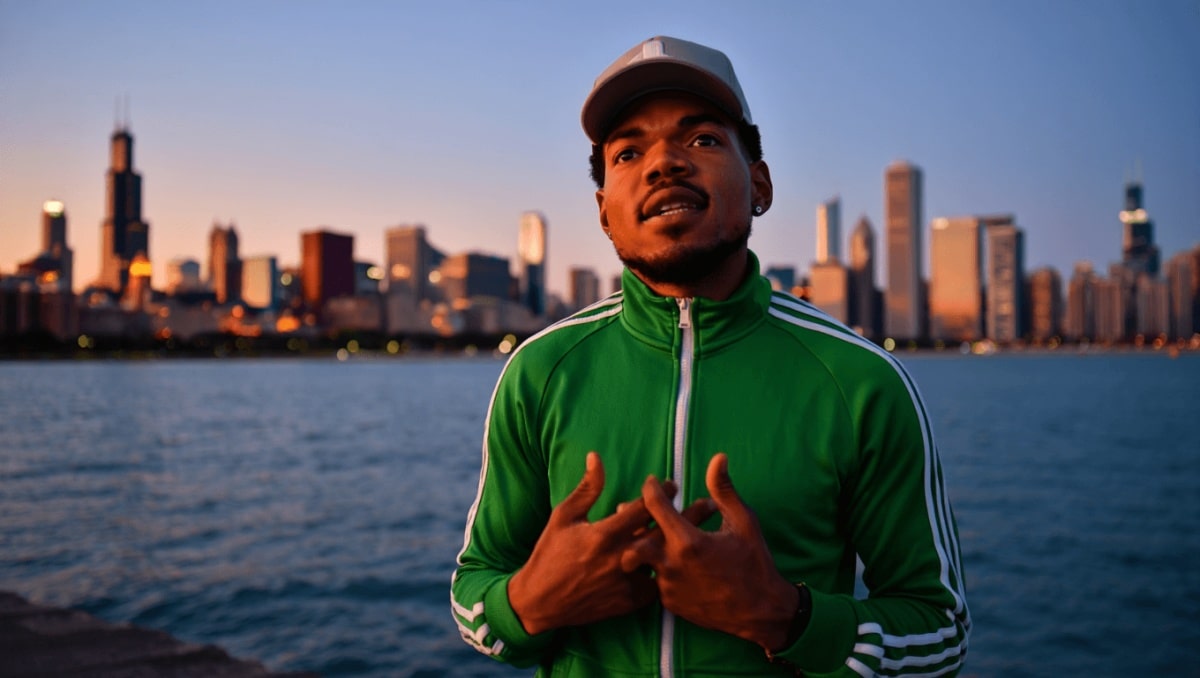
Chance The Rapper has spent years turning his love for Chicago into music, activism, and a public identity. In recent conversations he described life in his hometown as more than geography. For him, the city is a living influence that shapes his sound, choices, and responsibilities.
Roots and family ties that anchor his work
Born and raised on the South Side, Chance credits family and local schools for much of his artistic formation. He often references everyday scenes from his youth. Those images recur in lyrics, interviews, and public appearances.
Nas slams music industry over disrespect: teases new music, vows to address it
1992 vocal performances: 3 jaw-dropping moments that still amaze
Chicago is not just a backdrop, he explains. It is an active participant in his narrative.
How the city informs his music and style
Chance’s sound mixes gospel, hip-hop, and soul. That blend reflects the churches, clubs, and community spaces he grew up around. Local producers, choirs, and neighborhood artists helped craft his sonic identity.
Local sounds and collaborations
- Choirs and gospel elements that nod to church traditions.
- Collaborations with Chicago rappers and producers.
- Samples and live instrumentation drawn from local sessions.
His albums feel like letters to the city. They name streets, friends, and struggles. That specificity makes the music feel authentic.
Public service and civic commitment
Beyond music, Chance has poured energy into local causes. He has funded public schools and organized voter drives. These efforts frame him as both artist and civic actor.
Major initiatives
- School funding: Direct donations and advocacy for education resources.
- Voter outreach: Campaigns to increase turnout among young people.
- Community events: Concerts and fundraisers centered on neighborhood needs.
His activism is practical. He prefers boots-on-the-ground projects with measurable outcomes.
Daily life: how fame blends with neighborhood routines
Chance has described simple routines that keep him grounded. He shops locally, visits family, and attends church. He also pops into studios and community meetings.
- Maintaining local friendships.
- Supporting neighborhood businesses.
- Checking in on schools and parks.
These habits show a deliberate choice to remain present in the city he sings about.
Navigating celebrity while staying close to the community
Fame complicates life in Chicago. Chance faces media attention and the expectations of being a role model. He balances public visibility with protecting private moments.
He often frames fame as a tool. It amplifies causes, not just concerts.
Mentorship and youth programs
- Mentoring up-and-coming artists.
- Supporting after-school programs.
- Using platforms to highlight local leaders.
The cultural weight behind “it’s more than just a city”
When Chance says Chicago is more than a city, he means history, struggle, creativity, and community resilience. The phrase captures civic pride and a sense of responsibility.
He often links personal success to community support. That connection drives his choices.
What his stance means for other artists
Chance’s approach suggests a model for creative people who keep local ties. It shows how artists can invest time and money back into their hometowns.
- Artists can use visibility to fund change.
- Staying local can deepen artistic authenticity.
- Community work builds long-term impact beyond releases.










