
Show summary Hide summary
- Why The Weeknd favored secrecy in his early career
- How that anonymity impacted The Weeknd’s sound and aesthetic
- The strategy: “Let the music speak for itself” as a guiding principle
- How fans and the industry reacted to the mystique
- From underground anonymity to global recognition
- What modern artists can learn from The Weeknd’s early tactics
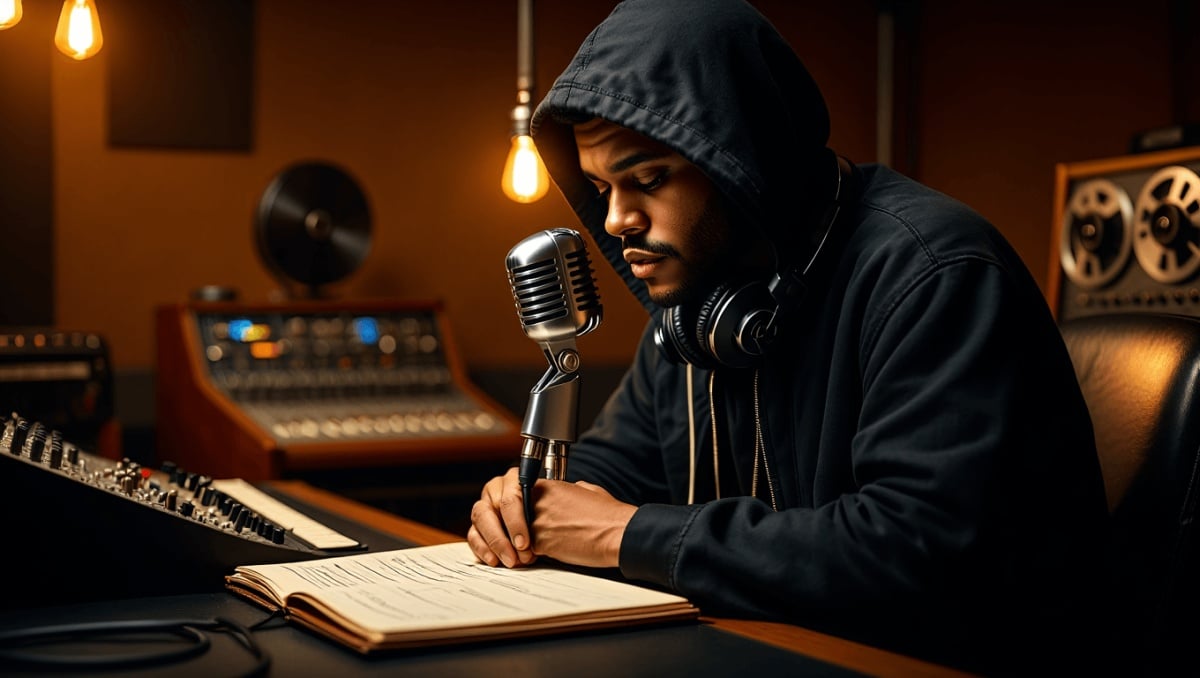
When Abel Tesfaye first emerged from the Toronto underground, he purposely kept his face and story in the shadows. That decision wasn’t a marketing stunt. It was a deliberate artistic move meant to focus attention on sound, mood, and lyrics rather than celebrity. The strategy helped him reshape how modern pop and R&B stars build mystique and control their narrative.
Why The Weeknd favored secrecy in his early career
In the mid-2000s, a young singer from Toronto wanted listeners to connect first with music. He believed visual identity could distract from emotion. Choosing anonymity let him test how songs stood on their own merits.
Nas slams music industry over disrespect: teases new music, vows to address it
1992 vocal performances: 3 jaw-dropping moments that still amaze
- He avoided press interviews and mainstream portraits.
- He released music through anonymous channels and mixtapes.
- He allowed fans to discover the music organically.
This approach forced listeners to focus on atmosphere and lyrics. It also made the later reveal feel like a cultural event rather than a debut stunt.
How that anonymity impacted The Weeknd’s sound and aesthetic
Without a public persona to sell, production and mood took center stage. Tracks emphasized moody synths, layered vocals, and atmospheric textures. The result was a signature sound that felt both intimate and cinematic.
Artistic benefits of staying hidden
- Freedom to experiment without public expectation.
- Less pressure from labels to conform to trends.
- A direct pathway to building a dedicated fan base.
By keeping the image minimal, the music itself carried the emotional weight.
The strategy: “Let the music speak for itself” as a guiding principle
Tesfaye articulated the idea clearly: he wanted to remove noise from the launch. The slogan became a tactic. Music, not gossip, would direct attention.
Letting the music speak involved focused releases, free mixtapes, and selective collaborations. Each move reinforced the idea that the art was the product, not the persona around it.
How fans and the industry reacted to the mystique
Word-of-mouth and online forums amplified the intrigue. Curiosity propelled shares, blog posts, and remix culture. The lack of a manufactured backstory made the sound feel raw and authentic.
- Early adopters spread the music across platforms.
- Music blogs debated the identity and influences.
- Major labels and producers took notice.
As interest grew, the uncoupling of face and voice created a rare kind of hype.
From underground anonymity to global recognition
The gradual shift from hidden artist to public figure was timed. When he finally stepped forward, audiences already knew the music well. The reveal became part of the narrative, enhancing rather than diluting his credibility.
Key moments in the transition
- Release of widely shared mixtapes that established his sound.
- Strategic collaborations with established artists.
- Selective media appearances that reinforced the brand.
What modern artists can learn from The Weeknd’s early tactics
The Weeknd’s path offers a template for building long-term interest. Control the narrative. Prioritize art over image. Use scarcity and mystery wisely to create cultural momentum.
His example shows how restraint can be a form of power. It suggests creative ways to stand out in a crowded, attention-driven market










