
Show summary Hide summary
- Why Metallica’s studio felt like a pressure cooker
- When therapy became part of the recording process
- How the sessions shaped the sound of St. Anger
- Some Kind of Monster: the world watches the fallout
- Fan, critical, and commercial reactions to the album
- How the experience changed Metallica’s dynamics
- Key takeaways from those intense recording sessions
Twenty-five years after the turbulent recording of St. Anger, the story remains a landmark in rock history. What began as a difficult studio project turned into a raw, unfiltered look at a band in crisis. The sessions exposed personal struggles, creative clashes, and an unusual decision for a major metal group: to bring a mental-health professional into the studio.
Why Metallica’s studio felt like a pressure cooker
By the early 2000s, tensions inside Metallica were visible and public. A long creative drought, line-up change, and frontman James Hetfield’s decision to enter rehab left the group fragmented.
Nas slams music industry over disrespect: teases new music, vows to address it
1992 vocal performances: 3 jaw-dropping moments that still amaze
- Member departures shook the band’s sense of stability.
- Personal issues spilled into rehearsals and tracking sessions.
- Creative disagreement over sound and direction intensified arguments.
What started as normal tracking quickly became emotionally charged. Band meetings grew longer, tempers flared, and communication broke down.
When therapy became part of the recording process
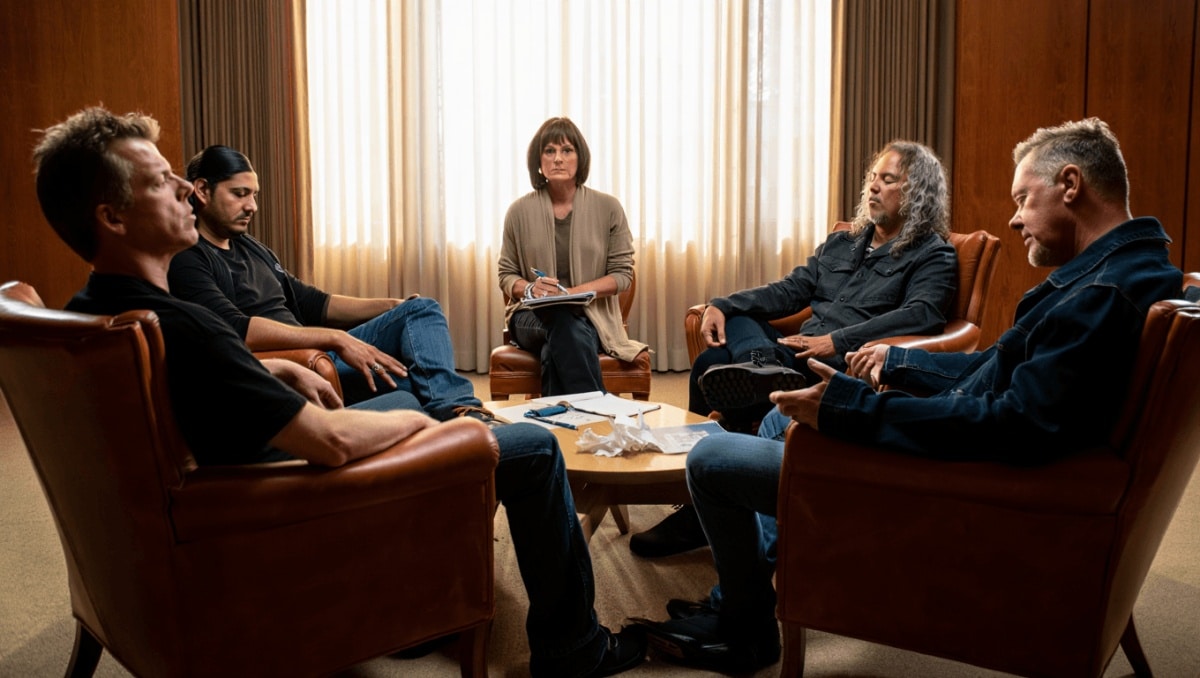
Faced with repeated clashes, Metallica made an unconventional choice: they invited a group therapist to mediate. The decision was pragmatic and personal.
Therapy was not a PR stunt. It was a way to keep the band together while they completed the album.
- The sessions aimed to rebuild trust and open lines of communication.
- Confrontations were addressed in front of a trained facilitator.
- The process was recorded and later shown to the public.
The therapist’s interventions forced band members to verbalize frustrations they had long kept private. Those moments became central to the story around the record.
How the sessions shaped the sound of St. Anger
The turmoil in the studio seeped into the music. The album’s raw, unpolished energy reflected the band’s state of mind.
- Production choices favored immediacy over polish.
- Guitar tones and arrangements leaned toward aggression and directness.
- Vocals and lyrics explored anger, accountability, and struggle.
Producer Bob Rock guided many of the technical decisions, while the emotional atmosphere influenced performance choices. The result was an album that sounded like a band airing its wounds.
Some Kind of Monster: the world watches the fallout
The sessions and therapy became the focus of a candid documentary. Some Kind of Monster captured difficult conversations and moments of honesty.
- The film offered a rare, unvarnished look at a major act in crisis.
- Fans and critics alike witnessed arguments, tears, and breakthroughs.
- It reframed public perception of Metallica’s internal life.
Because the process was documented, listeners could connect the music to the band’s real-time emotional work.
Fan, critical, and commercial reactions to the album
St. Anger polarized opinion from its release onward. Some applauded the raw honesty. Others criticized production choices and a shift in style.
- Commercially, the album debuted strong on charts.
- Critics were divided over sound and structure.
- Certain singles earned industry recognition, including awards.
The controversy kept conversations about the band alive. It also sparked debate about authenticity and the limits of reinvention for legacy acts.
How the experience changed Metallica’s dynamics
The therapy sessions were a turning point, not a quick fix. They did, however, create space for honest reflection.
- Communication practices were reshaped.
- Long-standing grievances were aired and partially resolved.
- The band emerged with a renewed focus on making music together.
In the years that followed, Metallica adjusted its approach to collaboration and touring. The studio crisis left a lasting imprint on how they worked.
Key takeaways from those intense recording sessions
Looking back, the era around St. Anger offers lessons about creativity under pressure.
- Professional help can be essential in high-stakes creative environments.
- Documenting the process can humanize artists and polarize opinion.
- Art born of conflict often divides listeners, yet can be deeply honest.
The decision to bring therapy into the studio remains one of the most talked-about moves in modern rock history. It changed an album, a band, and how the public understands the cost of longevity in music.










