Show summary Hide summary
DJI is expanding its handheld camera lineup with a premium, dual-lens model designed to bridge the gap between compact gimbals and pro gear. The Osmo Pocket 4P builds on the Pocket 4’s improvements while adding a second lens, advanced log capture, and new workflow tools aimed at creators who want studio-like control from a pocketable device.
Design and handling upgrades that matter
The Osmo Pocket 4P keeps the compact gimbal form factor DJI is known for, but with a few notable changes. It is slightly larger and heavier than the single-lens Pocket 4. The two-inch rotatable touchscreen still sits on the handle, and a USB-C port handles charging and file transfer.
New York City scaffolding sparks bizarre internet meltdown
Avengers: Doomsday hidden clues spotted in Wicker
- Internal storage: 103GB built-in, with microSD support for expansion.
- New controls: a zoom button and a customizable button appear when the screen rotates to landscape.
- Color choices: Classic Black and Pearl White, with matching accessories included.
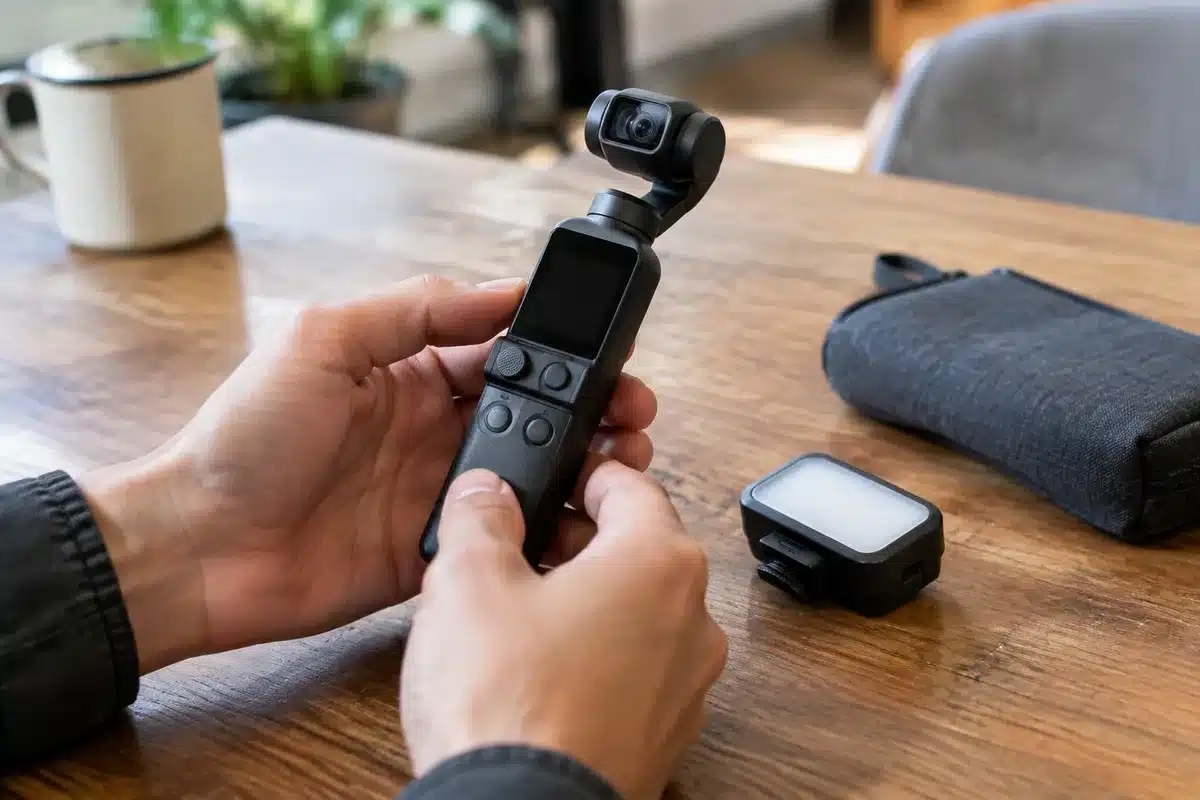
Protection is reduced out of the box. Unlike previous models, the 4P ships without a hard case or gimbal clamp. Instead, DJI provides a soft fabric pouch, wrist strap, and a hot-swappable fill light. That makes third-party cases a likely purchase for those worried about lens safety.
How the dual-lens system changes shooting options
What sets the 4P apart is the stacked dual-lens layout. The main lens is a 20mm-equivalent on an upgraded one-inch sensor. Above it sits a 60mm-equivalent mid-tele lens with a 1/1.28-inch sensor.

- Wide: 20mm equivalent, one-inch sensor for broad scenes and low-light capture.
- Mid-tele: 60mm equivalent for portraits and tighter framing, offering 3x optical zoom.
- Zoom range: up to 12x digital zoom depending on mode and resolution.
The lenses are stacked vertically, creating a distinctive “cyclops” look. They face outward when powered off, which saves mechanical complexity but exposes glass more than models that tuck the lens away.
Close focus and background separation
The 4P’s wide lens focuses much closer than the earlier model, letting creators capture intimate details. The mid-tele lens delivers more background compression, which enhances portrait separation and provides a more cinematic look.
If you want shallow background and tighter framing without changing position, the 60mm lens is the key advantage.
Video, log profiles, and what D-Log 2 brings
Both Pocket 4 and 4P support 4K up to 60fps, 37MP stills, and 4K slow-motion and motionlapse modes. Where the 4P stands out is in its expanded dynamic range options.

- Standard video: 4K 60fps, 4K 240fps slow motion available.
- Log profiles: supports DJI’s 10-bit D-Log, and debuts D-Log 2 on the wide lens.
- Dynamic range: DJI claims the new log profile can reach up to 17 stops on the improved sensor.
D-Log 2 captures flatter, desaturated footage in-camera so editors can recover highlights and shadows for better grading. However, D-Log 2 is limited to the wide lens and is not available when using the mid-tele lens. That means the telephoto option must use the original log profile with fewer stops.
Accessories, remote control, and ecosystem fit
DJI bundles vary by market, but notable accessories include a hot-swappable fill light and a Handle with a 1/4″ thread. The 4P is also compatible with DJI’s wireless microphone ecosystem and can connect to two transmitters simultaneously.
One distinct accessory is the Osmo FrameTap remote, included in Vlog Combo bundles. FrameTap is a small handheld controller with a touchscreen and thumbstick.
- Range: up to about 82 feet in ideal conditions, with DJI recommending shorter distances for stability.
- Functionality: basic gimbal and zoom control via the thumbstick and touchscreen. Framing grids and some button shortcuts are not available on the remote.
- Design trade-offs: very portable, but smaller screen and fewer physical controls than some competitors.
Compared with rivals, the FrameTap is compact and convenient. But it offers a more limited remote experience than some detachable remotes that replicate full on-camera controls.
Performance in real-world shooting and post-production
In normal scenes, both Pocket 4 and 4P produce sharp, color-rich footage. The 4P adds flexibility for pros who want more creative framing and grading latitude.
- Low-light: faster shutter and wider ISO windows help preserve detail in dim conditions.
- Close shooting: a minimum focus distance near 9 cm on the wide lens enables tight macro-like compositions.
- Post-production: D-Log 2 provides more room for color work on the wide-angle footage.
Note the trade-offs: the best dynamic range and the mid-tele lens cannot be used together. Users will need to plan which lens and log profile suit a shoot before rolling.
Availability, pricing signals, and who this suits
The Osmo Pocket 4P is on sale in parts of Europe, the UK, Canada, Australia, and Asia. U.S. buyers face limited direct availability due to regulatory challenges, so purchases may require third-party sellers.
- Example regional pricing: Australian bundles position the 4P above the Pocket 4, reflecting the second lens and extra features.
- Comparisons: the Insta360 Luna Ultra competes closely—particularly for creators who need advanced remote control.
For creators already invested in DJI gear, the 4P integrates smoothly with mics and other DJI accessories. For users whose priority is a fully featured remote, alternatives with more capable remotes may be more attractive.